Arizona’s attorney general on Tuesday filed criminal charges against Kalshi, the fast-growing prediction market, accusing the company of operating an illegal gambling business and escalating a long-running legal battle between states and the websites.
In a lawsuit, Arizona authorities claimed the prediction market operated an unlicensed gambling business by allowing residents to bet on professional and college sporting events. The state’s top lawyer also charged Kalshi with four counts of election wagering, which goes against the state’s ban on betting on elections.
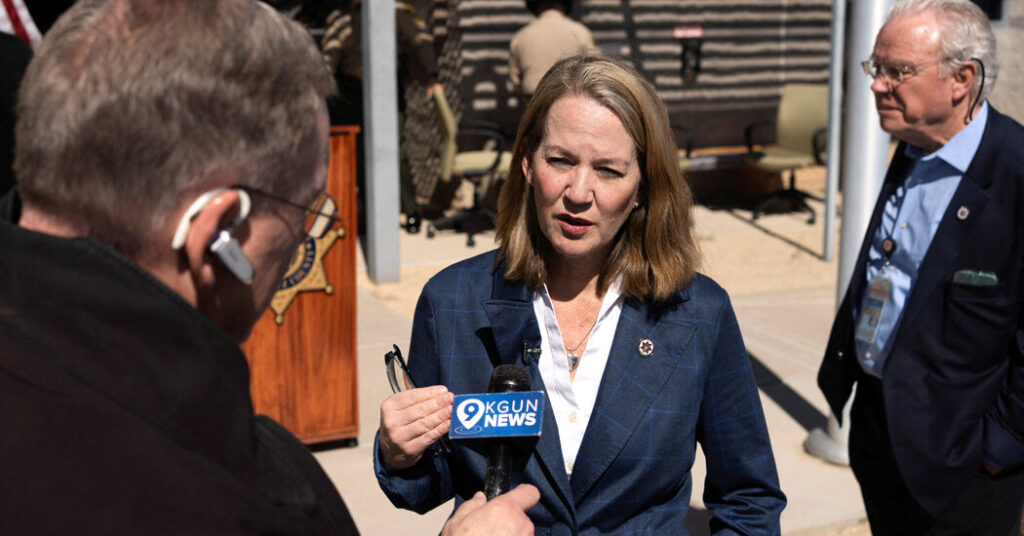
“Kalshi may brand itself as a ‘prediction market,’ but what it’s actually doing is running an illegal gambling operation and taking bets on Arizona elections, both of which violate Arizona law,” Kris Mayes, Arizona’s attorney general, said in a statement. “No company gets to decide for itself which laws to follow.”
A spokeswoman for Kalshi denied the claims, calling them “meritless,” and said in a statement that “these state court charges are seriously flawed. It’s gamesmanship.”
The criminal charges raise the temperature between prediction markets, which also include Kalshi’s rival, Polymarket, and states. Some states have been battling the sites in federal court and arguing that wagers on the platforms should follow the same rules that govern traditional gambling companies. Most of those cases have been civil disputes, so a criminal case opens a new front in the back-and-forth.
Kalshi had filed a federal lawsuit against Arizona on March 12 to stop the state from bringing charges, according to Arizona’s attorney general.
“Kalshi is making a habit of suing states rather than following their laws,” Ms. Mayes said. “In the last three weeks alone, the company has filed lawsuits against Iowa and Utah, and now Arizona.” She added that Kalshi was “running to federal court to try to avoid accountability.”
Kalshi and Polymarket are sites where people can bet on virtually anything, from the outcome of the Super Bowl to an election. Once a niche phenomenon, the platforms were first embraced by political junkies who wanted to bet on the presidential election. Now prediction markets are everywhere, a growing presence in American politics and culture.
But the sites have been dogged by concerns about market manipulation and insider trading, amid questions about how they might also stoke more betting and gambling behavior. For decades, sports betting was largely banned in the United States, until the Supreme Court ruled in 2018 that the federal prohibition was unconstitutional.
Kalshi has argued that prediction markets are more like financial marketplaces than gambling websites, and should be regulated at the federal level by the Commodity Futures Trading Commission.
Natallie Rocha is a San Francisco-based technology reporter and a member of the 2025-26 Times Fellowship class, a program for early-career journalists.
The post Arizona Files Criminal Charges Against Kalshi, the Prediction Site appeared first on New York Times.