Senior Israeli officials have told U.S. diplomats that Iranian protesters will “get slaughtered” if they take to the streets against Iran’s government even as Israel publicly calls for a popular uprising, according to a State Department cable reviewed by The Washington Post.
The cable, circulated by the U.S. Embassy in Jerusalem on Friday, relayed an Israeli assessment that Iran’s regime is “not cracking” and is willing to “fight to the end” despite the Feb. 28 killing of Supreme Leader Ali Khamenei and the ongoing U.S. and Israeli bombing campaign.
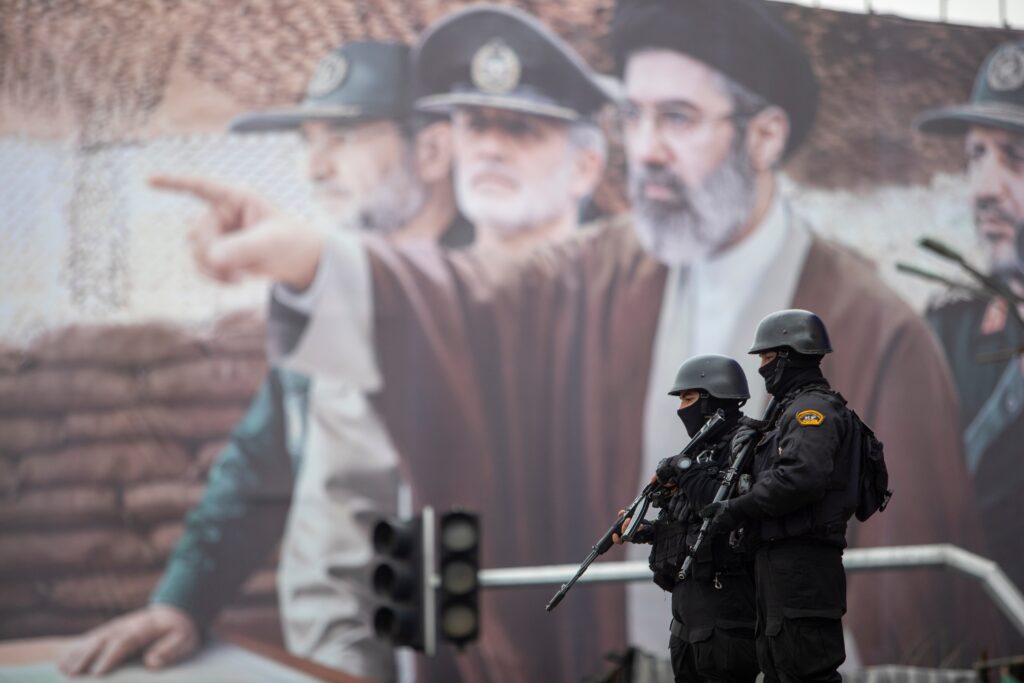
The regime killed thousands during wide-scale anti-government demonstrations earlier this year. If large numbers of Iranians return to the streets, Israeli officials say “the people will get slaughtered” because the Islamic Revolutionary Guard Corps, Iran’s principal military force, “has the upper hand,” according to the cable. The document’s authenticity was verified by two State Department officials.
Despite the grim forecast, Israeli officials said they hoped for a popular revolt and urged the United States to prepare to support protesters if that happens, according to the cable.
The cable summarized recent meetings between U.S. officials and senior members of Israel’s National Security Council, Ministry of Defense and Ministry of Foreign Affairs on Wednesday and Thursday.
It comes as Iran’s exiled crown prince, Reza Pahlavi calls for Iranians to take to the streets this week to mark the ancient Persian “Festival of Fire” known as Chaharshanbe Suri.
Narges Bajoghli, an Iran expert at Johns Hopkins University, said that Iranians have long been skeptical of Israeli intentions and that the dual messages on display in the cable will be viewed by many as callous and exploitative of Iranian lives.
“I think a lot of people will feel very betrayed by this assessment,” Bajoghli said.
The Israeli Embassy in Washington said Israel is “focused on eliminating the regime’s military capabilities — to everyone’s benefit.”
“Iranians have risked their lives taking to the streets time and again, including just this past January,” the embassy said in a statement. “There are opposition groups who have been working independently for years to overthrow the regime.”
Israel and the U.S. have hit thousands of targets inside Iran, including nuclear infrastructure, ballistic missile stockpiles, police stations and checkpoints set up by plainclothes internal security forces known as the Basij.
In a televised address on the first day of the attacks, Israeli Prime Minister Benjamin Netanyahu said his country “will strike hard at the terror regime and create conditions that will allow the brave Iranian people to cast off the yoke of this murderous regime.” He made a similar appeal last week.
Other Israeli officials have said the assault on Iran is a success even if a popular uprising doesn’t materialize. “Every day that we weaken this regime is a gain for the state of Israel,” Ze’ev Elkin, a member of Israel’s security cabinet, said in an interview on Israeli television.
Suzanne Maloney, an Iran expert and vice president at the Brookings Institution, said the vulnerability of Iran’s unarmed protesters should be a consideration for U.S. and Israeli officials. “The Iranian people are at grave risk at the moment from the regime, and it would be unfortunate if they were used as pawns in an effort to try to further inflame the situation,” she said.
The Trump administration’s outlook on the peril facing Iran’s opposition has shifted since the start of the war. President Donald Trump initially urged Iranians to “take over your government” but has recently acknowledged that Iran’s security forces would kill protesters.
“They literally have people in the streets with machine guns, machine-gunning people down if they want to protest,” Trump told Fox News.
“I really think that’s a big hurdle to climb for people that don’t have weapons,” he added.
A White House official, who spoke on the condition of anonymity to discuss a leaked cable, said Trump “doesn’t like to see suffering anywhere, including in Iran, where the terrorist regime was slaughtering protesters before the president intervened and is now targeting civilians throughout the region.”
The regime’s response to protests in January, which were brought on by Iran’s economic mismanagement and authoritarian tactics, resulted in a brutal crackdown condemned by much of the West.
U.S. officials also say they are no longer pursuing the overthrow of Iran’s entrenched clerical and military establishment.
Although Iran’s military has been badly degraded by U.S.-Israeli strikes, the regime’s resilience is one of many variables the Trump administration appeared to miscalculate in a war that is in its third week with no end in sight.
On Monday, top U.S. allies rejected Trump’s demand to send warships to help reopen the Strait of Hormuz, the passageway for 20 percent of the world’s oil and liquefied natural gas that Iran closed off when the war started, spiking energy prices and fears of a global recession.
Israel expected that the Iranian supreme leader’s assassination last month would sew “more chaos” within the regime in the immediate aftermath, Israeli officials told U.S. counterparts, according to the cable.
But in recent days, the Islamic republic’s hold on power has been evident in its ability to continue launching ballistic missiles and drones “everywhere they want to,” Israeli officials told U.S. diplomats, according to the cable.
Maloney said she was surprised the Israelis underestimated the regime’s resilience.
“That really badly Informed assumption is interesting given how impressive Israeli intelligence penetration of Iran has been,” she said. “It obviously lies at the root of the strategic miscalculation that Israel and the U.S. together blundered into.”
Despite reports that the late supreme leader’s son and successor was wounded in an airstrike, Israel officials said Mojtaba Khamenei was “still in charge” and “more aligned” with the IRGC hard-liners than his father, according to the cable. They speculated that the regime might moderate its views if the new supreme leader were killed but noted that it was “stubborn” and would have to be “taken down from within.”
On Tuesday, the Israeli military claimed that it killed the commander of the Basij, a force that is estimated to number about 1 million, and the head of Iran’s Supreme National Security Council.
Iran has funded militias and political movements across the Middle East that are hostile to Israel, including Hamas in Gaza, Hezbollah in Lebanon and the Houthis in Yemen. Israel’s effort to push for an uprising in Iran regardless of the number of fatalities is consistent with its decades-long effort to cause the “fragmentation of Iran” and “state collapse,” said Bajoghli, the Iran expert.
“One of the ways of achieving that is creating more opportunities in which the guns of the state get turned onto the population,” she said. “The goal is not creating a liberal democracy for the Iranian people. It’s widening the chasm between the society and the state.”
Lior Soroka, in Tel Aviv, and Aaron Schaffer, in Washington, contributed to this report.
The post Israel urges Iranians to revolt but privately assesses they’ll be ‘slaughtered’ appeared first on Washington Post.