Europe wants President Trump to end his war in Iran as fast as possible.
Mr. Trump wants Europe’s help relieving the only real pressure point that could force him to do that.
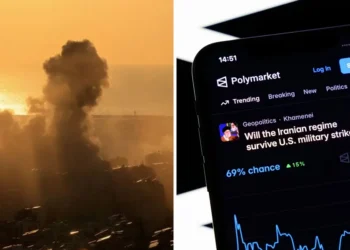
That pressure point is effectively an oil blockade by Iran in the Strait of Hormuz. Mr. Trump has called on Europe to send ships and other military forces to help clear the channel.
European officials have a long list of reasons, spoken and unspoken, for refusing.
It looks something like this.
1. They never wanted this war and don’t want a part of it.
The United States and Israel launched their first strikes on Iran late last month without consulting allies in Europe or elsewhere. There was no effort to assemble any sort of “coalition of the willing” or to make an international case for war, as the Bush administration did two decades ago with Iraq.
For the first few weeks of the war, all Mr. Trump seemed to want from Europe was the use of military bases to launch attacks. Germany agreed immediately. Britain did eventually, though not to the degree Mr. Trump wanted. Spain said no.
But as Iran’s attacks in the Strait of Hormuz sent oil prices soaring, Mr. Trump asked for more help from Europe — without offering operational input or a timeline for ending hostilities, international legal cover or anything else that Europe might want.
“The United States and Israel did not consult us before this war. There was never a joint decision regarding Iran,” Friedrich Merz, the German chancellor, said on Monday. “Therefore, the question of how Germany will contribute militarily does not arise. We will not.”
2. It’s not NATO’s job.
Mr. Trump has invoked the trans-Atlantic security alliance, which requires its members to aid America if it is attacked, and scolded NATO members in Europe for not answering his call. “For 40 years, we’re protecting you, and you don’t want to get involved,” Mr. Trump said on Monday.
To which European officials reply: That’s not how NATO works.
The alliance does not traditionally involve itself in the Middle East or in pre-emptive strikes by its members on their enemies. Its so-called Article 5 obligations bind countries to defend one another in case of attack, and they have only been invoked once: after the Sept. 11, 2001, terrorist strikes in the United States.
Mr. Merz stressed on Monday that NATO was a “defensive alliance.” Mark Rutte, the alliance’s secretary general and an ally of Mr. Trump’s, told the Reuters news agency shortly after the war began: “Clearly, NATO is not itself involved here. NATO allies are providing key enabling support.”
3. They don’t think it will work …
Shipping in the Strait of Hormuz is so precarious because even a single armed Iranian speedboat can take out an oil tanker. The U.S. Navy has not been able to defeat that threat on its own, and some European leaders said this week that they don’t know how their navies would tip the scales.
4. … and if it did, it could prolong the war.
The Iran-induced surge in global oil prices is raising costs for drivers and other consumers across Europe and the United States. European leaders are desperate to bring them down. They know Mr. Trump is, too.
Privately, top European officials say the only things that ever really seem to induce Mr. Trump to change his mind on an issue are financial markets and American public opinion. A clogged Strait of Hormuz influences both. Mr. Trump does not want to enter midterm elections with gas prices high and American voters blaming his war for them.
That calculation might be European leaders’ best leverage to persuade Mr. Trump to wrap up the war before it sprawls into their nightmare scenario: an economically devastated, politically unstable Iran that sends millions of migrants fleeing the Middle East toward Europe.
Lara Jakes contributed reporting from Rome.
Jim Tankersley is the Berlin bureau chief for The Times, leading coverage of Germany, Austria and Switzerland.
The post Why Won’t Europe Help Trump in Iran? Let’s Count the Reasons. appeared first on New York Times.