BRUSSELS — European leaders are pushing back against President Donald Trump’s call to deploy warships to open the Strait of Hormuz, a vital chokepoint for the world’s oil supply, as they try to keep some distance from the U.S.-Israeli war with Iran.
With little sign of the fighting letting up, Trump is finding America’s allies reluctant to join a conflict he unleashed without consulting them, and which is deeply unpopular in their own countries.
“While taking the necessary action to defend ourselves and our allies, we will not be drawn into the wider war,” British Prime Minister Keir Starmer said Monday.
The crisis spreading across the Middle East — in which Iran has attacked cargo vessels transiting the Strait with mines and drones, effectively bringing oil shipments to a halt and sending petroleum prices soaring — is quickly shaping up to be a new source of tension in an already rocky transatlantic relationship.
At the White House on Monday, Trump complained that European leaders were not heeding U.S. demands despite America’s longtime role in ensuring the continent’s security.
“You have to remember we have 45,000 troops in Japan. We have 45,000 troops in South Korea. We have 45,000, 50,000 troops in Germany,” Trump said. We defend all these countries and then: ‘Do you have any minesweepers?’ And they say, ‘Well, would it be possible for us not to get involved?’”
Trump singled out Britain, which, he said, “was sort of considered the Rolls-Royce of allies,” as a particular source of disappointment, saying he had asked Starmer for assistance including minesweepers, only to be told that consultations were needed. “You are the prime minister. You can make a decision,” Trump said, adding: “It’s very disappointing.”
The cool but nuanced response in Europe to Trump’s call for more cooperation reflected the region’s typical strategic dichotomy, with the countries more used to projecting global power — Britain and France — appearing somewhat more willing to assume more risk.
Starmer and French President Emmanuel Macron have said they are exploring options with allies to take part in securing the Strait of Hormuz. But others are being more direct in their resistance to any involvement that risks making them an Iranian target, even as their economies, companies and consumers feel the pain from the spike in energy prices due to Iranian attacks in the narrow strait.
“We’re beginning to see the effects of a real break of trust across the Atlantic,” said Nathalie Tocci, director of the Rome-based Institute for International Affairs. “I mean, why on earth would Europeans do this, right? I mean, we’re talking about a president that has withdrawn military assistance from Ukraine, that has imposed tariffs on Europe, that has threatened a European country with annexation. Like, you know, basically, why on earth should Europeans kind of come to the rescue?”
Several European officials have also outright rebuffed Trump’s demands to send forces or warships into ongoing fighting.
“This is not Europe’s war,” the European Union’s foreign policy chief, Kaja Kallas, said Monday evening after foreign ministers of the European Union’s 27 nations convened in Brussels to discuss the European response to the fallout of the war.
Kallas said the bloc was focusing on “diplomatic outreach” instead. “Nobody wants to go actively in this war, and of course, everybody is concerned what will be the outcome,” she said.
German Defense Minister Boris Pistorius has expressed the same sentiment. “This is not our war. We did not start it,” Pistorius told reporters Monday, adding that there would be “no military participation” from his nation. Pistorius said “sending more warships to the region will likely not help achieve” the negotiated solution the E.U. is seeking.
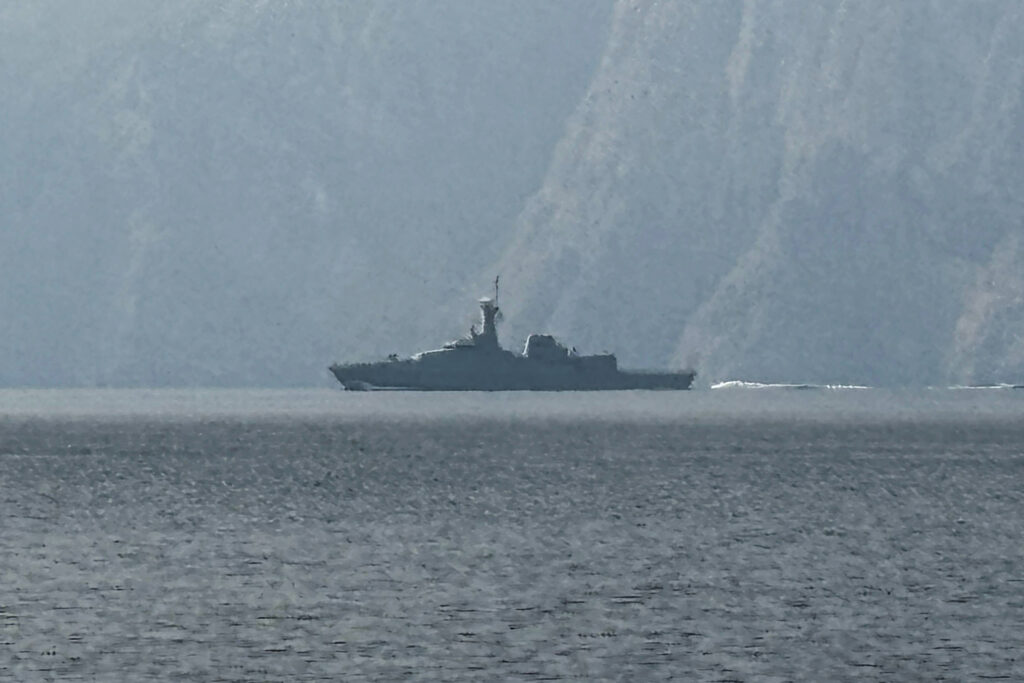
“What does … Donald Trump expect,” he asked, “from, let’s say, one or two handfuls of European frigates in the Strait of Hormuz that the powerful American Navy cannot accomplish?”
Italian Foreign Minister Antonio Tajani, speaking in Brussels, said that Rome would strengthen its preexisting naval operations in the Red Sea to ensure maritime safety there and in the Suez Canal, but that Italy “will not change the mandate, meaning there will be no going to Hormuz to conduct escort operations for oil tankers that must pass through the Strait.”
His refusal came as the government of Italian Prime Minister Giorgia Meloni is struggling to defend its close ties to Trump amid an increasingly open-ended and unpopular war in the Middle East. Tajani later told the Italian newspaper Corriere della Sera: “We cannot get involved in war.”
Meloni late Monday said assistance in the Strait of Hormuz would be “mean taking a step toward involvement” that Italy was unwilling to take.
“On the one hand, freedom of navigation is fundamental for us, which is also the subject of a statement that was made today with our partners,” Meloni told Rete4.“To intervene would objectively mean taking a step forward in involvement.”
European leaders are also calibrating their responses for their domestic audiences. In France, Macron, has balanced his messaging on the war, which he described as outside of international law, with a footing that has included dispatching war ships to the region and offering to help broker a ceasefire in Lebanon.
Macron has suggested the French navy could help build a coalition and get involved in securing shipping lanes in the region or escorting tankers through the strait, but he said earlier this month that would happen after “the most intense phase of the conflict.”
The French Foreign Ministry said Monday on social media that France’s aircraft carrier strike group remains in the eastern Mediterranean: “Posture has not changed: defensive it is.”
Trump has warned, in an interviewwith the Financial Times on Sunday, that it would be “very bad for the future of NATO” if European countries did not join in efforts to open the strait.
And he said the unwillingness to help proved his contention that while the United States defends its allies, the allies do not help America. In fact, the only time NATO has invoked its collective defense clause, known as Article 5, was to assist the United States after the Sept. 11, 2001, terrorist attack.
With the continent now feeling the rise in oil prices, European governments are scrambling to ramp up their response to the crisis and have stressed the need to resume the flow of shipments through the waterway, which is essential for the transport of oil, gas and fertilizer. Tehran has pledged to keep retaliating against U.S. and Israeli attacks, and has said the Strait of Hormuz is closed only to Iran’s “enemies.”
A European official said some nations were open to sending ships to help with demining and deterring a wider conflict if there is a de-escalation in the conflict. But “nobody wants to go in while the war is raging,” the official said, speaking on the condition of anonymity to share internal deliberations.
Trump’s call for countries to helps secure the Strait of Hormuz has also put U.S. allies in Asia, which are heavily dependent on oil shipments from the Middle East, in a bind.
Japanese Prime Minister Sanae Takaichi said Monday that Tokyo currently is not planning to deploy ships to escort vessels.
Japan’s postwar constitution restricts its military operations overseas. While Trump has urged American partners to provide minesweepers, Takaichi earlier ruled out the possibility of Japan sending the Self-Defense Forces for demining operations in a conflict zone before there is a ceasefire is declared.
In South Korea, officials in the presidential office said they are communicating with Washington over Trump’s remarks, but declined to say whether had been a formal request. South Korean officials said the presidential office is trying to determine Trump’s “exact intention.”
Faiola reported from Rome. Michelle Ye Hee Lee in Seoul contributed to this report.
The post European leaders rebuff Trump’s call to open the Strait of Hormuz appeared first on Washington Post.