If you made an overseas purchase last year that required shipping, the federal government may owe you money.
After Trump ended the de minimis exemption last year, purchasing an item straight from an international vendor, regardless of the item’s value, meant incurring International Emergency Economic Powers Act tariffs.
Now, thanks to a ruling by the Supreme Court that overturned Trump’s IEEPA tariffs, and a ruling by the Court of International Trade ruled that all tariffs paid under IEEPA must be returned, buyers may be able to collect a refund.
The Customs and Border Protection said in a declaration on March 6 that it could start rolling out refunds as soon as April, after some technological updates to its system. The CIT estimates that the CBP owes $165 billion in duties that must be refunded with interest, with about $650 million accruing each month.
Even though Trump introduced a new 10% “global tariff” under Section 122, meaning that overseas purchases will continue to face an extra charge, some shipping companies told Business Insider they are willing to help consumers claw back what they paid under the IEEPA.
From FedEx to USPS, here is what different companies are saying about refunding tariffs paid by individual consumers.
Some companies are willing to help
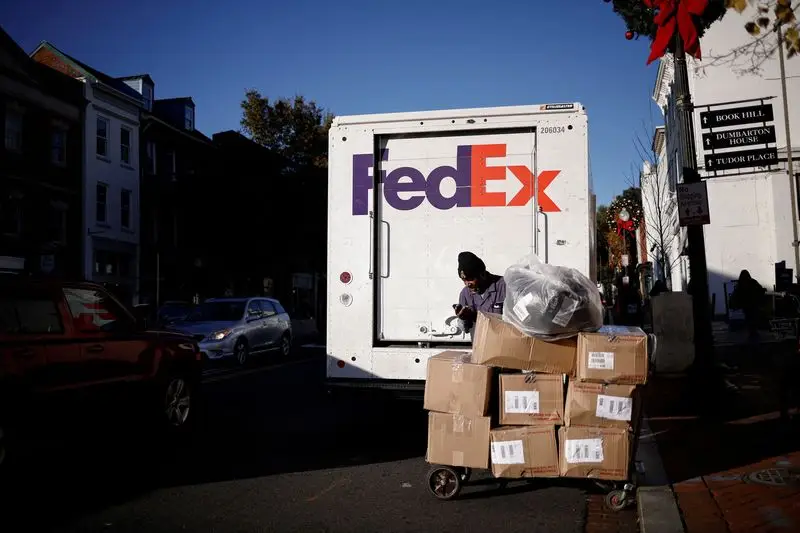
FedEx was the first company to file a lawsuit with the CIT to secure “a full refund” after the Supreme Court decision.
A spokesperson for FedEx told Business Insider that the lawsuit was “on behalf of our customers” and that the company is committed to returning tariff costs.
“Our intent is straightforward: if refunds are issued to FedEx, we will issue refunds to the shippers and consumers who originally bore those charges,” the spokesperson said.
“When that will happen, and the exact process for requesting and issuing refunds will depend in part on future guidance from the government and the court,” the spokesperson added.
Similar to FedEx, UPS told Business Insider that the company will support customers in obtaining IEEPA tariff refunds after a process is established by relevant agencies.
“We remain focused on keeping shipments moving and helping ensure our customers can fully exercise their rights throughout this complex process,” said a UPS spokesperson.
Morgan & Morgan also filed a proposed class action lawsuit in March against FedEx to recover the costs of import duties and fees associated with IEEPA in a legally binding manner.
“While FedEx has stated publicly that they plan to return those funds to their customers, the company did not make any legally binding statements to that effect in their complaint,” said Morgan & Morgan in a statement to Business Insider, “Nor have they mentioned any plan to refund the significant ancillary fees they charged for processing those tariffs.”
Other major companies
USPS is one of the most popular and affordable methods of shipping small goods, but it can be complicated as a government-owned entity.
USPS has been collecting tariffs for items via its prepaid “Delivered Duty Paid” service, mostly to avoid surprise fees and a buildup of abandoned small items at the border. Unlike FedEx or UPS, it is an independent agency that belongs to the executive branch of the federal government.
Though USPS pays for its own operations and is not funded by taxpayers, it is legally complicated for federal agencies to sue each other in court because they are part of the same legal entity, so it is unknown if USPS could obtain refunds for shippers or receivers through legal means. According to the Department of Justice website, a government agency can sue another only if it can prove a concrete adversity of interest.
A USPS spokesperson told Business Insider that the CBP is responsible for questions regarding the “disposition of tariff monies.”
The CBP and shipping company DHL did not respond to requests for comment.
Read the original article on Business Insider
The post Bought something from overseas last year? You might be owed a tariff refund. appeared first on Business Insider.