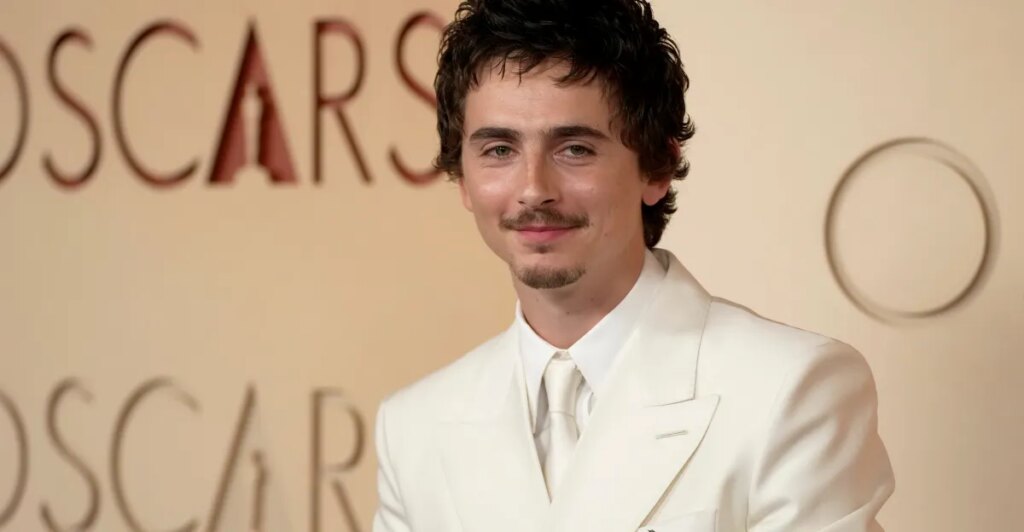
After spending the past several months engaged in an intense Oscar campaign for Mary Supreme — including claiming that his performance as pompous ping-pong player Marty Mauser was his best work to date — Timothée Chalamet ultimately lost Best Actor to Sinners star Michael B. Jordan during Sunday’s ceremony.
Chalamet’s loss wasn’t a total upset, given Jordan’s win at the Actor Awards two weeks prior. However, it marked a surprising shift in momentum for the young actor, who was posed as the Best Actor frontrunner early on in the awards season by awards pundits and entertainment outlets.
So, what exactly went wrong? For the past few years, Chalamet has seen both critical and box-office success starring in films like Call Me By Your Name, Dune, and A Complete Unknown — two of which earned him his previous Best Actor nominations. With Marty Supreme, Chalamet’s eventual Best Actor win looked like a sure thing to both fans and entertainment journalists. However, following some incendiary remarks he made in a Variety and CNN Town Hall about opera and ballet leading up the awards show and his eventual loss on Sunday, a big question remains: Did Chalamet sabotage what seemed like a clear path to victory?
It’s reasonable to think that Chalamet’s loss is a cautionary tale of an overly eager actor flying too close to the sun. However, as history shows, the 2026 Oscar might never have been Chalamet’s to begin with.
From Best Actor frontrunner to Oscar villain
Chalamet’s Best Actor chances were one of the biggest question marks going into this year’s ceremony. He had started strong, winning at the first of the season’s major awards shows: the Critics Choice Awards and the Golden Globes. However, he lost the BAFTA (the British equivalent of an Oscar) to Robert Aramayo (star of the British film I Swear), and Michael B. Jordan beat him at the Actor Awards (formerly the Screen Actors Guild Awards). Given that the latter are voted for by members of the film industry — overlapping with members of the Academy — Chalamet was less of a safe bet for the big prize at the Oscars.
Then, just two weeks before the Academy Awards, he made some controversial remarks about the arts. In conversation with his Interstellar co-star Matthew McConaughey, Chalamet said, “I don’t want to be working in ballet or opera, or, you know, things where it’s like, ‘Hey, keep this thing alive,’ even though it’s like no one cares about this anymore.”
The comments went viral, and the backlash was swift. His remarks were denounced by the MET Opera, ballet icon Misty Copeland, and director Steven Spielberg, among others. His defenders argued that his statements weren’t technically wrong, even if they were a bit ungraceful. The kerfuffle even made it into Oscars host Conan O’Brien’s monologue, with the comedian joking that they had hired extra security to protect Chalamet from members of the opera and ballet communities.
But, by this point, Chalamet’s public antics — specifically, the way he had chosen to market Marty Supreme — had already come under scrutiny. In a piece for Vulture, critic Craig Jenkins outlined Chalamet’s attempts to appeal to Black audiences and capitalize on his adjacency to Black culture throughout the film’s press tour, including collaborations with the internet comedian Druski and Minnesota Timberwolves player Anthony Edwards, who crowned him “White Boy of The Year.” He released a song with (white) British rapper EsKeeDee Kid and wore Timberlands to the Golden Globes. By the time Chalamet made his comments about ballet and opera, it felt like he had completely miscalculated his campaign and started getting on everyone’s nerves.
But here’s the thing: Chalamet’s comments about opera and ballet took off on March 5, the same day that Oscar voting closed. So, while it’s possible his overexposure didn’t sit right with some Academy voters, it’s very likely that many had already submitted their ballots and that his loss had nothing to do with the controversy at all.
Timothée Chalamet’s Oscar win was never set in stone
One thing that’s been missing from this conversation is the fact that the Academy has a storied reputation of making even the most promising and successful young actors wait for their turn on the big stage, especially when compared to their female counterparts. Chalamet winning an Oscar at the tender age of 30 was always going to be a long shot, even with his myriad accomplishments and the bold proclamation in front of his peers at last year’s SAG Awards that he wanted to “be one of the greats.”
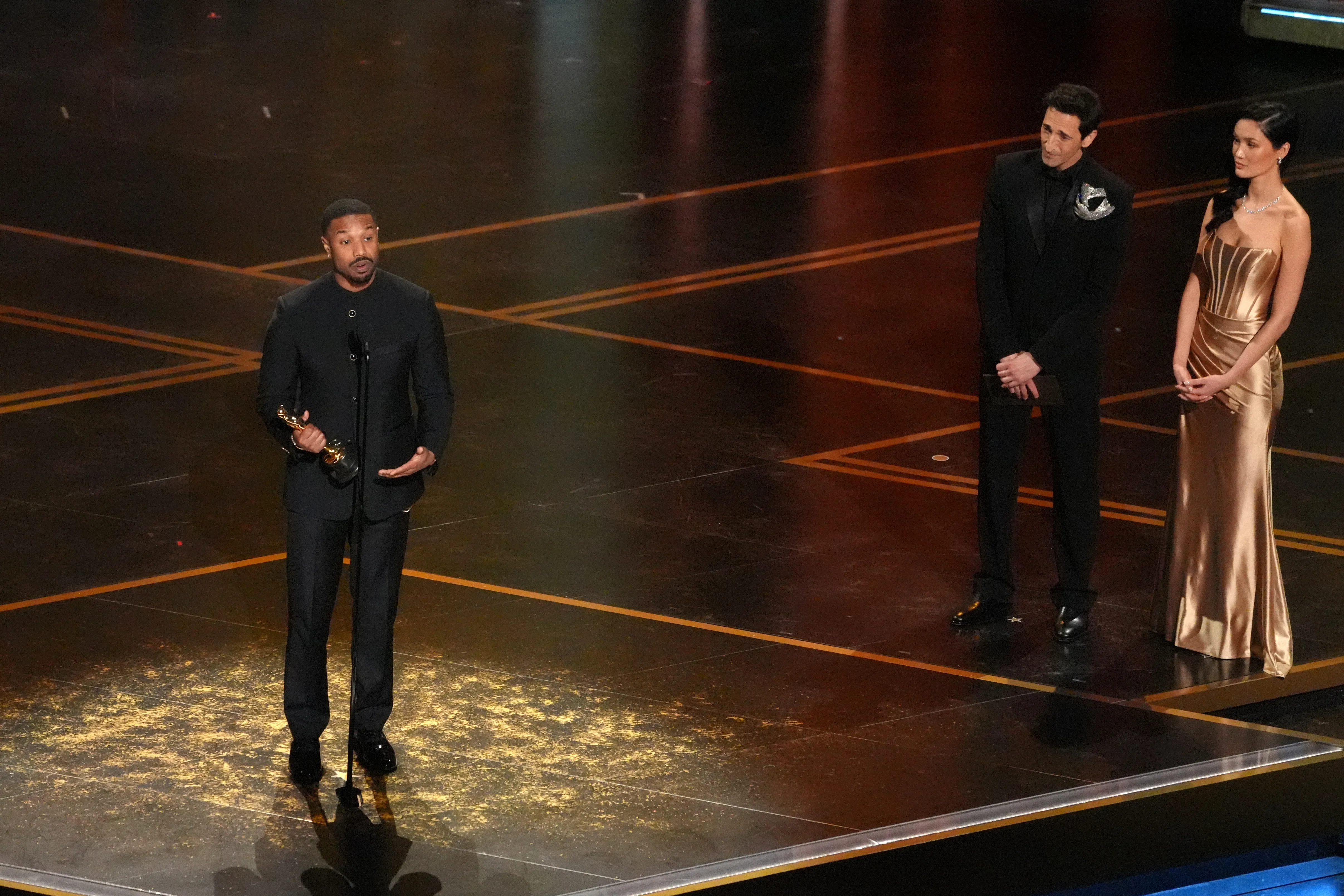
Two-time Best Actor winner Adrien Brody is still the youngest actor to take home the prize at the age of 29, winning for The Pianist in 2003. Meanwhile, Marlee Matlin was the youngest Best Actress winner at 21 for Children of A Lesser God in 1987, and Jennifer Lawrence was the second youngest at 22 for Silver Linings Playbook in 2013. Anora star Mikey Madison just took home the Best Actress Oscar last year at age 25. Conventional wisdom would say this is rooted in the way that Hollywood idealizes youth in women, while allowing for and celebrating maturity in men. In an article for Vulture, journalist Nate Jones suggested that the older, male members of the Academy like seeing these younger, privileged men, with their “millions of dollars, beautiful women, [and] the full flush of youth” sweat it out a bit before claiming a trophy.
Leonardo DiCaprio, who was Chalamet’s competition in the category this year, is one notable example of the Academy’s aversion to awarding young hunks. The star didn’t win Best Actor until he was 41 for the film The Revenant, despite racking up four acting nominations starting at the age of 19. Joaquin Phoenix won his first Oscar at 45. Brad Pitt didn’t win until he was 56. Jordan, last night’s winner, is 39. Several hot, young male actors, including Austin Butler, Paul Mescal, and Jacob Elordi, have all been nominated in recent years, and all of them have lost.
So, it’s not a shock that Chalamet would ultimately be bested by someone a nearly decade older than he is. On top of giving a critically acclaimed performance tackling two different roles in Sinners, Jordan has established himself as the relatively young but accomplished industry veteran between the two, earning his first acting credit in 1999. He was a series regular in The Wire and gave critically acclaimed performances in 2013’s Fruitvale Station and 2018’s Black Panther (a Best Picture nominee). Specifically, his 12-year-long working partnership with Sinners director Ryan Coogler has helped cement Jordan as a box-office draw. He’s also established his bonafides as director, succeeding Coogler at the helm of the third Creed film.
The fact that Chalamet seemed like the more likely winner is likely more the result of the visibility of his Oscars campaign than the two men’s respective statuses in Hollywood.
It remains to be seen what Chalamet will do after taking such a highly publicized L. Will he go even harder in future Oscar campaigns, or dial it back a bit as he promotes films like Dune: Part III later this year? Maybe his Best Actor campaign will be perceived in a more flattering light the more he distances himself from it — and with a few more excellent performances under his belt. Either way, a future Chalamet win isn’t nearly as exciting as getting him to watch him recalibrate and continue playing the Oscars game.
The post The Oscar was never really Timothée Chalamet’s to begin with appeared first on Vox.