In Republican-ruled Idaho, nearly everyone in state government agrees the priority in education is “parental choice.” They just can’t agree on what parents should get to choose.
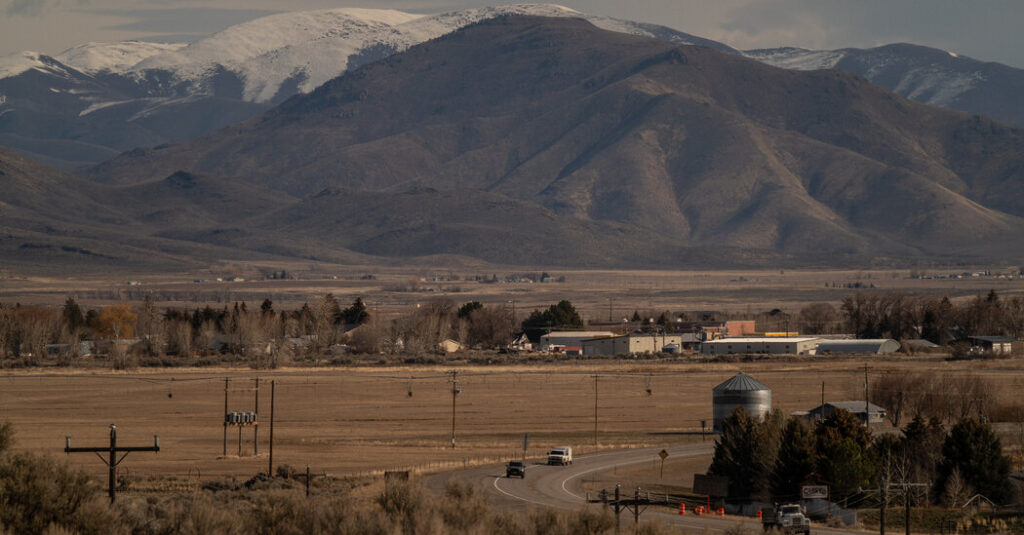
For some lawmakers and parents, it’s protecting a new $50 million tax credit offering families up to $5,000 per child for private-school tuition and other expenses. For others, particularly in Idaho’s vast rural counties where private schools may not exist, it’s preserving the state’s 20-year investment in distance learning programs. That’s how rural students access Advanced Placement classes, dual high school and college-credit courses and a state-mandated financial literacy program.
In the middle of a budget crunch, those competing priorities are exposing a Republican rift in one of the nation’s most conservative states.
“We’ve experienced this huge shift, from believing that the public schools were a bastion of our democratic republic that could use more accountability to believing we shouldn’t give them any money at all,” said Julie Yamamoto, a retired teacher and Republican from Canyon County who chaired the House Education Committee before losing to a more conservative challenger in 2024. “And it’s happened so quickly.’
Idaho’s economy is strong by most traditional measures. The population is growing, unemployment remains below the national average and household income rose steadily over the past decade. But state and federal tax cuts, coupled with shrinking federal spending on programs such as Medicaid have left lawmakers facing a budget gap of about $40 million this year, stretching to as much as $600 million or even $1 billion in the near future.
“It’s entirely self-inflicted,” said Stephanie Witt, a political scientist at Boise State University.
The conservatives who increasingly dominate the legislature, particularly since 19 Republican incumbents lost primaries in 2022, say state economists were too optimistic in their revenue estimates and that spending cuts will solve the problem. House Speaker Mike Moyle has pushed weeding out “waste and fraud.”
State Representative Josh Tanner, co-chairman of the legislature’s budget-writing committee, pointed to “bloated bureaucracy.”
“When revenues fall short,” Mr. Tanner said when he was appointed co-chairman, “lower-priority programs must be reduced.”
For decades, even as Idaho evolved into a place where no Democrat has won statewide office since 1990, Republicans largely supported the public schools. The state’s conservatism was shaped as much by a frontier ethos and the Church of Jesus Christ of Latter-day Saints as by national ideological movements.
“In rural areas especially, the public school is the cornerstone of the community,” said Layne McInelly, president of the Idaho Education Association, a teachers’ union. “It’s Friday night football and the Future Farmers of America.”
The Census Bureau consistently rates Idaho last or next to last in per student spending. Still, Idaho’s constitution guarantees a “general, uniform and thorough system of public, free common schools.” Lawmakers have interpreted that expansively, requiring districts to accept students from inside or outside the district if space allows and encouraging home-schooling and distance learning long before they became part of the educational mainstream.
But politics in the Idaho legislature, where Republicans hold 90 of 105 seats, are shifting from “small government” conservatism to a more hard-edge “no government” philosophy on education spending. A proposed constitutional amendment eliminating the state’s school attendance mandate and declaring a parental right to educate children “without government regulation outside of the public schools” narrowly failed in the House this month. The private school tax breaks also failed repeatedly — until more conservative candidates challenged and beat Republican lawmakers who had opposed them.
Ms. Yamamoto said she was repeatedly told to make sure private school tax breaks passed “or it will be your undoing.” Then it was. Her successor campaigned on and voted for the vouchers.
“We now have folks that are out there loud and proud actively working to defund public schools,” said Soñia Galaviz, a Democratic state representative and fifth-grade teacher.
Gov. Brad Little, a Republican, is closer to the party’s old guard, though he has been working to coexist with the harder-line members of his party. He signed the private school tax breaks into law last year despite expressing concern about potential gaps in accountability, saying Idaho “can have it all — strong public schools and education freedom.”
Then state leaders grasped the scale of their fiscal problem.
In his State of the State address in January, the governor pledged to balance the budget in part by trimming $33 million from Idaho’s distance-learning infrastructure.
Those programs take two forms, virtual charter schools and the Idaho Digital Learning Alliance, a state-run program created in the early days of widespread internet access that offers online courses to students in every district.
The alliance fills the gap for small schools that cannot afford advanced math, foreign language or college-level classes. Enrollment surged during the Covid pandemic, and state funding for the alliance has risen by more than 150 percent since then.
“Those are kids taking AP classes or trying to earn associate degrees before they graduate,” said Jan Bayer, superintendent in Boundary County, which serves 1,500 students at the northern tip of the Idaho panhandle. “They’re our high-achieving students, and we don’t have anything else to offer them.”
When a student takes an alliance course during the school day, the program receives money while the student’s home district continues to count that child toward attendance funding. Mr. Little has said his proposed cuts simply eliminate that “double dipping,” but his proposal would cost the Idaho Digital Learning Alliance about $10 million, around 40 percent of its annual budget.
The program’s superintendent estimated that one in five rural students takes an alliance course each year, as do about one in nine urban students.
“If we have to trim, these districts will have to fill the gap,” the alliance’s superintendent, Jeff Simmons, said.
The governor is also taking aim at Idaho’s stand-alone virtual public charter schools, including the Idaho Home Learning Academy, which has grown from fewer than 300 students a decade ago to more than 7,600, making it one of the largest public schools in the state.
A recent state review found that the academy employed far fewer full-time staff than its funding formula assumed, relying heavily on part-time instructors to save more than $22.5 million meant for staff pay. More than half of that money was then distributed to families for educational materials, but some was spent on paddle boards and private school classes for students attending the publicly funded virtual charter school.
Mr. Little has called on lawmakers to cut $23 million from virtual charter schools, and the legislative has already passed a bill tightening how the schools can spend state money.
Supporters of distance learning acknowledge the need for more accountability, but wonder why lawmakers would cut existing education programs when they could reverse or delay the private-school tax credits to total $50 million. They note that even the governor’s call to keep classroom spending flat will result in cuts in some brick-and-mortar schools because of population growth.
“I just don’t believe you’ll see a lot more parents choosing private schools because of the vouchers,” said Jim Foudy, superintendent in Blaine County, which includes the wealthy Sun Valley resort area as well as some of Idaho’s most remote mountain communities.
Instead of increasing enrollment, Mr. Foudy predicts private schools will simply raise tuition “because they know they can.”
“That’s in places that have private schools,” he added. “Those are not an option in parts of our district.”
Anna Griffin is the Pacific Northwest bureau chief for The Times, leading coverage of Washington, Idaho, Alaska, Montana and Oregon.
The post In Deep-Red Idaho, a Republican Rift Over Schools and ‘Parental Choice’ appeared first on New York Times.