“War is the great auditor of institutions.” So wrote the British military historian Correlli Barnett. What, then, does the war with Iran reveal about the state of U.S. military power?
The first, and most obvious, lesson is the potency of U.S. precision-strike capabilities. Since the start of Operation Epic Fury on Feb. 28, U.S. and Israeli forces have hit more than 15,000 targets without losing any aircraft to enemy air defenses. (Five U.S. Air Force planes were damaged on the ground in Saudi Arabia by an Iranian missile strike, while three were lost to friendly fire and one in a fatal accident.)
Those strikes were made possible by superb U.S. and Israeli intelligence, enabling the killing of Ayatollah Ali Khamenei and other top Iranian leaders. The tragic exception was an errant U.S. airstrike that, according to Iranian state media, hit a girls’ school, killing at least 175 people, many of them children.
The United States has leveraged its technological advantage to full effect against Iran, admittedly a second-rate adversary. But even in such a one-sided conflict, there are sharp limits to what airpower alone can accomplish.
Despite the U.S. airstrikes, the clerical regime has maintained its grip on power, with the hard-liner Mojtaba Khamenei succeeding his father as supreme leader. Nor has the U.S. secured Iran’s stockpile of nearly 1,000 pounds of highly enriched uranium. The most effective means of toppling the government, and seizing the nuclear material, would be to dispatch U.S. ground troops. The Pentagon has ordered more than 2,200 Marines to the Middle East, but, while they might be used to seize the Kharg Island oil transit hub, an invasion of Iran is unlikely because of America’s casualty aversion. Iran’s leaders are aware of U.S. sensitivities and doubtless suspect they can wait out the air attacks.
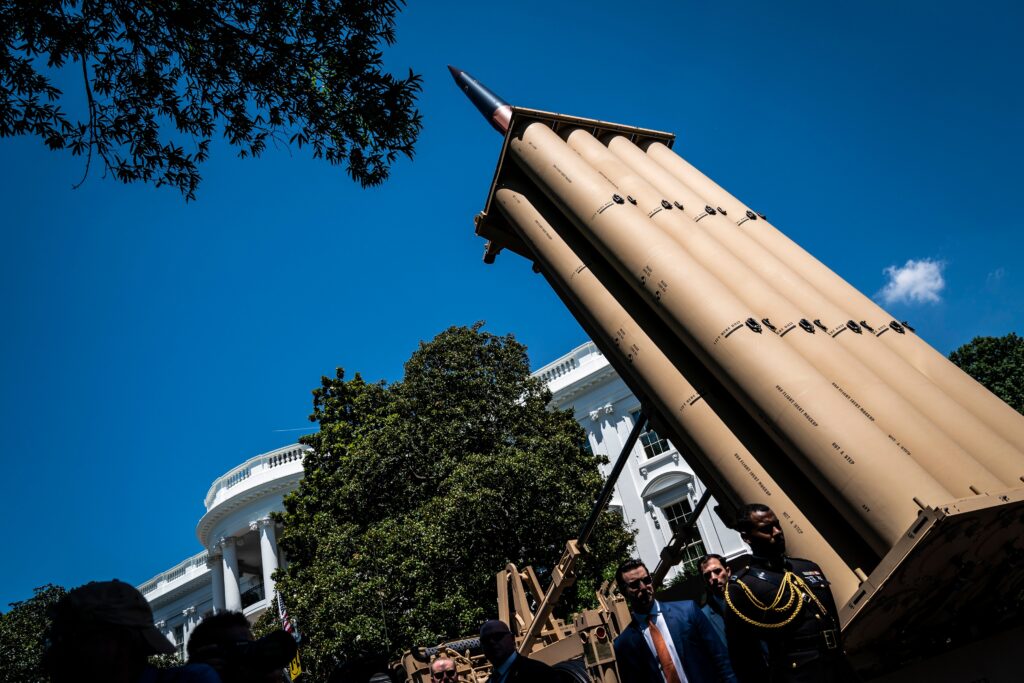
Another U.S. vulnerability is its “magazine depth.” The military has top-of-the-line guided missiles but procures few of them. Last year the U.S. reportedly produced only 96 THAAD air-defense missiles, 54 Precision Strike Missiles and 57 Tomahawk cruise missiles. It will take years and billions of dollars to replenish stockpiles, leaving us less prepared for a conflict against Russia or China in the meantime.
America’s difficulty in dealing with asymmetric warfare is another major problem. Iran knows it cannot prevail in open combat. Instead, it has sought to raise the war’s economic and political costs for President Donald Trump by closing the Strait of Hormuz and targeting civilian infrastructure and U.S. bases in the Persian Gulf. In the process, the Iranians have shown a knack for finding and exploiting weaknesses. They’ve targeted U.S. early-warning radars and employed drones that can overwhelm or evade conventional air defenses.
The math of using $3.7 million Patriot missiles to shoot down Shahed drones costing $20,000 to $50,000 is brutal and unsustainable. In the past year, Ukraine developed interceptors costing as little as $1,000, but Washington didn’t bother to buy them. The U.S. military and the Gulf states are now rushing to do so.
Iran’s asymmetric advantage is particularly pronounced in the Strait of Hormuz, only 30 miles wide at its narrowest point. The regime has been using mines, missiles and drones — including sea drones similar to those employed by Ukraine against the Russian Black Sea Fleet — to close the waterway. It has struck at least 18 commercial ships in two weeks.
This has brought traffic through the strait to a virtual standstill, leading to what the International Energy Agency has described as “the largest supply disruption in the history of the global oil market.” World oil prices have spiked, and the U.S. stock market has been thrown in to turmoil, putting pressure on Trump to end the war sooner rather than later.
Shipping lines have been begging the U.S. Navy to escort tankers. When it did so during the Tanker War in 1987 and 1988, one U.S. warship was struck by an Iranian mine and another by an Iraqi air-launched missile. Since then, Iran has greatly expanded its anti-ship capabilities. It’s little wonder that shipping companies haven’t been keen to “show some guts,” as Trump has demanded, when the U.S. has hesitated to risk its own ships. The president is now imploring U.S. allies to help, but few nations will go where the U.S. Navy won’t.
Iran’s ability to close the Strait of Hormuz, if it stands, would represent a humiliating defeat for the U.S. The only way to end the threat is either by diplomacy or by sending large numbers of troops to occupy the Iranian shoreline. Adding insult to injury, Iran has actually managed to increase its own oil exports since the conflict started.
Though the U.S. military is the best in the world, America’s political leadership leaves much to be desired. Ever since the end of the Gulf War in 1991, when President George H.W. Bush wisely refrained from marching on Baghdad, U.S. presidents have given the armed forces tasks they couldn’t accomplish — most notoriously, to transform Iraq and Afghanistan into democracies. Now, the military has been given the nearly impossible objective of bringing about regime change from the air.
Trump and his national security team, moreover, appear surprised that the Iranian regime didn’t collapse after the death of its leader and that it has responded to U.S. attacks by targeting the Strait of Hormuz. Both contingencies were eminently foreseeable, but Trump’s management of this conflict has been woefully and predictably deficient.
Many of the U.S. military weaknesses revealed in the war can be fixed by smarter acquisitions decisions: The U.S. needs to expand munition production lines and buy more drones and drone defenses. But there is no easy fix for the problem of incompetent political leaders who recklessly fritter away America’s overwhelming military advantages in unnecessary “excursions” premised on wishful thinking. That deficiency can be remedied only at the ballot box.
The post The Iran war reveals the limits of U.S. military power appeared first on Washington Post.