The Trump administration on Friday approved a $5 billion oil drilling project in ultradeep waters of the Gulf of Mexico over protests from Democrats and environmental activists who said the venture posed significant risks to wildlife and communities.
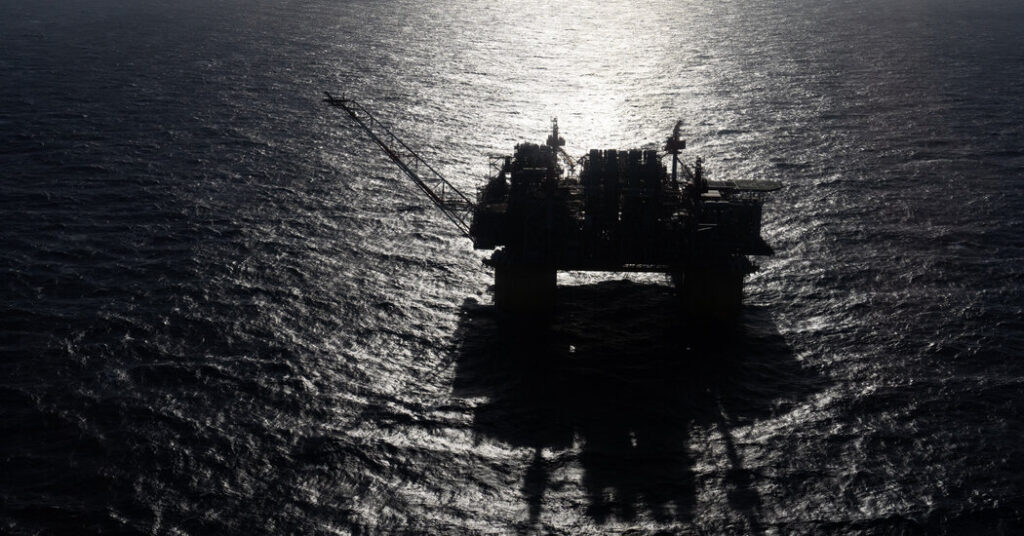
The project by the British energy giant BP would be about 250 miles off the coast of Louisiana and is expected to start producing oil in 2029. The company projects it will deliver up to 10 billion barrels of oil by the end of this decade.
Known as Kaskida, it would be the company’s first new deepwater project in the Gulf since the Deepwater Horizon explosion in 2010, which set off the worst oil spill disaster in U.S. history.
“Kaskida is a world-class project that reflects decades of technological innovation by BP and the offshore oil and gas industry,” Paul Takahashi, a BP spokesman said in a statement. Approval “marks an important step forward for the project and is all the more important at a time of heightened global concerns about energy security and affordability,” he added.
Opponents said the extreme pressure and high temperatures required to operate in waters deeper than 56,000 feet heighten the risk of a blowout that could endanger Gulf communities and the marine ecosystem.
The approval of BP’s production plan by the Bureau of Ocean Energy Management, an agency of the Interior Department, brings the company closer to being able to start drilling, though other federal permitting hurdles remain.
The Interior Department did not respond to a request for comment.
The green light for more drilling in the Gulf comes as the Trump administration tries to blunt the impact of the war with Iran, which has sent oil prices soaring to four-year highs.
Also on Friday, the energy secretary, Chris Wright, invoked emergency powers to allow a company to restart an oil pipeline off the California coast that state officials have kept offline since it ruptured in 2015 and caused one of the worst spills in state history. The Energy Department also approved an immediate 13 percent increase in exports at a liquefied natural gas terminal run by Venture Global in Louisiana.
Mr. Wright cast the moves as central to easing reliance on oil imports through the Strait of Hormuz, a portal for one-fifth of the world’s oil supply that has essentially been shut down by the war.
“At a time when Iran and its terrorist proxies attempt to disrupt the global energy supply, the Trump administration remains committed to strengthening American energy dominance,” Mr. Wright said in a statement.
Democrats in California accused President Trump of using the war in the Mideast as an excuse to restart offshore drilling in the state, something he has wanted to do for months. Gov. Gavin Newsom of California called reopening the pipeline “a political attempt to point the finger at California to divide and distract the American people from his wartime failures and the massive spike in oil and gasoline prices his war has caused.”
BP is one of the largest producers in the Gulf of Mexico, and Kaskida, which the company discovered in 2006, is notable for both its bounty of oil and the technical challenges involved in extracting that fuel.
The oil is buried extremely deep, meaning equipment must be able to withstand incredibly high pressure. But the company has downplayed the risks.
“There’s enough production analogs around Kaskida from similar fields with similar characteristics, so I don’t feel there’s really any risk on the subsurface perspective,” Murray Auchincloss, BP’s former chief executive, told analysts in 2024. .
Opponents said that BP had not done enough since the Deepwater Horizon disaster to prevent future spills and noted that the company’s emergency plan for Kaskida is similar to what it did 15 years ago: It proposes using chemical dispersants to break oil into tiny droplets and push it underwater.
“It’s deeply disturbing that the Bureau of Ocean Energy Management approved a proposal littered with legal and regulatory flaws, especially given BP’s history in the Gulf,” said Brettny Hardy, a senior lawyer with Earthjustice, an environmental group.
“The agency’s decision is a threat to the communities that will be harmed by decades of additional oil that gets refined next to their homes and children’s schools,” Ms. Hardy said. “It’s also an insult to the millions of people and businesses in the Gulf whose lives were changed for the worse by Deepwater Horizon.”
When the project was seeking approval last year, Senator Edward J. Markey, Democrat of Massachusetts, criticized what he called “Donald Trump’s offshore whims.” The Trump administration moved in December to repeal permits for five offshore wind projects along the East Coast, some of which are nearly complete. Companies sued and multiple federal judges have allowed work on all five projects to go forward while the courts considers the merits of the cases against the Trump administration.
On Saturday, Revolution Wind, off the coast of Rhode Island, announced that it had begun delivering power to homes and businesses across New England.
“By blocking already-built wind turbines from coming online and approving dangerous deepwater oil drilling, the Trump administration is giving a green light to oil spills and a red light to lower electric bills,” he said in a statement.
Mr. Markey, along with Representative Jared Huffman, Democrat of California, also led a letter to the Bureau of Ocean Energy Management noting that in a worst-case scenario, the Kaskida project could result in an oil spill of up to four million barrels. That’s more than the Deepwater Horizon disaster, which spilled 3.19 million barrels into the Gulf over 87 days.
They also argued that BP had failed to show it has the equipment to contain a high-pressure blowout and said that Kaskida was an “unacceptable threat to Gulf communities, ecosystems and the climate.”
“The likelihood of an oil spill is higher from deepwater and ultra-deepwater drilling than from drilling in shallower water,” environmental groups including Earthjustice and the Sierra Club Environmental Law Program said in a regulatory filing last year urging federal officials to block the project or require modifications. “Deepwater and ultra-deepwater oil spills and accidents are also much more difficult to respond to and contain.”
The Trump administration has forged an aggressive plan to increase the production and use of fossil fuels in the United States, and offshore oil is a central part of that strategy. Yet their plans have not gone entirely smoothly.
A lease sale in the Cook Inlet of Alaska earlier this month was a bust, with not a single company offering a bid. And on Wednesday, a sale of more than 80 million federal acres of water in the Gulf of Mexico drew only about $47 million in high bids, the weakest sale in about a decade. Last year an auction in the Gulf brought $279 million.
Lisa Friedman is a Times reporter who writes about how governments are addressing climate change and the effects of those policies on communities.
The post Trump Administration Approves Ultra-Deepwater Oil Drilling Plan appeared first on New York Times.