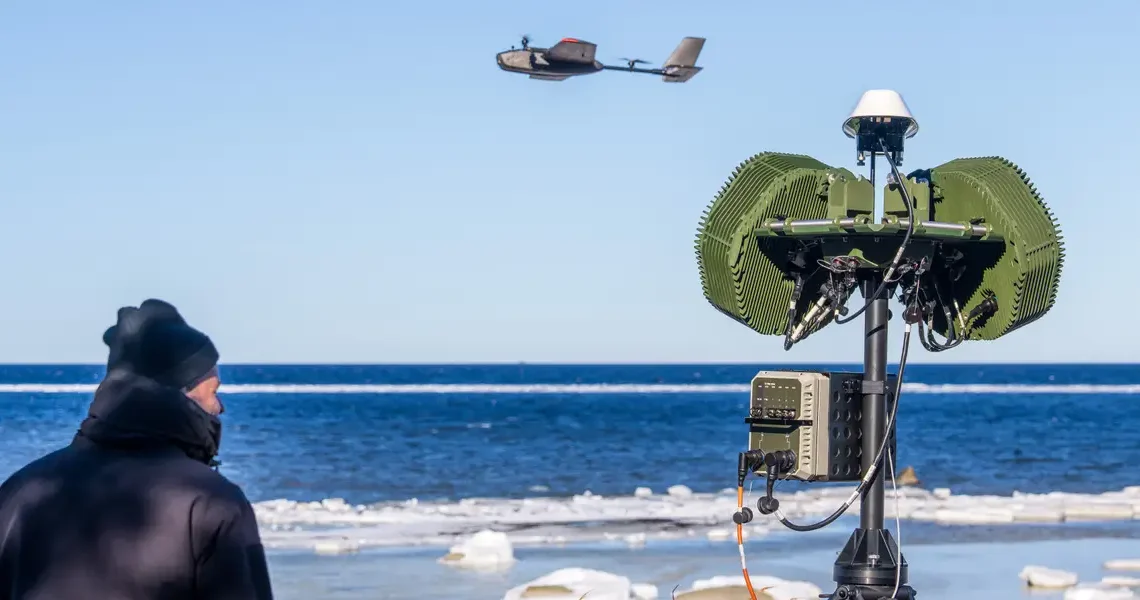
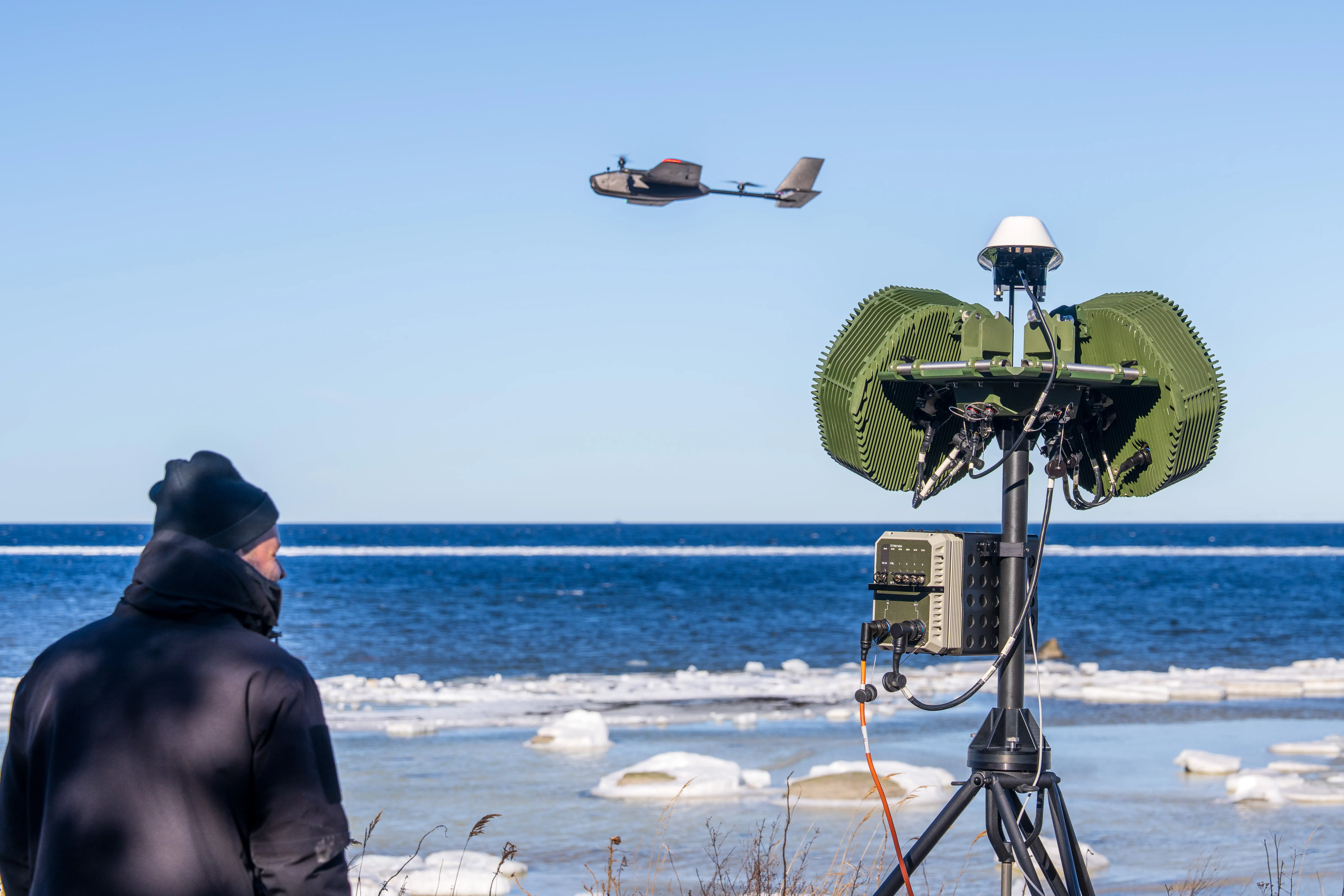
The US and its NATO allies are boosting their ability to detect, track, and target drone threats along the alliance’s eastern edge, its border with Russia.
Through rapid 90-day testing cycles designed to replicate real situations, US forces, Baltic allies, and defense companies are building a shared data network for faster decision-making. The effort links sensors that detect aerial threats with counter-drone systems that can destroy them, aiming to improve defenses against Russian-style drone attacks, including Shahed-type systems.
US and Estonian forces executed exercise Digital Shield 2.0 earlier this month, the second stage in an ongoing testing series.
The exercise “was really born from an initiative to integrate different sensor types into an easily accessible and shareable integrated sensor architecture, or an air picture,” US Army Capt. Micah Maule, plans officer for the 10th Army Air and Missile Defense Command, told Business Insider.
While the first Digital Shield proved the concept, the second expanded the scale, adding more sensors to detect larger uncrewed aerial systems such as Shahed-type drones and additional air-defense and counter-UAS radars to sharpen the picture of incoming threats.
Those systems feed into a common command-and-control network using commercially developed software, creating a streamlined flow of surveillance data that operators can view in a single air picture before deciding how to respond.
“So you could actually task effectors to go out and destroy drones from the same common operational picture,” Maule said.
Digital Shield 2.0 included several simulated scenarios that could become real-world threats, including cyberattacks disrupting operations, high-stress conditions with lots of drone targets, and a live-fire situation running the entire process against Shahed replicators.
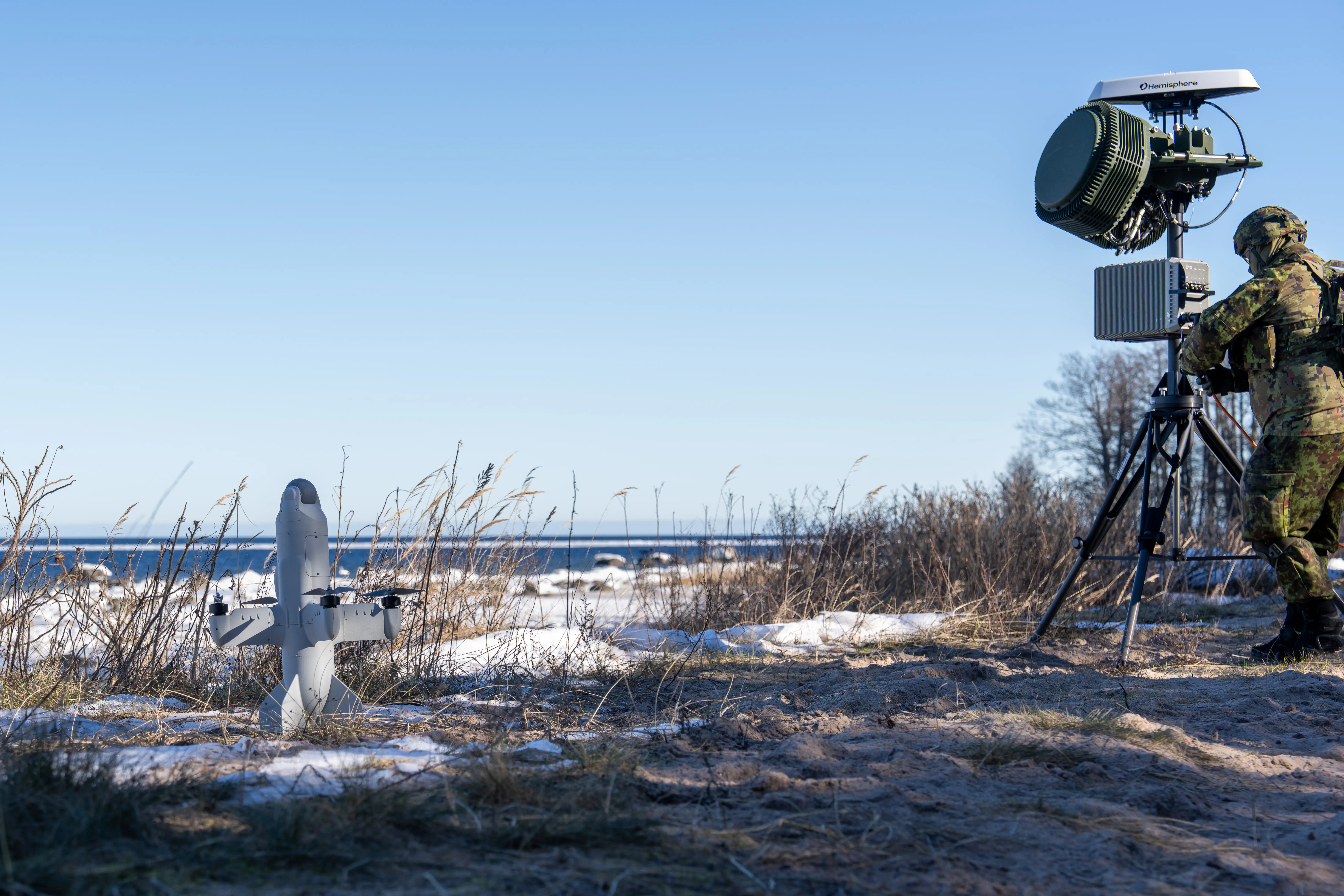
Adding more sensors layers the defenses, but it also increases the volume of incoming data. Maule said the goal of the shared command-and-control system is to merge those inputs into one clear picture, reducing the cognitive burden on operators.
An advantage of the design is that the system can be operated farther from the front, out of range of many types of drones, and that it feeds data to multiple partners for heightened awareness.
The rapid pace of the Digital Shield testing reflects the Pentagon’s Silicon Valley-style “move fast, fail fast, fix fast” approach for developing new technology. It also pressures industry partners to keep up. Vendors must meet strict integration requirements, and the swift development cycle forces faster fixes and upgrades based on field feedback.
Digital Shield is an example of the work being done as part of the new Eastern Flank Deterrence Line initiative, which is led by the US and NATO. The effort is intended to build a robust defense against Russia that can detect drones across wide areas and counter them with lower-cost solutions.
Artificial intelligence is also being integrated into the initiative to analyze sensor data faster and speed up decisions on how to respond.
One persistent problem remains the cost of stopping cheap drones.
“We have to beat the cost curve,” Maule said. “If the UAS is a couple or tens of thousands of dollars, you can’t be using extremely expensive interceptors.” The US and its allies have learned that lesson from Ukraine and in the Middle East.
Read the original article on Business Insider
The post NATO allies are linking their defenses together to better hunt and kill drones on its eastern edge appeared first on Business Insider.