Cuba is arguably facing its most precarious moment since the Communist revolution.
The Trump administration has imposed a blockade on foreign oil, plunging Cuba into a humanitarian emergency and threatening the government’s survival.
The two countries are now in discussions to try to resolve their standoff.
In the nearly seven decades since rebels led by Fidel Castro descended from their mountain camp to seize power, Cuba’s fortunes have been repeatedly rewritten, both from within and by forces far beyond its shores.
The triumph of the 1959 revolution gave way to Cold War tensions and the Cuban Missile Crisis, when the island — wedged between U.S. and Soviet superpower ambitions — stood at the center of a showdown that brought the world to the brink of nuclear war.
In the years that followed, Mr. Castro built a Soviet-aligned Communist state. Literacy and health care expanded, even as political repression deepened and economic opportunities shrank under decades of a U.S. trade embargo, sanctions and systemic mismanagement by the Cuban government.
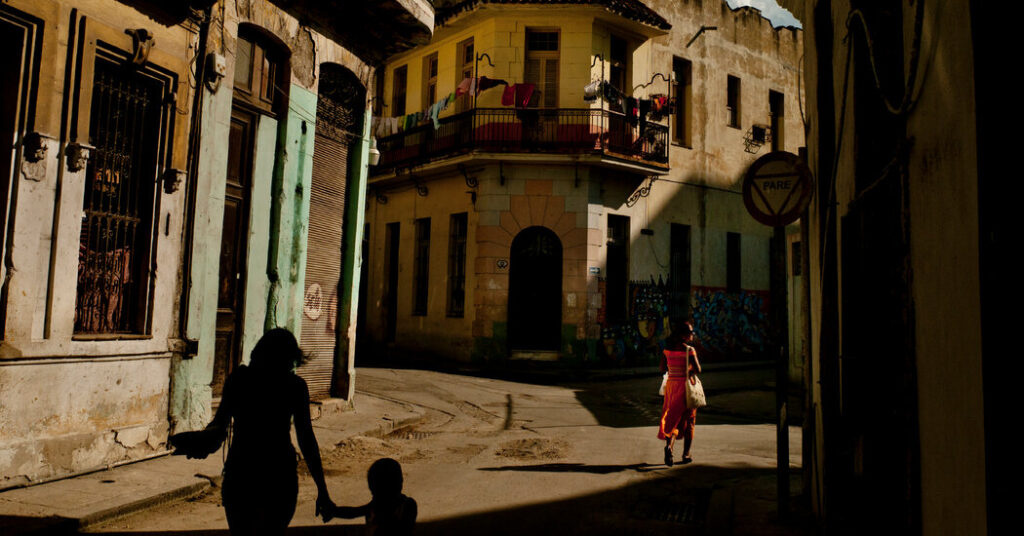
Much of the country was left frozen in a midcentury patina, visible in the crumbling buildings of Old Havana and the aging American cars still clattering through its streets.
Mr. Castro’s death in 2016 closed one chapter but did little to change the island’s economic trajectory. Some researchers estimate that roughly 2.75 million Cubans have left the island since 2020, the majority heading to the United States.
These photographs were made across a long span of decades — a visual record of a small nation that has played an outsize role in world affairs, surviving crisis after crisis and now navigating yet another.
Emiliano Rodríguez Mega is a reporter and researcher for The Times based in Mexico City, covering Mexico, Central America and the Caribbean.
The post Cuba in Photos, Then and Now appeared first on New York Times.