Elliott Abrams, a senior fellow at the Council on Foreign Relations, was the special representative to Venezuela during the first Trump administration.
Ten weeks after the capture of Venezuelan strongman Nicolás Maduro, the Trump administration is moving forward with its plans to rebuild that country’s economy and link it to our own. Almost invisible so far is any progress toward a democratic transition.
President Donald Trump has dispatched to Caracas Energy Secretary Chris Wright to talk oil, Interior Secretary Doug Burgum to talk minerals and U.S. Southern Command’s Gen. Francis L. Donovan for reasons that are less clear. More Venezuelan oil is landing at Gulf ports, under new Treasury Department licenses and new contracts with the state-owned Petróleos de Venezuela.
With the Strait of Hormuz in effect closed, additional oil on the world market would be salutary. But increased production from Venezuela will take time. Chevron estimates that increasing its current 250,000 barrels a day to 375,000 may take two years. There’s no bonanza around the corner. Still, revenue from increased production and from oil sales without discounts, an end to U.S. sanctions and the beginnings of new investment will help the Venezuelan economy. There’s also money to be made by U.S. investors, including some who lobbied the administration to allow them to do business there.
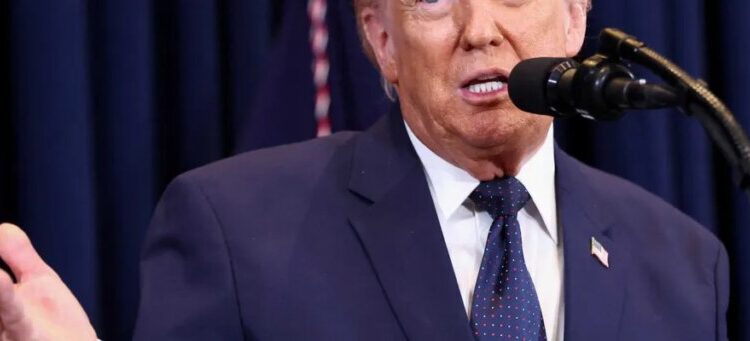
But what about the promise of a political transition? Trump doesn’t seem much interested. In January he called Delcy Rodríguez “a terrific person.” This week he added that she’s “very respected” and doing a “great job” as the “president” of Venezuela. According to whom?
Rodríguez, Maduro’s vice president, cannot legitimately be president any more than Maduro could. He stole the 2024 election, and her status derives solely from his. The “great job” she is doing involves hardly any political opening. Venezuela’s Foro Penal human-rights group says more than 500 political prisoners remain jailed more than two months after Maduro’s fall, when the number should by now be zero. At least one poll shows that far from being “very respected,” Rodríguez would lose a free election to Nobel Peace Prize winner María Corina Machado, 67 percent to 25 percent.
The Trump administration has nevertheless reopened diplomatic relations with the regime, which were broken in 2019. The State Department’s March 5 announcement gave some hope on political goals: “The United States and Venezuela’s interim authorities have agreed to re-establish diplomatic and consular relations.” That development, it added, “will facilitate our joint efforts to promote stability, support economic recovery, and advance political reconciliation in Venezuela. Our engagement is focused on helping the Venezuelan people move forward through a phased process that creates the conditions for a peaceful transition to a democratically elected government.”
Referring to the regime’s “interim authorities” is a good sign. So are the terms “political reconciliation” and “democratically elected government.” But if there have been any moves toward these goals in the past two months, they’ve not dented the regime’s complete control of Venezuela. Meantime, diplomatic relations will lend increased legitimacy to Maduro’s heirs. Those representatives will take over the Venezuelan Embassy in Washington, allowing them to work in the capital, lobbying Congress, NGOs, business groups, the media and the administration for less pressure and more time.
What should be demanded of Caracas to make a transition possible? As of today, no exiled political leaders have been allowed to return home. When Machado — Venezuela’s most popular politician — met with Trump on March 6, the message was apparently “patience.”
A more just course would require that all political prisoners be released immediately and that the return of exiled leaders start now. Other steps: Demand that Venezuela’s democratic political parties be permitted to elect their own leaders, replacing those illegally appointed by the Maduro regime. Establish an independent national electoral commission to run elections freely and fairly. Start the planning and mechanisms that will permit the millions of Venezuelans who fled during the Maduro years to vote in the countries where they now live. Agree on a plan for transitional justice that will make people account for their crimes during the last two decades but give whatever degree of amnesty is needed.
These measures must be the product of serious negotiations between the regime and Venezuela’s democratic political parties — exactly what’s happened in almost every Latin American transition from dictatorship to democracy in the last half century. If Rodríguez and company refuse, the Treasury ought to withhold revenue from oil sales. Until there is a national accord, steps the regime is now taking — its new hydrocarbon measure and amnesty law, evidently aimed at protecting regime officials — are illegitimate and transitory. They lay no basis for the “political reconciliation” Washington claims to want or for the long-term investments that require legal certainty. All such matters must be on the negotiating table.
The Trump administration’s removal of Maduro opened the door for Venezuela to return to democracy. But the White House doesn’t seem anxious to push the country through it. The democratic parties in Venezuela are ready. The regime is resisting. It’s time to tell Rodríguez that the game is over, to get talks started, and to insist that a political transition begin now.
The post The game is up in Venezuela appeared first on Washington Post.