Photographs by Landon Speers
As we drove through southwest Memphis, KeShaun Pearson told me to keep my window down—our destination was best tasted, not viewed. Along the way, we passed an abandoned coal plant to our right, then an active power plant to our left, equipped with enormous natural-gas turbines. Pearson, who directs the nonprofit Memphis Community Against Pollution, was bringing me to his hometown’s latest industrial megaproject.
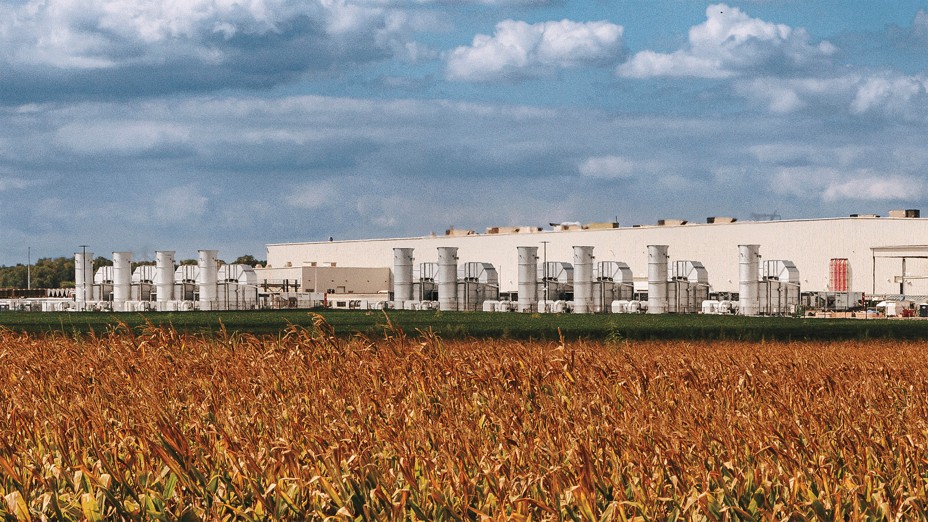
Already, the air smelled of soot, gasoline, and asphalt. Then I felt a tickle sliding up my nostrils and down into my throat, like I was getting a cold. As we approached, I heard the rumble of cranes and trucks, and then from behind a patch of trees emerged a forest of electrical towers. Finally, I saw it—a white-walled hangar, bigger than a dozen football fields, where Elon Musk intends to build a god.
This is Colossus: a data center that Musk’s artificial-intelligence company, xAI, is using as a training ground for Grok, one of the world’s most advanced generative-AI models. Training these models takes a staggering amount of energy; if run at full strength for a year, Colossus would use as much electricity as 200,000 American homes. When fully operational, Musk has written on X, this facility and two other xAI data centers nearby will require nearly two gigawatts of power. Annually, those facilities could consume roughly twice as much electricity as the city of Seattle.
To get Colossus up and running fast, xAI built its own power plant, setting up as many as 35 natural-gas turbines—railcar-size engines that can be major sources of smog—according to imagery obtained by the Southern Environmental Law Center. Pearson coughed as we drove by the facility. The scratch in my throat worsened, and I rolled up my window.
xAI’s rivals are all building similarly large data centers to develop their most powerful generative-AI models; a metropolis’s worth of electricity will surge through facilities that occupy a few city blocks. These companies have primarily made their chatbots “smarter” not by writing niftier code but by making them bigger: ramming more data through more powerful computer chips that use more electricity. OpenAI has announced plans for facilities requiring more than 30 gigawatts of power in total—more than the largest recorded demand for all of New England. Since ChatGPT’s launch, in November 2022, the capital expenditures of Amazon, Microsoft, Meta, and Google have exceeded $600 billion, and much of that spending has gone toward data centers—more, even after adjusting for inflation, than the government spent to build the entire interstate-highway system. “These are the largest single points of consumption of electricity in history,” Jesse Jenkins, a climate modeler at Princeton, told me.
Even conservative analyses forecast that the tech industry will drop the equivalent of roughly 40 Seattles onto America’s grid within a decade; aggressive scenarios predict more than 60 in half that time. According to Siddharth Singh, an energy-investment analyst at the International Energy Agency, by 2030, U.S. data centers will consume more electricity than all of the country’s heavy industries—more than the cement, steel, chemical, car, and other industrial facilities put together. Roughly half of that demand will come from data centers equipped for the particular needs of generative AI—programs, such as ChatGPT, that can produce text and images, solve complex math problems, and perhaps one day inform scientific discoveries.
To power AI, energy and tech companies are turning to fossil fuels, which they regard as more reliable and readily available than wind, solar, or nuclear. Asked where the energy for data centers should come from, OpenAI CEO Sam Altman has repeatedly said, “Short-term: natural gas.” (OpenAI and The Atlantic have a corporate partnership.) A Louisiana utility plans to build three natural-gas plants for a Meta data center that, upon completion, will be among the largest in this hemisphere. The lifespans of coal plants, too, are being extended to power new data centers. And the IEA estimates that data-center emissions could more than double by 2030—becoming one of the fastest-growing sources of greenhouse gases in the world.
The optimist’s case is that, by then, advanced nuclear reactors will have obviated many of the new fossil-fuel plants, and AI tools will have invented technologies that can solve the climate crisis. That may well happen. But today, “the market has converged on Add gas now, and then add nuclear later,” Jenkins said. In other words, if natural-gas turbines seem to offer the most expedient path to an AI-enhanced future, then clean air may have to wait.
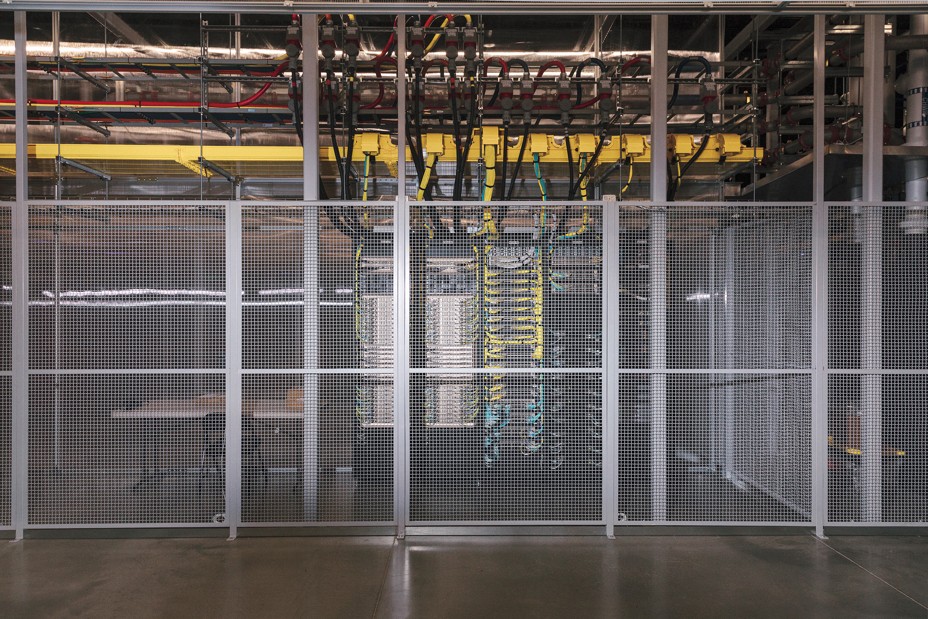
A data center is a planet of contradictions: heat without motion, shelter without bodies, light without sky. “The lifeblood of the internet is essentially flowing through these sites,” Jon Lin, the chief business officer at Equinix, one of the world’s largest data-center companies, told me in an Equinix facility in Loudoun County, Virginia. Behind Lin, someone in a green hoodie fiddled with computer chips shelved in a row of humming, refrigerator-size cabinets on the data-center floor. There were no windows, to keep the facility secure and to guard against the sun’s heat. As we walked along a corridor of cabinets, motion-activated lights illuminated the way. Farther ahead, only faint blue lights and blinking computer equipment pierced the darkness.
Ever since the first data centers were built, in the mid-20th century, their purpose has remained constant: pack computer equipment close together to store and send information as efficiently as possible. But their scale has grown dramatically. The original data centers were simply large rooms housing mainframe computers. With the rise of the internet, in the 1990s, backroom computers gave way to entire buildings, such as the one Lin and I stood in—facilities that enable us to stream movies, trade stocks, store medical records, manage supply chains, and make military decisions. Now the AI race is requiring vastly greater computing power, which has led to even bigger data centers, ones filled with computer chips that are much hungrier and run much hotter.
[Read: The lifeblood of the AI boom]
In a traditional data center, the cabinets are cooled by industrial fans—as we walked through the Equinix facility, I felt a constant breeze on my cheek—and rooftop cooling towers eventually expel the heat. The cabinets in a generative-AI data center use dozens of times more electricity. Lin showed me a row of AI-specialized cabinets used by Block, the firm that owns Square and Cash App, which radiated enough heat to make me break a sweat; to cool them, water runs into special metal plates that sit atop the chips inside the cabinets. AI data centers are filled with similar equipment, and cooling thousands of cabinets can require a lot of water. Public records from the Memphis water utility, for instance, show that the address for Colossus used more than 11 million gallons in September alone, as much as 150 homes use in an entire year. When a data center’s cooling equipment malfunctions, spiraling heat combined with humid air has yielded that rarest of meteorological events: indoor rain.
Placing servers in the same or neighboring buildings allows them to exchange information seamlessly and quickly, and Loudoun County has the highest concentration of data centers in the world, with 199 already operating and another 30 or so on the way. According to one report, 13 percent of global data-center capacity is squeezed into the county’s 520 square miles. One particularly dense stretch is called “Data Center Alley.”
Northern Virginia offers a glimpse into what the AI rush may bring to the rest of the nation. Loudoun is running out of space, but new data-center hubs are popping up in Phoenix, Atlanta, and Dallas. Amazon and Meta are building AI data centers in Indiana and Louisiana, respectively, that will each require more than two gigawatts of electricity, dozens of times more than standard facilities. OpenAI has proposed that the U.S. establish “AI Economic Zones”: little Loudouns everywhere.
As I drove into Data Center Alley with Julie Bolthouse, the director of land use at the Piedmont Environmental Council, she explained how to distinguish data centers from warehouses: cooling towers on the roof, dozens of backup diesel generators to one side, no windows (or false ones, decorative glass panels backed by a wall of concrete). There didn’t seem to be any warehouses, though, and I gave up counting data centers within minutes, unable to tell where one facility ended and the next one began. Bolthouse helps run a coalition aiming to slow data-center development throughout Virginia, but in Loudoun, it is too late. So many data centers are under construction just north of Dulles International Airport that hills of freshly dug dirt loom over roads and orange dust tints the air. Should Musk successfully colonize Mars, the early stages of terraforming might look like this.
The architect of this labyrinth is Buddy Rizer, Loudoun’s longtime executive director of economic development. Rizer has courted data centers with regulatory and state tax incentives, and when we met in his office, he told me that since 2009, at least one has been under construction at any given time. Data centers are typically operated by only a few dozen staff members, but building them has produced a steady source of employment. They also provide nearly 40 percent of the county’s budget, helping to pay for police, schools, and parks for a population that has grown steadily since 2010.
Within a 1.5-mile radius of us, Rizer said, were 12 substations: small jungles of metal poles and wiring that convert high-voltage electricity into a form you’d use to charge your iPhone or, in this case, run a data center. All around us were towering utility poles strung with high-voltage transmission lines that carry raw electricity from power plants to those substations; they hang over Loudoun like a canopy, or a cobweb. Follow any one cable far enough, and you’re likely to reach a data center.
For years to come, the AI race is projected to be the main force driving roughly 2 percent annual growth in U.S. electricity demand, which has been stagnant for nearly two decades. Nationally, this is not a crisis; regionally, it may be. Dominion Energy, the major electrical utility in Virginia, predicts growth of 5.5 percent each year, with overall electricity demand doubling by 2039. Aaron Ruby, a spokesperson for Dominion, told me that the company is preparing to meet that surge, though he was frank about the challenge: “We are experiencing the largest growth in power demand since the years following World War II.” By the end of the decade, training the industry’s most powerful AI model could require as much electricity as millions of American homes.
In China, hundreds of data centers have been announced since 2023, and additional facilities are planned for beneath the ocean and in the desert. China’s biggest advantage in the AI race is not the talent of its software engineers or the quantity of its data centers, but its abundance of energy: In 2024, the nation produced nearly as much electricity as the U.S., Europe, and India combined.
President Trump has declared that the nation is in an “energy emergency,” and been vocal about the need to build more power plants for the U.S. to win the AI race. A senior executive at OpenAI told me that the U.S. needs to activate every resource at its disposal—solar panels, natural-gas turbines, nuclear reactors. And Anthropic, OpenAI’s top rival, published a report arguing that the U.S. should streamline permitting for data centers and power plants in order to keep pace with China.
But an internet-driven energy crisis has failed to materialize before: As fiber-optic cables were being laid in Loudoun in the 1990s, energy companies built more coal- and gas-fired plants. “Dig More Coal—The PCs Are Coming,” read a 1999 Forbes headline. When the demand didn’t arrive, the nation was left with a glut of gas plants and multiple bankrupt energy companies.
The generative-AI boom, too, could prove to be a bubble. The technology remains extraordinarily expensive, largely because of the cost of advanced computer chips, and no AI firm has presented a convincing business model. One path to profitability might be more efficient algorithms—which would preclude the need for the new natural-gas plants. And if AI doesn’t turn out to be as transformative a technology as experts predict, swaths of data centers could be left unused or unfinished—ruins from a future that never came to pass.
Either way, the rush to power data centers as fast as possible has already pushed the U.S. to expand its reliance on fossil fuels.
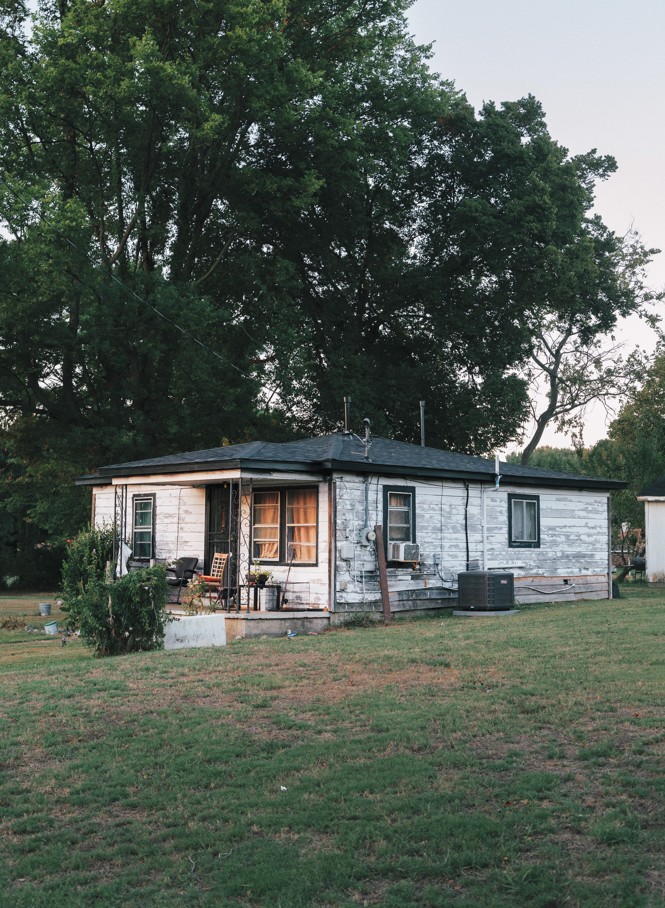
Behind her one-story brick home in southwest Memphis, Sarah Gladney grows tomatoes, and when the vines wilted early last summer, she had a suspect in mind. “When the wind comes up early in the morning, I can smell it,” Gladney told me, nodding in the direction of Colossus. One of her neighbors, Marilyn Gooch, told me the data center’s turbines have made her uncertain about whether she should let her grandchildren visit.
Their neighborhood, Boxtown, is named for the railway boxcars that formerly enslaved people used to build homes, and is still almost entirely Black. Virtually every heavy industry has set up nearby—a wastewater facility, an oil refinery, a coal-fired power plant. Colossus itself, which is next to a steel mill and a trucking and rail yard, occupies the hull of an old oven factory. Life expectancy in and around Boxtown is more than five years below the national average, and the cancer risk in southwest Memphis is four times higher. What KeShaun Pearson and I smelled may not have been Colossus itself; xAI had chosen an area so besieged by heavy industry that any exhaust from the facility’s turbines would mix in with a pervasive smog.
Colossus was built so quickly that many Boxtown residents and elected officials didn’t know what was happening until the project was well under way. Construction began in May 2024, and the project was announced the following month. Gladney, Pearson, and his younger brother Justin—who represents the district in the Tennessee General Assembly—found out about the project that day in June. By Labor Day weekend, less than three months after the press conference, Colossus was up and running.
The company installed its own gas turbines because that was faster than waiting on the local grid, and argued that it did not need a permit to do so because the turbines would operate for less than a year, a claim that the Southern Environmental Law Center, representing the NAACP, contested in a letter threatening to sue the company. (xAI has since received a permit for 15 turbines, and is reportedly operating 12.) Meanwhile, residents report that they have had respiratory issues flare up since xAI moved in.
Last June, when an analysis commissioned by the city of Memphis found “no dangerous levels” of pollutants in Boxtown and at two other test locations, the SELC criticized the study’s methods. Using satellite data, researchers at the University of Tennessee at Knoxville found that levels of nitrogen dioxide—which causes smog and is associated with asthma and other respiratory problems—near Colossus have been substantially elevated since its public announcement. (xAI says on its website that it will install technology to reduce the pollution from its turbines. The company, the Shelby County Health Department, and the Memphis mayor’s office did not respond to a list of questions about Colossus’s environmental impacts and xAI’s presence in Memphis; the Greater Memphis Chamber of Commerce declined to comment.)
Fossil fuels have become the default for data centers around the country. OpenAI’s first Stargate data center, in Texas, also has its own gas-fired power plant. Chevron and Exxon are angling to hook natural-gas facilities directly into data centers, and the world’s three major manufacturers of natural-gas turbines all advertise their products as convenient energy sources for data centers. Michael Eugenis, the director of resource planning at Arizona Public Service, the state’s largest utility, told me that because of the demand from data centers, the company is adding more fossil-fuel capacity than it otherwise would have; natural gas will help power Microsoft, Amazon, and Oracle data centers, too.
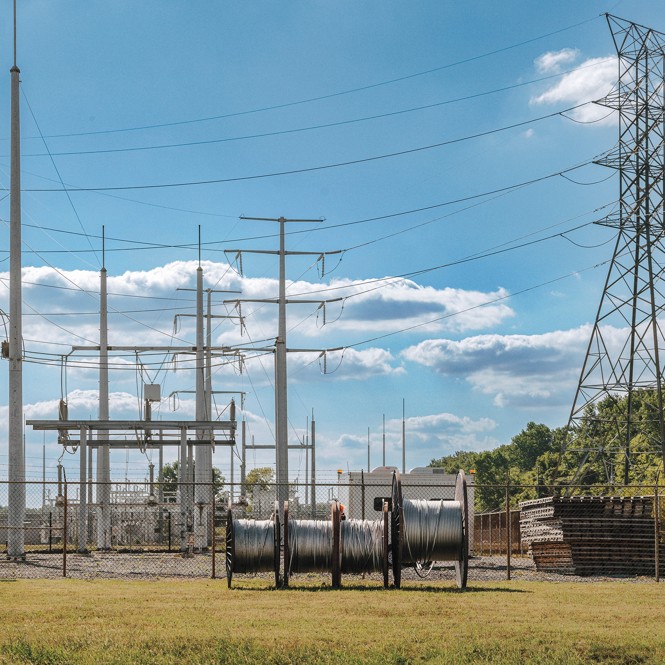
In early 2025, a company affiliated with xAI purchased a former warehouse and nearly 200 acres south of Colossus to set up another data center, Colossus II. On a weekday afternoon, the road near the site was dense with traffic—not dump trucks and forklifts, but sedans lining up outside the adjacent public school for pickup. An xAI affiliate bought a retired Duke Energy plant about a mile away in Mississippi that is likely to power this facility, and filed an application to operate 41 natural-gas turbines on the site. Those turbines could emit more carbon dioxide annually than the city of San Jose.
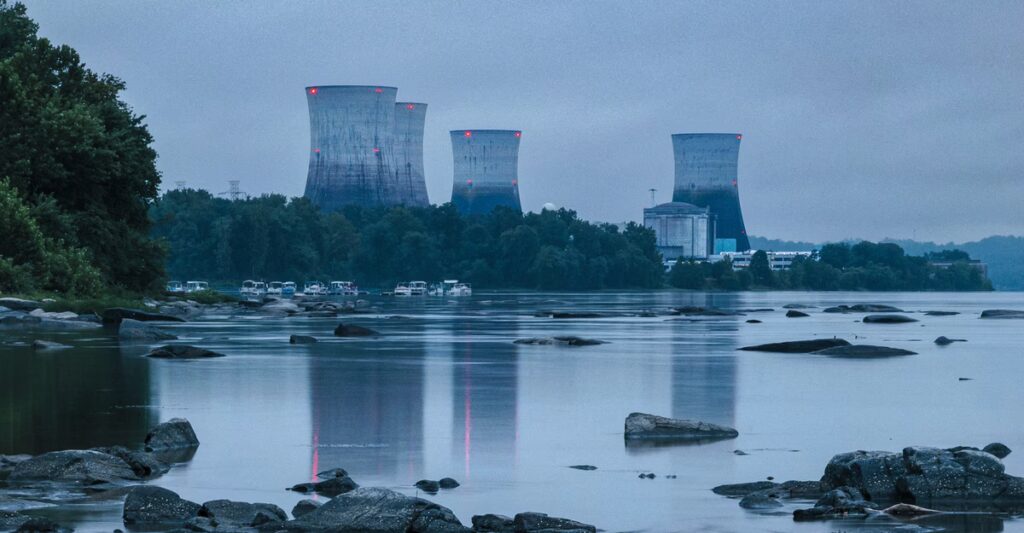
On an island in the Susquehanna River, just south of Harrisburg, Pennsylvania, I saw another way to power the AI boom. Above me loomed four beige hourglass-shaped structures, each some 365 feet tall: the cooling towers for Three Mile Island, the site of the worst nuclear disaster in American history. On March 28, 1979, the facility was only a few years old, and nuclear-energy reactors were being built across the country. But a series of mechanical and human errors caused the core of one of the reactors, Unit Two, to rapidly overheat and leak radioactive material. The effects on human health and the environment were negligible, but together with the catastrophe at Chernobyl seven years later, the partial meltdown turned public sentiment strongly against nuclear power.
Three Mile Island’s Unit One went undamaged and continued operating, after a brief pause, until 2019. By then natural gas was too cheap, the regulatory environment was too unfriendly, and the losses—hundreds of millions of dollars—were too great for Constellation Energy, which owns Unit One, to keep the plant running.
[From the March 2023 issue: Jonathan Rauch on the real obstacle to nuclear power]
Nobody has ever resuscitated a fully shut-down U.S. nuclear-power plant, but in fall 2024, Constellation announced plans to do just that. Microsoft had agreed to purchase electricity from Unit One to power its data centers over the next two decades, a guarantee allowing Constellation to spend the $1.6 billion needed to restart the plant. It was the ultimate bellwether of the AI age: Experts have long argued that we need clean nuclear power to reduce the grid’s existing carbon footprint. Instead, Three Mile Island will help offset a new source of emissions from a single company.
Constellation is now reversing the steps it took to decommission the reactor: renewing its license, restoring equipment, retraining personnel. Dave Marcheskie, a community-relations manager, explained this to me in a conference room overlooking the nuclear core, which is housed in a building that resembles a large grain silo. Behind him, a clock counted down the time to launch: 650 days, zero hours, 42 minutes, and one second.
As the need for carbon-free electricity grows more urgent, Americans are having to reckon with nuclear energy again, and the AI boom has provided the industry with wealthy backers and an army of tech cheerleaders. Meta and Amazon are buying electricity from large nuclear-power plants, and nearly every major data-center company is investing in experimental nuclear technologies—especially small modular reactors, which in theory will make fission cheaper and easier to deploy.
[Read: A new reckoning for nuclear energy]
Nuclear energy has its downsides, of course. The waste is radioactive and must be stored almost indefinitely, and the meltdown at Japan’s Fukushima plant in 2011 was a reminder of how spectacularly dangerous nuclear reactors can be. But the dangers posed by the burning of fossil fuels are far more imminent.
At Three Mile Island, Marcheskie led me down a hall and into the actual power plant. Pipes, tubes, and hulking machines lined the floor and ceiling; a trefoil sign warned that a large tank potentially contained radioactive materials. The elevator was broken, so we walked a few stories up to the stadium-size room from which all of Three Mile Island’s electricity will flow. Scaffolding and shipping containers were scattered around a row of pistachio-green semi-cylinders. Once the plant restarts, uranium atoms ripped apart in the adjacent core will generate immense amounts of heat, vaporizing water into steam that will spin blades inside those cylinders 1,800 times a minute, which will in turn produce hundreds of megawatts of electricity.
This will be orchestrated from a nearby control room, where hundreds of lights and switches line muted-green walls. The shift manager, Bill Price, explained that one half of the main panel controls the nuclear core, while the other half controls the turbines. In the middle is the most important control of all: a red button that shuts down the reactor, and above it an identical button that serves as a backup. In the event of an emergency, Price said, you’d press both. I put a finger on each button and pushed.
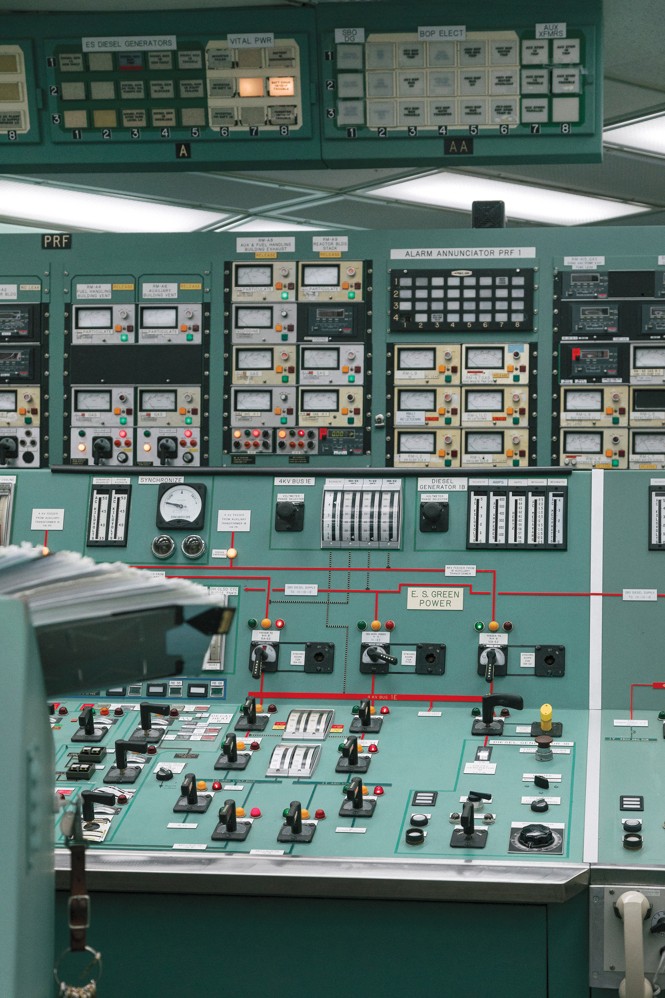
A small amount of the electricity generated here will support the plant itself. Microsoft is buying the remainder through a power-purchase agreement, a mechanism companies use to buy carbon-free electricity to match whatever their facilities draw from the grid. Power generated at Three Mile Island will help offset the energy used by data centers in Virginia and Illinois; Microsoft says it purchases enough clean energy to match all of its electricity consumption, as do Google, Amazon, and Meta. These companies are also investing in hydropower, geothermal plants, and solar panels; Google is exploring building a data center in space, to enable cloud-free access to the sun.
[Read: For now, there’s only one good way to power AI]
Still, tech firms insist that nuclear and other clean technologies cannot be deployed quickly enough to meet their needs. President Trump has signed an executive order to accelerate permitting for natural-gas and coal-fired plants to support data centers. Yet China’s energy advantage in the AI race comes from nuclear reactors and solar panels, not coal and oil; the country is building nearly two-thirds of the world’s new solar and wind capacity.
The U.S. could still catch up, thanks to private investments by the likes of Google and Microsoft. A majority of planned electricity generation in the U.S. will be carbon-free, and running data centers on renewables can be done, Jenkins, the Princeton climate modeler, told me. Meanwhile, natural-gas turbines are so far back-ordered that acquiring one in the next few years will be virtually impossible.
For now, using existing power sources more wisely, rather than building new ones, may be all the AI industry needs. Electrical grids are designed for periods of peak demand—cooling on summer afternoons, heating on winter mornings—but mostly they run well below maximum capacity. Researchers at Duke University have shown that if data centers reduced their electricity consumption during some of those peaks, it would free up enough electricity to accommodate the country’s planned data centers for years. Google and xAI have already entered agreements to do so.
That strategy would allow tech companies to continue building more data centers without waiting for utilities to expand the grid. And time, not dollars or electrons, is the AI industry’s primary currency. Google, Microsoft, and their competitors can afford to spend historic sums without near-term financial returns, but they cannot afford to slip behind one another.
Time is also the biggest problem for Microsoft’s deal with Three Mile Island, which is taking years to restart. As we left the facility, Marcheskie led me south, past the beige towers and through a fog that had settled over the river. At one point we passed a cluster of concrete barrels that had escaped my attention on the drive up. Marcheskie told me that they contained all of the nuclear waste from Unit One’s 45 years of operation. Perhaps one day such casks will also line the perimeters of Colossus and Stargate.
AI may well overhaul how humans think and work, but it’s also pushing us toward another inflection point. We can unlock the promises of this technology by doubling down on the energy systems of the past, or we can seize the opportunity to push the grid into a carbon-free future. To get there, an industry that likes to move at warp speed will have to develop a quality it severely lacks: patience.
This article appears in the April 2026 print edition with the headline “Insatiable.”
The post Inside the Dirty, Dystopian World of AI Data Centers appeared first on The Atlantic.