In the next two decades, the owners of roughly 300 million acres of American farm and ranch land are expected to retire or die. How and to whom this land is transferred will determine the future of rural America and our food system.
Much of this land could end up being taken over by the nation’s biggest and wealthiest agricultural operations, which already dominate farming. Other land could be bought up by private investors, many of whom see the acreage as a low-risk asset in their financial portfolios or a future subdivision, strip mall or data center. These entities have purchased thousands of small and midsize farms over the last few decades and are eager to buy more.
The consolidation of agricultural land ownership is harmful for the environment, our health, rural economies and food security. And so it would be better if young people took over the acreage about to change hands and kept small and midsize farms going.
Unfortunately, that’s not happening often enough.
Many people claim that millennials and Gen Z-ers don’t want to farm, that the work is too hard and dirty and that rural lifestyles aren’t appealing. While it’s true that some young people feel this way, the bigger reasons the next generation isn’t flocking to the farm are much more complicated.
For one, young people are often told that farming isn’t a worthwhile profession. Many farm kids are encouraged by educators and even their own parents to leave small towns, where economic opportunities are limited. In America, transience and mobility are rewarded while settling in a rural community is sometimes seen as settling for something less.
Others avoid agriculture because, as children, they watched their farming parents or grandparents struggle. They saw them work multiple jobs to scrape by. They saw prices rise for equipment, feed and seed, and they saw farm incomes stagnate.
Last month, a bipartisan group of agricultural leaders sent a letter to the Senate and House agriculture committees, warning that high prices for supplies like fertilizer and machinery, cuts to federal research funding and staffing and market disruptions could contribute to the “widespread collapse” of American agriculture and rural communities.
The impending wave of land transfers mixed with current economic crises have prompted more nonprofit organizations, including the one where I work, to support aging farmers with succession planning. Others are trying to keep agricultural land in the hands of farmers rather than real estate developers. This work is important. But unless it’s coupled with broader structural reforms, rural farming communities will languish. We need to make agriculture more welcoming to the next generation.
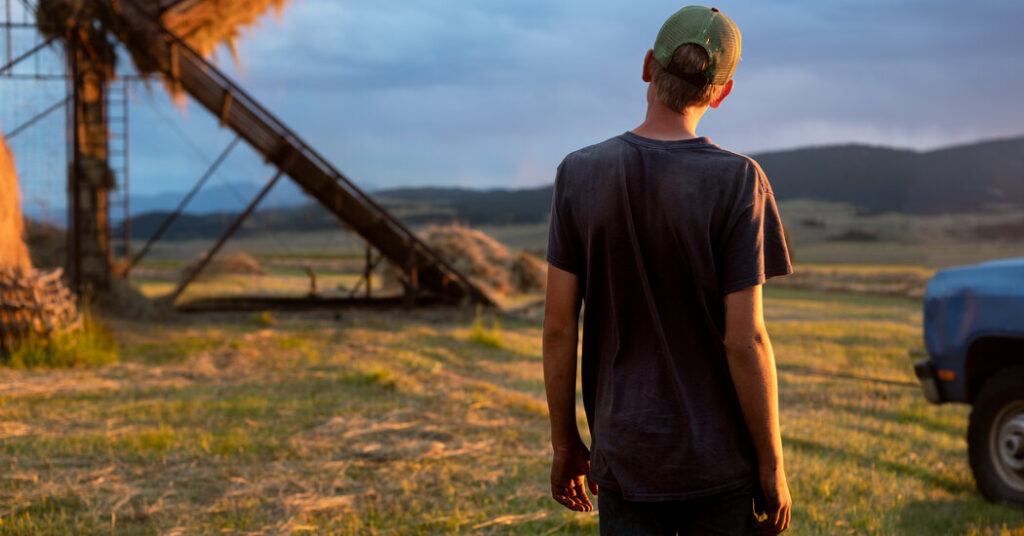
Despite the widespread perception to the contrary, there are young people who want to farm.
Some, like me, grew up on farms. We know the discomforts of agricultural life, but we also know its joys. I have rarely felt more purpose and clarity than when I’ve helped my parents on their farm haul hay, chop weeds, fix fences or carry a newborn calf to the barn on a freezing night.
Others didn’t grow up in agriculture, yet they feel called to it. Through my work, I’ve met veterans who return from service eager to nurture the soil. I’ve met foodies who understand that the best meals depend on raising the best ingredients. I know urbanites who yearn for hands-on work with the land.
The biggest barrier to entry for next-generation farmers isn’t knowledge or training or work ethic; it’s the historically high price of farmland. Young people need an agricultural economy that makes it easier for them to farm. They need viable, consistent markets for high-quality local products. And, most important, they need affordable land.
I feel this personally. Less than a mile from my parents’ Middle Tennessee farm, 32 acres are up for sale. The land has no house or barn and is listed at more than $34,000 an acre, a figure driven up by local real estate development pressure. My wife and I want a farm of our own, but at prices like these, we can’t afford the land.
Congress can do a lot to ease the land access and affordability crisis as it debates the long overdue farm bill this year. It can increase funds for conservation easements that protect farmland from development, expand low-interest government loans and create new down payment assistance programs, all to help make land easier to buy for prospective farmers. The federal government should also create an Office of Small Farms within the Department of Agriculture, especially since many young people want to, and can only afford to, farm at this scale.
State leaders could pursue their own policies, such as offering tax credits for new farmers and grants to help offset the cost of farm infrastructure and equipment, which have bipartisan support. Nonprofits can also help by providing technical assistance, connecting people who own land with young farmers looking to lease or buy it and establishing locally focused cooperative farming models, which can help with marketing and processing.
The next time you’re in a grocery store, think about the food you’re buying — and who you want to grow or raise it. When you pass through a rural community, fields and pastures all around, think about that land and who will tend it years from now.
Farming isn’t easy, but some of us want to do it. Here’s hoping we get a chance.
Brooks Lamb is the special adviser for strategic communications at the American Farmland Trust.
The Times is committed to publishing a diversity of letters to the editor. We’d like to hear what you think about this or any of our articles. Here are some tips. And here’s our email: [email protected].
Follow the New York Times Opinion section on Facebook, Instagram, TikTok, Bluesky, WhatsApp and Threads.
The post Why the Kids Won’t Farm appeared first on New York Times.