Who hasn’t had the experience of hearing some know-nothing proudly display his ignorance — whether in a bar, on a crowded plane or on Joe Rogan’s podcast?
Increasingly, thanks to the explosive growth of prediction markets such as Kalshi and Polymarket, every misinformed or malinformed blowhard has an arena to capitalize on his or her pontifications by placing bets on whether they will come true.
So do well-informed experts and, more troubling, insiders with the ability to manipulate the betting markets that are proliferating so rapidly.
Many people object to users’ ability to bet on death and destruction — such as the assassination of foreign leaders or the outbreak of war. The Biden administration was preparing regulations forbidding such wagering, but its initiative was canceled by the Trump administration.
The prediction market’s critics raise two more concrete concerns about its growth: It’s vulnerable to manipulation by anonymous insiders, and it risks exacerbating problem gambling, especially among young men who are among the targets of the companies’ promotional pitches.
Before diving deeper into these and other consequences of the explosion in event betting, a few words about how these markets work.
Put simply, they pose questions that can be reduced to simple choices of “yes” or “no”; the choices made by users are updated in real time.
Among the bets currently designated “trending” on the Kalshi website, for instance, is the identity of the next Democratic presidential nominee.
California Gov. Gavin Newsom leads the pack with 27% of bettors wagering that he’ll get the nomination; their counterparties are betting that it will be someone else. Newsom bettors put up 27 cents per dollar of their wager — $2.70 for a $10 bet; naysayers put up 74 cents. If Newsom wins the nomination, his bettors will collect the full dollar. If he doesn’t, they lose their stake.
These markets have taken the world by storm, with Kalshi and Polymarket combined accounting for more than 80% of the action. Both firms are privately controlled, but their valuations among venture investors are robust.
In December, Kalshi raised $1 billion from a clutch of venture investing firms on terms that valued it at $11 billion. More recently, both platforms have been seeking investments at valuations approaching $20 billion each.
That may not be an implausible goal. Prediction markets are estimated to be collecting some $13 billion a month in bets, and one research firm recently predicted that the sector could reach a trading volume of $1 trillion by the end of this decade.
News and sports-betting firms have lined up for a piece of the action. In December, Kalshi signed a deal with CNN giving the cable news channel access to its betting data and providing for a “Kalshi-powered real time news ticker” that will run on the CNN screen Kalshi also reached a deal to become the National Hockey League’s “official prediction market partner.”
Dow Jones, the publisher of the Wall Street Journal, made Polymarket its official prediction market partner in January, ostensibly to provide readers “real-time insight into collective beliefs about future events,” as Dow Jones Chief Executive Almar Latour stated in announcing the deal. In October, Polymarket received a $2-billion investment from Intercontinental Exchange, the parent of the New York Stock Exchange and other trading floors.
The sports betting firms DraftKings, FanDuel and Fanatics have also announced plans to add prediction markets to their offerings.
Any juggernaut like this is bound to attract a backlash. In this case, it has come from states that have legalized sports betting, such as Nevada, and are worried that the prediction markets could cannibalize their legal offerings and evade their gambling regulations. Indeed, most of the betting on the prediction sites is sports-related.
The prediction firms have found a friend in the federal government, specifically the Commodity Futures Trading Commission. During the Biden administration, the CFTC sued Polymarket for illegally offering prediction trades. Polymarket paid a $1.4-million penalty and agreed to subject itself to CFTC oversight.
Trading on Polymarket is still illegal in the U.S., but users have been accessing the platform via virtual private networks that obscure their location. Polymarket is working on acquiring a U.S. license from the CFTC. Kalshi is operating legally under CFTC regulations.
Last year, the Trump administration dropped CFTC investigations of the prediction business. The agency’s Trump-appointed chairman, Michael S. Selig, has been outspoken about fighting back against the states. “The CFTC will no longer sit idly by,” he wrote in a Wall Street Journal op-ed last month, “while overzealous state governments undermine the agency’s exclusive jurisdiction over these markets by seeking to establish statewide prohibitions on these exciting products.”
As it happens, Donald Trump Jr. has taken advisory positions with both Kalshi and Polymarket and invested in the latter.
Neither firm responded to my questions about the demographics of their customer base, the problem of insider trading, or my request for them to validate their claims of accuracy. The White House responded to my questions about whether Trump Jr.’s involvement with the firms raised ethical issues by stating that “the only special interest guiding the Trump Administration’s decision-making is the best interest of the American people.” White House spokesman Davis Ingle also told me by email that ethics rules “prohibit use of non-public government information for personal gain.”
That brings us to the prediction firms’ chief argument on their own behalf. They assert that their markets are better than traditional opinion polls at discovering what people really think — that in effect they are monetizing “the wisdom of crowds.”
Polymarket is “the most accurate thing we have as mankind right now, until someone else creates some sort of a super crystal ball,” Shayne Coplan, who founded the platform in 2020 after dropping out of New York University, told “60 minutes” in November.
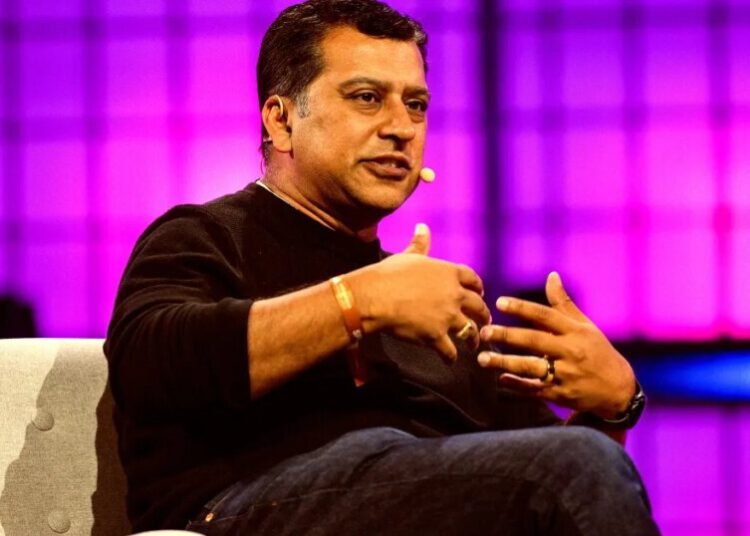
“Kalshi is replacing debate, subjectivity, and talk with markets, accuracy, and truth,” its chief executive, Tarek Mansour, who founded the platform in 2018 with a fellow MIT graduate, said at the time of its $1-billion funding round.
The wisdom-of-crowds argument presupposes that the masses possess some recondite knowledge that can be unlocked by allowing individuals to express themselves as part of an anonymous mob. Kalshi’s management dresses this argument up as “democratizing finance through innovation. … Imagine transforming your insights and predictions about the future into tangible assets. That’s the reality we’re offering.”
The idea that everyone’s opinion about anything is an asset just waiting to be exploited suggests that we’re no longer talking about the wisdom of crowds, but the wisdom of you, the individual bettor.
The markets’ record suggests that claims of accuracy are oversold. Just after the close of the voting last week in the Texas GOP Senate primary, for example, Polymarket declared Texas Atty. Gen. Ken Paxton the clear winner, based on an 83% vote on its platform. When the real votes were counted, however, Paxton was so close to incumbent Sen. John Cornyn — 42% to 41% in favor of the latter — that the two were forced into a May 26 runoff election.
It’s true that traditional opinion polls have lost some accuracy, in part because the advent of mobile phones has made it hard for them to reach respondents by phone at home. But the key question raised by the wisdom-of-crowds argument of the prediction firms is: Who is the crowd? Some of the prediction questions offered by the sites are so thinly traded that they’re vulnerable to manipulation.
One example arose during the third-quarter earnings investor call for cryptocurrency firm Coinbase on Oct. 30. CEO Brian Armstrong closed the call by reading out a series of terms — “bitcoin, ethereum, blockchain, staking and web3.” He had learned, he said, that all those terms were cited in “mention” markets on Kalshi and Polymarket — markets in which bettors can wager on whether a speaker at a given event will utter certain words. Armstrong’s remark made winners of anyone who bet that he would use those words.
Coinbase told me by email that Armstrong wasn’t trying to resolve those bets, but spoke in “a lighthearted, offhand way,” and that Coinbase prohibits “employees, including executives, from participating in prediction markets” that are related to “confidential activity involving the company.”
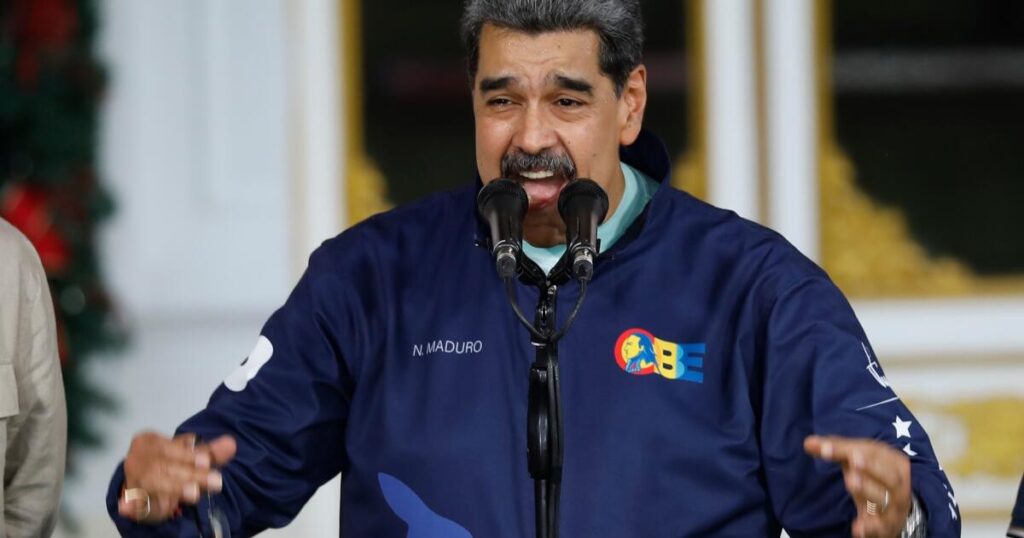
Perhaps more troubling is a series of anonymous bets related to the U.S. government’s foreign policy initiatives — such as bets on Polymarket that Venezuela President Nicolás Maduro would soon be out of office, placed in January just before the U.S. captured Maduro, netting the bettor a profit estimated at $400,000.
Another anonymous user trading on Polymarket as “Magamyman” netted a profit of more than $630,000 with a series of fortuitously timed bets forecasting the U.S. and Israeli attacks on Iran, including a $123,300 profit on a bet that Ayatollah Khamenei would be “out” as Iran’s leader by March 30. Khamenei was killed in the first wave of attacks on Feb. 28.
Kalshi, for its part, has penalized two users a total of about $6,000, including a onetime GOP candidate for California governor, for allegedly manipulating its markets. Kalshi says it opened 200 investigations of possible market manipulation over the last year. Yet it’s unclear whether insider trading in the prediction market is actually illegal, as is insider trading in the securities markets.
Put it all together, and the question remains whether the growth of the prediction market is a healthy development for sports, politics, society or the bettors themselves — especially as their betting patterns get treated as “news” with an unvalidated claim to accuracy. But you might be able to turn a profit by wagering that the prospect is dismal.
The post Betting on war? Why prediction markets like Kalshi and Polymarket are a problem appeared first on Los Angeles Times.