Lost Science is an ongoing series of accounts from scientists who have lost their jobs or funding after cuts by the Trump administration. The conversations have been edited for clarity and length. Here’s why we’re doing this.
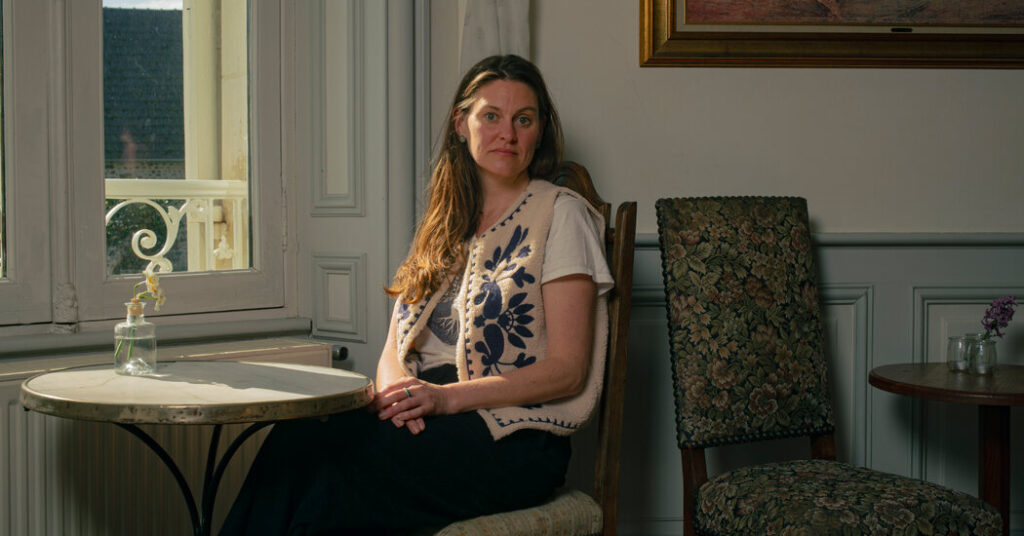
Erin McGuire: I grew up in rural Maine, where my dad was a farmer. I was also on the food stamp program, now known as SNAP, and free and reduced-price school meal programs. And that experience informed my career, where I have focused on: How do you get healthy food to marginalized populations?
The Horticulture Innovation Lab, which was funded by the U.S. Agency for International Development, was an absolute dream job. The lab was one of the only organizations focused on fruit and vegetable research, which is chronically underfunded.
We worked with farmers in West and East Africa, South Asia and Central America, making sure that their soil requirements are met, that we’re increasing production, innovating around post-harvest, which is a huge issue globally. Farmers will grow fruits and vegetables and then have no way to refrigerate or dry them before they get to market. So we would invest in small-scale, low-energy cooling and drying technology.
We also did a lot of work on the social science side. How do you increase consumption of fruits and vegetables? How do you ensure that fruits and vegetables, which are traditionally women’s crops, increase women’s livelihoods?
We funded scientists in West and East Africa, South Asia and Central America to lead those efforts. And we were in the middle of all of those experiments when we got shut down.
Last year, we got notice that our work was no longer of interest to the American government and we needed to shut down. And it was just a complete mess. First of all, this lab that I poured my heart into was being destroyed. We had to lay off our entire staff, 10 people at the University of California, Davis.
And when we lost our funding, 200 scientists lost their funding. One of our flagships was in West Africa, where three scientists were studying the biodiversity of African indigenous vegetables and tracking what varieties did well in drought conditions or high pest conditions. Documenting this biodiversity is valuable in and of itself, but also from a climate change perspective: What are the traits that will help feed people in a world that is hotter and more unpredictable?
They were also looking at the traits that were interesting to women in terms of cooking and feeding their families and working to get indigenous vegetables back into the school system.
The project included tons of field trials. And they were in the height of them when everything shut down. We never got those crops.
A pro bono lawyer helped us set up a public benefit company, Responsible Innovations, to preserve the network of scientists. It is really important to keep those connections and figure out different ways to apply for funding, different ways to highlight each other’s work. Millions of dollars were spent building these relationships that keep our food system safe.
Food systems are global. Pests travel the world. Climate change will affect us all. And biodiversity is being lost. If we don’t capture that biodiversity in a much more strategic way and work with scientists in Africa, Asia and Latin America, we won’t have a food-secure future.
Erin McGuire is the former director of the Horticulture Innovation Lab at the University of California, Davis and the director of Responsible Innovations.
Emily Anthes is a science reporter, writing primarily about animal health and science. She also covered the coronavirus pandemic.
The post Her Lab Worked to Future-Proof Fruits and Vegetables appeared first on New York Times.