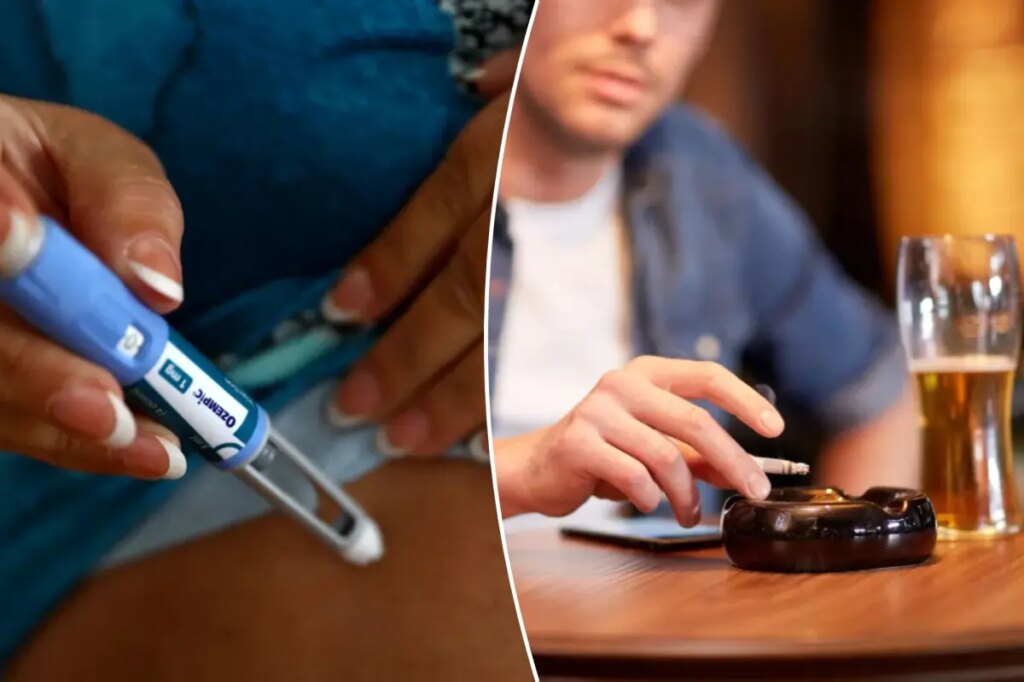
GLP-1 drugs like Ozempic have long helped people eat less — now, they’re showing promise in helping people crave less.
A new analysis of records from over 600,000 diabetic veterans found that GLP-1 use significantly cut the number of overdoses, suicide attempts, drug-related emergency room visits and subsequent hospitalizations.
“GLP-1 enters the brain and puts [a] lid on the drug noise,” explained Dr. Ziyad Al-Aly, a physician, scientist and clinical epidemiologist at Washington University in St Louis, who conducted the research.
Other studies have demonstrated that GLP-1s reduce cravings for alcohol, cigarettes, opioids and even gambling.
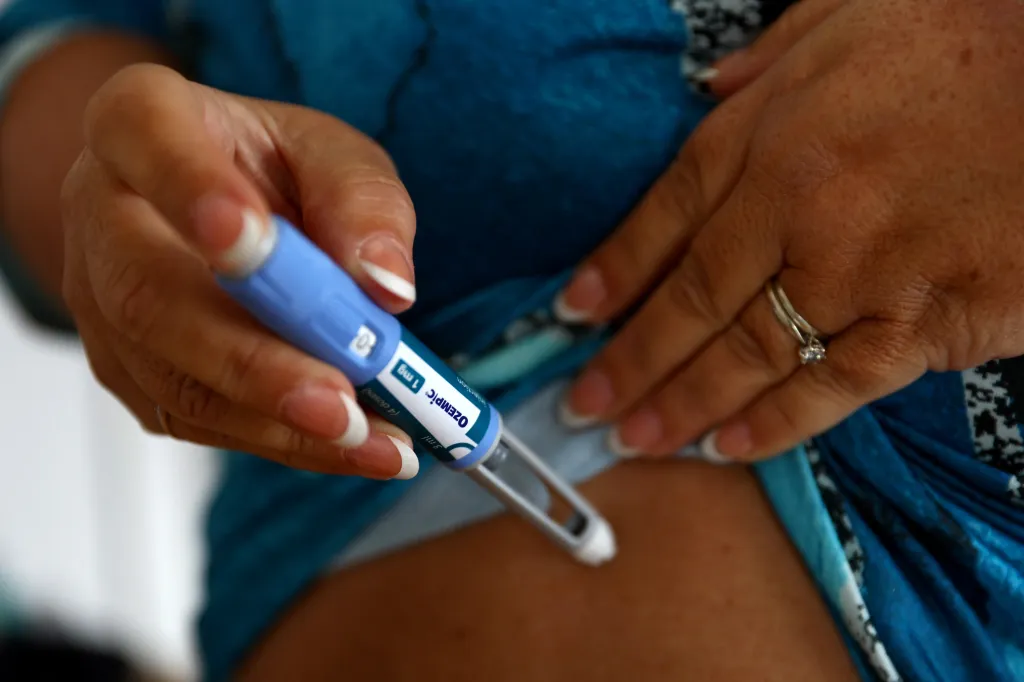
Still, these weight loss and diabetes drugs face a long, rigorous road to approval for addiction treatment by the Food and Drug Administration. FDA approval is important because it paves the way for broad market access and coverage by health insurance companies.
“GLP-1s are not currently FDA-approved for [addiction] treatment, and it’s unlikely insurance companies would cover such treatment unless approval is granted,” Rob Stransky, president of the telemedicine company NiceRx, told The Post.
Here’s everything you need to know about how GLP-1s can help people with addiction — and when insurance companies might start covering them for this purpose.
How is addiction usually treated?
Treatment plans typically involve medication combined with behavioral therapy or counseling.
“There is a nicotine patch for smoking, there is naloxone (Narcan) and naltrexone for alcohol, there is methadone for other substances,” Al-Aly said. “Every substance, it has its own treatment. Now, with this GLP-1, it seems to be working across the board.”
How does Ozempic work to curb addiction?
GLP-1s mimic the GLP-1 hormone the body naturally produces after eating. This helps to regulate blood sugar, slow stomach emptying and signal fullness to the brain.
While these drugs are meant to address diabetes or obesity, Al-Aly said it was “serendipity” that they also appear to help with addiction.
“In my own clinic, I’ll tell you, I started getting patients telling me, ‘Oh, Dr. So-and-so started me on a GLP-1 for diabetes or because I wanted to lose weight, and all of a sudden, I don’t care for smoking anymore,’” Al-Aly said.
“Two hours later, I see another patient who tells me, “Oh, Dr. So-and-so started me on this GLP-1 for weight loss, and now I don’t drink anymore.’”
When you get a shot of GLP-1, Al-Aly explained, it enters the bloodstream and binds to receptors in the central nervous system, including key spots within the mesolimbic system. That region acts as the brain’s primary reward system and drives eating for pleasure instead of hunger.
The GLP-1 dampens the dopamine-driven reward response to eating, decreasing the “food noise.”
Al-Aly said that “drug noise” — persistent and obsessive thoughts about doing drugs — also eases.
Is one type of GLP-1 better than another for easing addiction?
Though they’ve boomed in popularity in the past few years, GLP-1s have been around for decades — and some have become more sought-after than others. Semaglutide, sold under the brand names Ozempic, Wegovy and Rybelsus, tends to be used most often in addiction studies, Al-Aly said.
“Generally speaking, they’re all more or less the same with regard to addiction,” Al-Aly said of GLP-1s. “The chief among them is Ozempic.”
What would success look like?
When a Type 2 diabetic takes a GLP-1, a physician will monitor their A1C — their average blood sugar level over the prior two or three months. An obese adult on a GLP-1 will keep track of the numbers on their scale.
Al-Aly said that cravings are a bit harder to quantify, but tools that assess the strength, frequency and duration of an urge or desire can help indicate addiction severity.
One major consideration: Is the goal complete abstinence from the addictive substance?
“With GLP-1s, people may not totally abstain,” Al-Aly said, “[but] they lose the urge to overuse and overconsume.”
When might insurance companies start covering GLP-1s for addiction?
First, you need FDA approval. For FDA approval, Phase 3 clinical trials are generally necessary to confirm a drug’s safety and efficacy.
Al-Aly said that drug companies and researchers are still at the evidence-gathering stage for addiction potential.
“There are several trials ongoing. Some of them for alcohol use disorder, some of them for gambling,” Al-Aly shared.
“The science seems to be converging in that more and more studies are coming out, more and more studies are saying the same thing,” he added. “That convergence of evidence and the enormous enthusiasm behind all of this suggests to me that we’re likely to get a more definitive answer sooner than later.”
Al-Aly predicts that FDA approval for addiction treatment “will be likely” in the next five, no more than 10 years.
“Coverage would likely follow soon after FDA approval, but the timeline and extent will vary by insurer and plan,” he continued. “Depending on the cost of GLP-1 drugs at the time (costs are falling and may be much lower then), prior authorization may be required.”
Al-Aly said that 2032 is a “reasonable ballpark” for the start of insurance coverage, but “I hope we get there faster.”
“Every year of delay has a body count,” he said. “Streamlining the [FDA] evaluation and approval of these drugs should be prioritized.”
In the meantime, he warns against physicians prescribing GLP-1s off label to address addiction.
“We need more studies to help us understand what these drugs are doing and not doing and who would benefit most from them before we endorse [widespread] utilization,” Al-Aly said.
What are the concerns about GLP-1s for addiction?
When people go off a GLP-1, they tend to regain pounds — sometimes exceeding their starting weight. It’s unclear what happens when an addict goes off a GLP-1.
Al-Aly compared the lid being placed on drug noise to a pressure cooker ready to blow.
“I worry that … suddenly letting go of that pressure cooker, [the addiction] comes back in vengeance,” he added. Perhaps that means overdosing on fentanyl or drinking “like a fish.”
Since addiction is a chronic brain disease, Al-Aly suggests that addicts may need to take a “tiny, teeny” long-term GLP-1 maintenance dose that’s less than their initial dose to make sure they don’t relapse.
It wouldn’t be the first medicine used for long-term addiction treatment. Naltrexone — which blocks opioid receptors in the brain — can be taken for months or years under medical supervision.
Another issue with GLP-1s is potential side effects like nausea, vomiting, diarrhea, constipation and more rarely, pancreatitis and kidney problems. Many people abruptly stop the medicine because they can’t stand the side effects.
Would addicts on Ozempic lose weight?
Drug and alcohol addicts tend to be malnourished — what happens if they take a GLP-1 known for weight loss?
Studies show that GLP-1s may not produce the same or significant weight loss in people who are not overweight or obese. Research has found that 10% to 20% of Type 2 diabetics have a healthy body mass index, yet they qualify for GLP-1s.
“It really only works to reduce weight in people who are overweight or obese,” Al-Aly said of GLP-1s.
Besides diabetes and obesity, which other purposes have GLP-1s been approved?
The FDA OK’d Wegovy to lower the risk of cardiovascular episodes like heart attacks and strokes.
Ozempic has been approved for chronic kidney disease and Zepbound for obstructive sleep apnea.
The post Shots like Ozempic are curbing ‘drug noise’ for addicts — so when will they be covered by insurance? appeared first on New York Post.