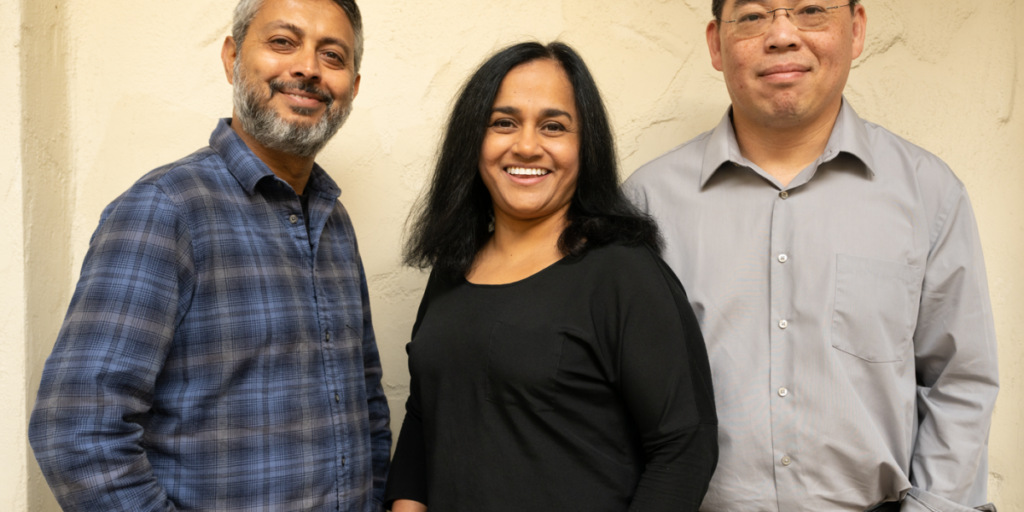
Oro Labs, a Silicon Valley startup that uses artificial intelligence to automate companies’ procurement processes, has raised $100 million in new venture capital funding.
The fundraise, which is the company’s Series C round, is being led by Goldman Sachs Growth Equity and Brighton Park Capital. Existing investors Norwest Venture Partners, B Capital, XYZ Capital, and Felicis are also participating. As part of the deal, Clare Greenan, a vice president at Goldman Sachs Growth Equity, and Mike Gregoire, partner at Brighton Park Capital, will join Oro’s board of directors. Oro declined to disclose its valuation following the new fundraise. The new capital raise brings the total amount of money the startup has raised to date to $160 million.
The five-year old startup has built what it calls a “procurement orchestration platform”—a layer of AI-powered software that sits on top of a company’s existing enterprise resource planning and procurement systems. Rather than replacing those legacy investments, Oro acts as an intelligent front door, using AI agents to route requests, check compliance, and automate manual processes.
Oro’s customers include a number of Fortune 500 companies, including Coca-Cola, Pfizer, Novartis, Thermo Fisher Scientific, and Booking.com, among others. The company says it now works with 15 of the top 25 life sciences companies, two of the top four diversified U.S. banks, and five of the top 15 food and drink manufacturers.
Oro’s fundraise comes after a year in which the five-year-old company said it achieved 300% revenue growth. The company says it expects to triple revenue again this year and that it is currently seeing a 150% “revenue retention rate,” meaning that existing customers are rapidly expanding their use of the platform.
“Demand for procurement orchestration has skyrocketed because of one fundamental truth: procurement teams simply cannot continue to operate like they always have. The market volatility, disruption and price pressures are too severe,” Sudhir Bhojwani, co-founder and CEO of Oro Labs, said. Companies, he said, “need a layer that brings order and intelligence to the chaos—and that layer is orchestration.”
Bhojwani, a software engineer who spent nine years at Ariba, a procurement software company that was acquired by SAP, told Fortune that the fundamental problem with existing procurement software is that it is “designed as systems of record, rather than systems of action.” What he means is that the software produces data in the form of purchase orders, contracts, and invoices, but is not designed, for example, to produce risk-based assessments of whether a particular invoice should be paid or presents a compliance issue. He said procurement departments consistently receive the lowest net promoter scores in internal company surveys because they are seen as overly-bureaucratic blockers that slow down the business. And most of that bureaucracy still involves manual processes, according to Bhojwani. He said one Fortune 500 energy company, which he could not name but said had roughly $40 billion in annual revenue, had a procurement process that involved 20 million human touchpoints per year before it began using Oro’s software. “We built Oro to ensure enterprises can move faster without losing control,” Lalitha Rajagopalan, a cofounder of Oro Labs who currently leads strategy and operations for the company, told Fortune.
Bhojwani said that Oro’s software helped one global pharmaceutical company with roughly $20 billion in procurement spending bring the time it takes to onboard a new supplier from more than 30 days to under 10 days, and that the company thinks it can reduce this further to less than five days. At the same company, manual compliance checks on purchase orders that previously took 36 hours now take six minutes, with 50% of transactions running completely without human intervention, he said. He said the company has compared the accuracy of Oro’s automated decisions to those made by its purchasing department employees and that the AI system’s accuracy has reached 90%. He said this inevitably meant that “the number of people who are doing this work can be reduced dramatically.”
Gregoire, the Brighton Park partner who is joining Oro’s board, said the company represents a generational shift in how procurement technology works. “Previous generations of procurement software relied on rigid, manual decision trees that easily broke down under enterprise scale and complexity,” he said. But Oro is built on AI systems that understand the language in purchase orders, invoices, and contracts and also builds on a knowledge graph, or complex map, of how a particular company’s processes work and what its purchasing and compliance rules are.
Gregoire added that Brighton Park liked the fact that Oro’s founding team has deep roots in the procurement industry, giving them an intimate understanding of where legacy systems fall short. “Their extraordinary traction with the world’s most complex, highly regulated enterprises like Novartis, Coca-Cola, and Roche proves the platform can handle the most demanding compliance environments,” he said.
Oro plans to use the new capital to accelerate its growth, building out its product capabilities but also adding to its sales and go-to-market teams. Bhojwani said that the company spends about half of its budget on research and development. The company is also expanding what it calls the Oro Partner Enterprise Network, or OPEN, which brings together technology providers, consulting firms, and service partners. Unlike many legacy software-as-a-service companies, Oro does not use a per-seat licensing model. Instead, it charges based on transaction volume—a pricing structure that Bhojwani said better reflects the value the platform delivers. “I never believed in [the per-seat] model fundamentally,” he said of seat-based pricing. “It didn’t make sense before and it definitely does not make sense now.”
He also said that he is not concerned that businesses will use AI coding tools to create their own procurement software with similar capabilities to what Oro has built. He says bringing together all the capabilities that Oro has would not be easy, and, even if a company did do that on their own, the cost of maintaining such a system would not be something most companies would want to take on.
The post Exclusive: Oro Labs, which uses AI to streamline corporate procurement, raises $100 million appeared first on Fortune.