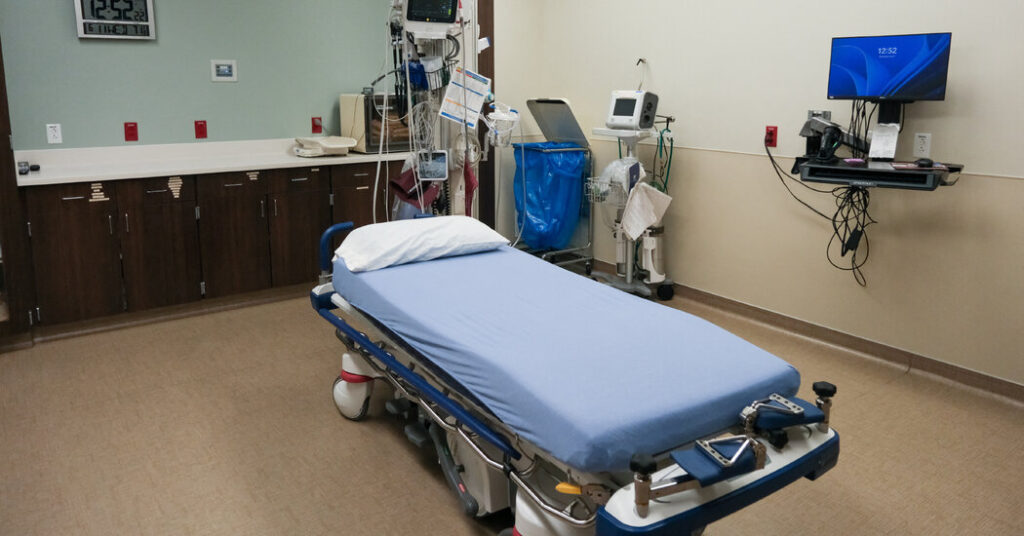
Americans are feeling the squeeze from rising health care costs, and they are already doing without. One-third of Americans — an estimated 82 million people — say they are making sacrifices, including skipping meals or driving less, to pay for care, according to a new survey released on Thursday.
In the survey, 15 percent of individuals said they had borrowed money in the last year to pay for medical expenses, while another 11 percent said they had skipped a meal. Those without insurance reported even more trade-offs.
The survey was conducted from June through August 2025 by the West Health-Gallup Center on Healthcare in America, a partnership between Gallup and West Health, a group of nonprofits focused on health care costs.
“It is impacting people every day in their decisions,” Tim Lash, president of the West Health Policy Center, said. “It is getting worse.”
In the survey, people also said they had delayed making major changes to their lives, like having a child or retiring, in the last four years because of health care costs. About 29 percent said they had postponed a vacation, while 26 percent said they had put off surgery or another medical treatment.
A poll by the same groups in late 2024 found an increasing number of Americans believed they would not be able to afford care if they needed it. At the time, the share of adults reporting that they had recently been unable to pay for a medicine and treatment was about 11 percent, the highest level in four years.
“It’s telling a consistent story here,” said Ellyn Maese, a senior researcher at Gallup and research director for the West Health-Gallup Center.
The broader issue of affordability already looms over the midterm elections, with health care costs a major part of it. The bitter debate in Congress over the fate of enhanced Obamacare subsidies helped focus attention on rising costs. When those subsidies ended last year, millions of Americans saw their insurance premiums more than double, and Democrats seized on the issue.
But it’s not just Obamacare; people with coverage from an employer are also facing much higher rates. Health insurance premiums for a family are approaching $27,000 a year, and people are paying more out of pocket when they see a doctor or stay overnight in the hospital.
A recent poll by the health policy organization KFF found that health care costs topped a list of the public’s economic anxieties, above concerns about the prices of food and groceries, gas and utilities. And the issue proved consequential in the 2018 midterm elections, when Democrats made major gains in Congress after Republicans tried to repeal the Affordable Care Act.
In the West Health-Gallup survey, some individuals reported delaying major life events because of health care costs. About 14 percent said they had postponed buying a new home, while 18 percent said they had put off changing jobs. About 6 percent said they had delayed having or adopting a child, and 9 percent said they had postponed retirement.
Even those with family incomes above $240,000 a year were postponing significant events, according to the survey. Individuals who said they were in poor health were more likely to make sacrifices.
“No one is safe from making these trade-offs,” Ms. Maese said. She added that she was startled to see people saying they were making such significant decisions about their work, their homes and how they lived their lives because they needed to pay for medical expenses.
“To see some of those things put at risk was jarring,” she said.
Reed Abelson covers the business of health care, focusing on how financial incentives are affecting the delivery of care, from the costs to consumers to the profits to providers.
The post A Third of Americans Have Cut Spending or Borrowed Money for Health Care appeared first on New York Times.