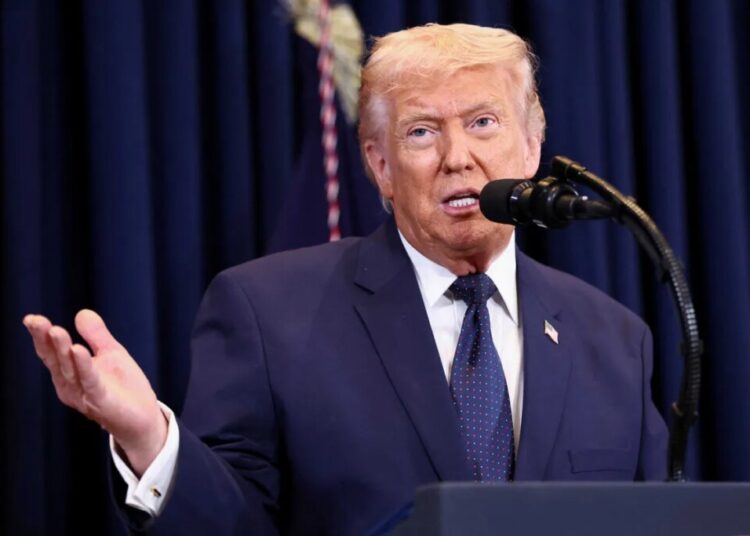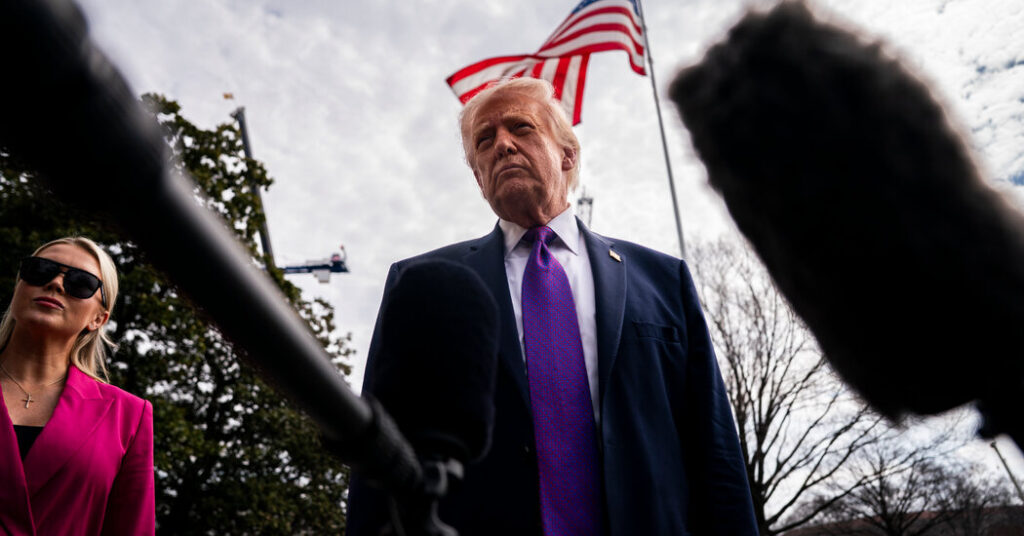
TACO — short for Trump Always Chickens Out — became a term among investors last spring. They’d noticed a pattern: the president’s habit of walking back his most dramatic policies when the stock market blowback became too intense.
He did that with tariffs, backtracking on some of his most extreme positions. He seemed on the brink of invading Greenland until suddenly he wasn’t. And this week, as oil prices soared and the S&P 500 dropped, Trump signaled he might do something similar in Iran.
But can Trump retreat on Iran as easily as he did with tariffs or Greenland? Today I write about why that might be very difficult.
Could Trump reverse course on Iran?
No one can say for sure what President Trump will do in Iran in the coming days and weeks. But we’ve seen some signs that he might be looking for a way out.
The war is “very complete, pretty much,” Trump told CBS News on Monday. Later that day he suggested the war would end “soon, very soon.”
That might be because things have gotten messier than he anticipated. The war has effectively closed down the Strait of Hormuz, a crucial shipping lane carrying roughly 20 percent of the world’s oil. Iran is targeting energy infrastructure in the Gulf, and analysts have issued alarming warnings about a pending fertilizer shortage. By Monday morning, the U.S. stock market had dropped and oil prices had surged to nearly $120.
But by Tuesday morning, anyone betting on a TACO trade seemed vindicated: After Trump hinted at an expedited end to the war, stock markets rallied and the price of crude fell.
For Trump, the economic and political costs of the war are rising. It’s also a crucial election year. Judging by his past actions, now might be the time to again bet that the president will find a way to declare victory and walk away.
But an actual war is different than tariffs, or even the threat of war. Nearly two weeks of fighting create facts on the ground that make walking away from Iran a more complicated prospect.
Regime change — for the worse?
Israeli strikes took out Ayatollah Ali Khamenei, Iran’s supreme leader, on Day 1 of the war, raising hopes inside and outside the country that a more moderate — and, from a U.S. perspective, America-friendly — regime could eventually take over. Those hopes were largely dashed this week when the one man the U.S. and Israel had openly warned they didn’t want in power was named the next supreme leader.
I spoke to my colleague Erika Solomon, our Iran bureau chief. She said the new supreme leader, Mojtaba Khamenei, a hard-line cleric and Ali Khamenei’s son, is still an unknown quantity. But, she told me, “most intelligence and military experts I spoke to think that, from an American perspective, Mojtaba Khamenei is going to be worse.”
The younger Khamenei is known to be close to the most powerful military force in Iran, the Revolutionary Guards, who saw him as their favorite candidate. His appointment has been largely read as a signal of both continuity and defiance — a sign that the regime is not seeking change. The younger Khamenei may also have personal reasons to dig in: He also lost his mother, wife and son to the U.S.-Israeli strikes that killed his father, and was injured himself.
The nuclear problem might be a bigger problem now
The U.S. strikes on Iran’s uranium enrichment facilities last year left them severely damaged. But the country still has a stockpile of enriched uranium. Its scientists still have the know-how. And should the U.S. pull out now, it’s hard to imagine the younger Khamenei would not sprint as fast as possible for a nuclear weapon.
“A war that was meant to prevent Iran from having a bomb could be the war that actually pushed Iran beyond the Rubicon to reach a bomb,” Danny Citrinowicz, a former head of the Iran branch of Israel’s military intelligence, told Erika.
U.S. officials know this. They are reportedly sufficiently worried about that uranium stockpile to have debated sending in ground troops to retrieve it. An end to the war that doesn’t somehow account for those canisters could leave the U.S. and Israel in a worse position than they started.
An unstable region, and some very angry allies
At the moment, Erika said, the Iranian government itself doesn’t seem on the verge of collapse. But the growing risks of internal strife are real. The country is deeply fractured between regime critics — still seething over a bloody crackdown that killed thousands in January — and supporters who have only become more radicalized with the war.
An unstable Iran would be a nightmare scenario for U.S. allies in the Gulf, which have been in Iran’s firing line, my colleague Vivian Nereim, our Gulf bureau chief in Riyadh, told me. These countries “do not want a massive, hulking failed state right across the water,” she said — one that could create refugee crises and insurgencies or lead to rogue militias terrorizing the Strait of Hormuz.
Saudi Arabia, the biggest country in the Gulf, never wanted the U.S. to launch this war, Vivian said. But “now that it’s happening, they want to finish it.”
What exactly “finishing it” looks like is, of course, the problem Trump is facing.
An unpopular war
The Iran war is not popular in the U.S. Most Americans oppose it and are already beginning to feel the cost of it. The spike in oil prices has sent the price of gasoline surging 17 percent.
One of Trump’s political strengths has been his ability to reverse course when his big gambles have gone awry. He may well still attempt it here. But he risks leaving a path of destruction in his wake with potentially cascading costs to himself, to America and to its allies.
MORE TOP NEWS
The world taps oil reserves as Iran blocks shipments
World leaders tried to shore up the global oil market yesterday as retaliatory attacks by Iran threatened to choke off the Strait of Hormuz. The member countries of the International Energy Agency said they would release 400 million barrels of oil from their strategic reserves — the largest drawdown ever.
At least three large cargo ships were hit in or near the strait on Wednesday, according to a British maritime monitoring group. Iran appeared to take responsibility for one of the attacks, saying in a social media post that “any vessel that intends to pass must obtain permission.”
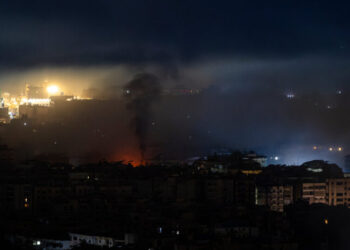
A heavy wave of airstrikes shook Beirut. Follow our live updates.
Other developments:
-
A deadly strike on an Iranian elementary school was the result of outdated targeting data used by the U.S. military, according to U.S. officials and others familiar with preliminary findings of the military’s ongoing investigation. The school building was fenced off from a nearby military base about 10 years ago.
-
Iran’s new supreme leader was wounded in attacks on the first day of the war, Iranian and Israeli officials said.
-
Iran has fired missiles with cluster-munition warheads at Israel, according to verified footage and Israeli officials — actions that could violate the laws of war.
-
Israeli airstrikes have damaged several Iranian cultural heritage sites.
-
In a little over a week, the war has jolted global security and the economy. Here’s how.
Starmer was warned about appointing Mandelson
Prime Minister Keir Starmer of Britain was told that making Peter Mandelson his ambassador to the U.S. would bring “general reputational risk” because of Mandelson’s ties to Jeffrey Epstein, the convicted sex offender, according to documents released yesterday.
Starmer, who is struggling with dismal approval ratings, is facing questions about his judgment in choosing Mandelson for the high profile diplomatic post. The documents also included a letter noting that Mandelson’s lawyers had requested a payout of about £547,201, or about $734,000, when he was fired. Mandelson was instead given a severance payment of about £75,000.
Related: Virginia Giuffre told the British police that Epstein had trafficked her to Britain and forced her to have sex with the former Prince Andrew. They chose not to investigate.
OTHER NEWS
-
Ukrainian forces struck a factory in the Russian city of Bryansk that produces components for Russian missiles.
-
A summit between Trump and Xi Jinping, China’s leader, is less than three weeks away — and Beijing is frustrated about the vague agenda.
-
For years, China has flown military jets near Taiwan almost every day. Why did they suddenly stop?
Top of The World
The most clicked link in your newsletter yesterday was about the benefits of drinking hot water.
SPORTS
World Cup: Iran will not participate in this summer’s tournament, the country’s sports minister said, despite assurances from Trump that its team would be welcome.
STUDY OF THE DAY
Falling cats
How do cats always seem to land on their feet? Researchers dropped them from midair and found a new explanation: a very flexible segment of their spines, capable of twisting an astounding 360 degrees, that allows them to correct their orientation in midair. (Don’t worry about the test subjects — they were protected by “a thick, soft cushion at the landing site.”)
MORNING READ
American theater productions big and small are now starting their stage lives in London. The costs of developing and running shows in the U.S. have skyrocketed: $20 million Broadway budgets are now common. At the same time, profits have plunged. That has led to a wave of offshoring across the pond, allowing producers and artists to refine new work and build word-of-mouth before staging higher risk productions in New York. Read more.
AROUND THE WORLD
Chasing away the winter blues … in Alaska
The Iditarod sled dog race is an extreme endurance event. Some would say winter in Alaska is, too. By the time March arrives and the race starts, people are ready to party.
In Anchorage, the state’s largest city, spectators gather with Bloody Marys, homemade Jell-O shots and cheap beer to “trailgate,” celebrating the 1,600-kilometer race. Check out the scene.
RECOMMENDATIONS
Tour: This Milan family apartment doubles as a showroom for Mario Milana’s furniture designs.
Watch: “Scarpetta” stars Nicole Kidman as chief medical examiner.
Nourish: Cabbage is a nutrient powerhouse. These are its health benefits.
RECIPE
Eru, a perennial leafy green that grows wild in Central and West Africa, is at the heart of this saucy stew. Traditional versions call for a long simmer of assorted meats, dried crayfish, eru and hot pepper. This recipe offers some substitutions but still makes for an unforgettable meal.
WHERE IS THIS?
Where is this swimming spot?
TIME TO PLAY
Here are today’s Spelling Bee, Mini Crossword, Wordle and Sudoku. Find all our games here.
You’re done for today. See you tomorrow! — Katrin
We welcome your feedback. Send us your suggestions at [email protected].
Katrin Bennhold is the host of The World, the flagship global newsletter of The New York Times.
The post Will Trump TACO on Iran? appeared first on New York Times.