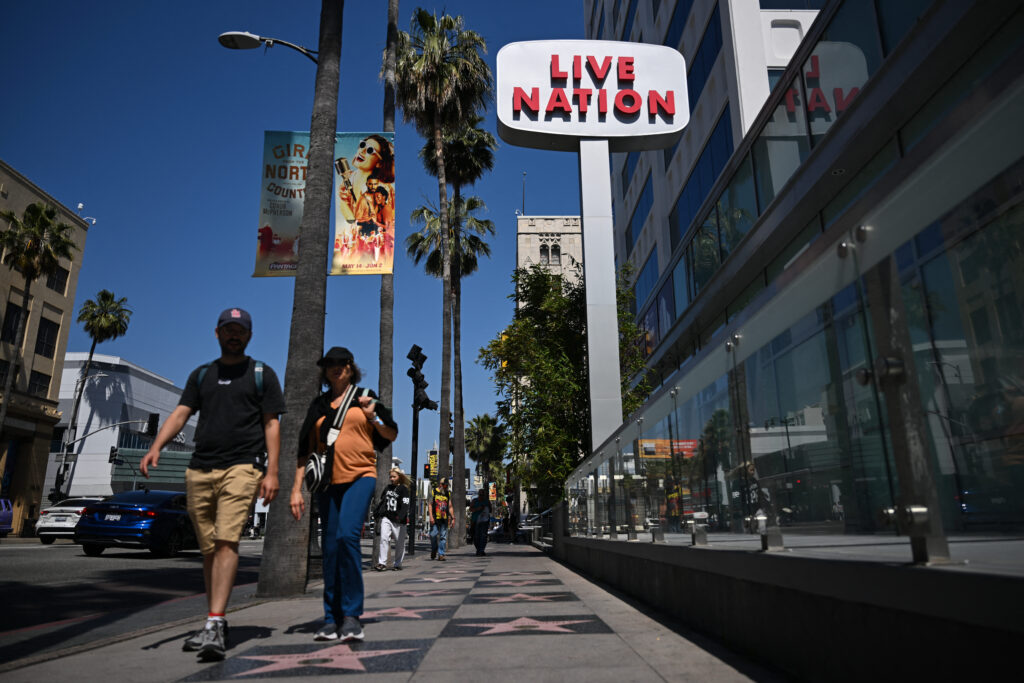
The Justice Department settled with the entertainment conglomerate Live Nation this week to end a lawsuit that should never have been brought. It’s unclear whether consumers will be any better off after this lengthy legal fight, but that’s nothing new in the world of antitrust.
Live Nation manages musical performances, owns venues and sells event tickets, largely through its subsidiary Ticketmaster. The Biden administration went after the company amid public outrage after it appeared ill-prepared for selling tickets to Taylor Swift’s Eras Tour. “It is time to break it up,” then-Attorney General Merrick Garland said in May 2024.
Ticketmaster certainly does well, selling tickets for roughly 80 percent of big concert venues in America. But raising prices isn’t necessarily monopolistic behavior. Sometimes it’s a simple matter of following the law of supply and demand. Ticket prices rise when more people want to buy from a limited pool of seats.
Secondary sellers like StubHub or SeatGeek get unfairly maligned for selling tickets at marked-up prices, but consumers are willing to pay the going market rate. It’s much more transparent than the shadier world of ticket scalping.
The Trump administration kept the lawsuit going. To avoid the risk of being broken up, Live Nation cut a deal with the government at the start of what would have been a lengthy trial.
As part of it, the company agrees to allow concert venues to use multiple companies to directly sell tickets to their events instead of demanding exclusivity. Ticketmaster will give other companies access to parts of its own backend technological systems to make it easier for venues to sell through competing providers. And Live Nation is going to let competitors share what have been exclusive arrangements with 13 amphitheaters.
Venues should be able to freely opt in to contracts with ticketing providers of their choice. But government compelling a private company to share its proprietary technology platforms with competitors will have unpredictable results. Concert-goers could end up worse off if new entrants use the tickets being sold at retail price to direct customers toward resale markets that offer seats at significantly higher price points.
Live Nation’s critics are mad that it wasn’t broken up, and no doubt the company is miffed at being arbitrarily hamstrung. The only people walking away happy now are lawyers and lobbyists.
The post Don’t expect cheaper concert tickets appeared first on Washington Post.