A trio of Democrats with presidential ambitions unveiled tax plans in recent days. All three opening bids in the 2028 ideas primary lead by disclaiming any desire to raise taxes on the middle class. Instead, they seek to narrow the tax base while expanding the welfare state. This has never happened before. Even in a country as affluent as America, it won’t work, because there simply are not enough rich people to sustain the spending they desire.
Sen. Chris Van Hollen (D-Maryland) wants to create new special tax surcharges for everyone earning over $1 million but does not want individuals making less than $46,000 to pay any income tax. His plan is on top of the 5 percent annual wealth tax for billionaires proposed by Rep. Ro Khanna (D-California) and Sen. Bernie Sanders (I-Vermont), which Van Hollen supports.
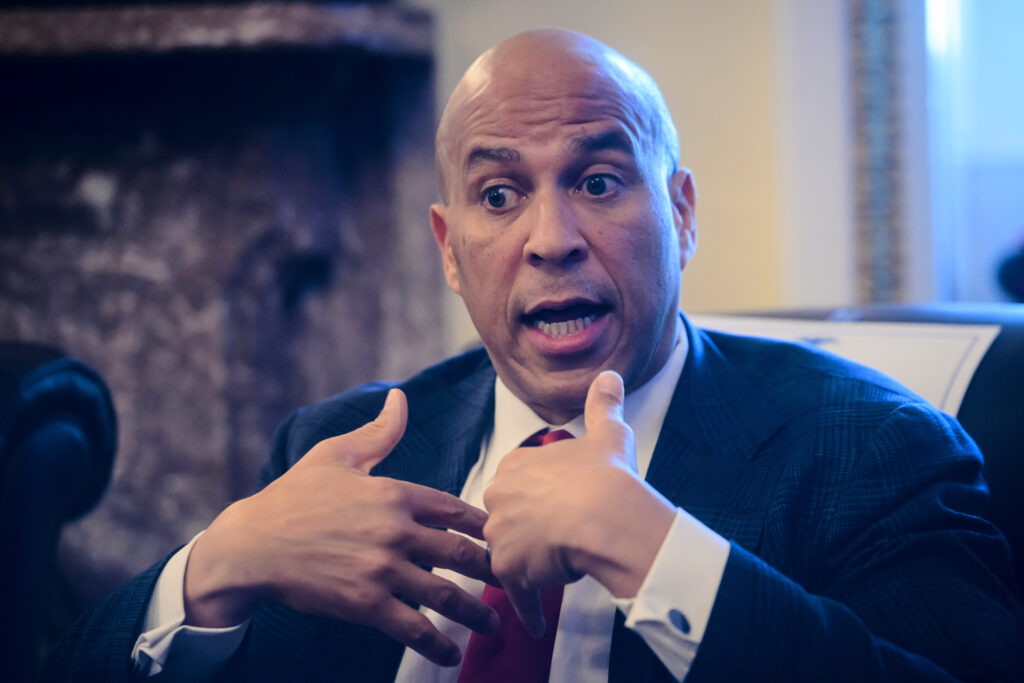
Sen. Cory Booker (D-New Jersey) countered on Monday with a plan to raise the rate for the top two tax brackets by six percentage points, as well as hike business taxes. In exchange, he would raise the standard deduction to $75,000 for married couples and $37,500 for individuals, more than double what it is today. He would also increase the child tax credit and the earned income tax credit. Booker claims all of this together would be revenue-neutral.
Raising the standard deduction isn’t a crazy idea, if it’s paired with eliminating other deductions and tax credits. It would massively simplify tax filing to set a higher floor and then charge a flat rate, or even keep a progressive structure, for all personal income above that floor.
But Van Hollen and Booker would keep and significantly expand those tax credits, which are really welfare programs administered as tax policy, on top of the welfare programs that are administered as welfare programs. This would further increase the already high degree of progressivity in the federal tax and transfer system.
Democratic politicians act as though that progressivity doesn’t exist whenever they make proposals like these. The truth is that most rich countries tax the average worker’s wages at much higher rates than the United States.
Preliminary analysis from the Tax Foundation finds that, under Van Hollen’s plan, the $50,000 to $75,000 income group flips from being a payer of federal income tax to a net recipient after refundable credits, and a good chunk of tax paid by those earning between $75,000 to $100,000 is also offset. Turning taxpaying into a profitable activity for roughly half of taxpayers while simultaneously increasing new spending on a variety of government programs is unprecedented.
The U.S. does have more rich people than other countries, but they already pay a disproportionate share of taxes. The top 1 percent of U.S. income earners make 22 percent of the income but pay 40 percent of federal income taxes. Broaden it to the top 5 percent, and they pay 61 percent of federal income taxes. Those shares are much higher now than they were in 1980.
Research from economists at the Joint Committee on Taxation, using the most realistic model of the U.S. tax code, suggests that this top-heavy system is already near the revenue-maximizing top rate. Making the system even more progressive comes at the cost of long-run economic growth, which means fewer jobs, lower wages and less innovation.
These Democrats are right to not want to burden working families with more taxes. If they really want to help, however, the most regressive way the federal government collects revenue is not the income tax. It’s Social Security.
The government’s largest spending program redistributes wealth from relatively poor working people to relatively affluent retired people. One-third of benefits go to those with annual incomes over $100,000. If Democrats want to engage in class warfare, they could call a Social Security reform bill the “Stop Giveaways to Millionaires Act.”
But of course, Democrats aren’t proposing these tax reforms to balance the budget or reduce the $38.9 trillion national debt. They want to spend any new money they raise — and more. And the authors of these three plans don’t have the courage to tell the American people the truth: If they want an even larger federal government, everyone will need to pay much higher taxes.
The post The good, bad and ugly of new Democratic tax plans appeared first on Washington Post.