Markets kept their footing on Tuesday after wild trading 24 hours earlier instigated by a nearly 26 percent swing in the price of oil.
For over a week, investors around the world have been on high alert for signs of how the war launched by the United States and Israel on Iran on Feb. 28 would affect the global economy.
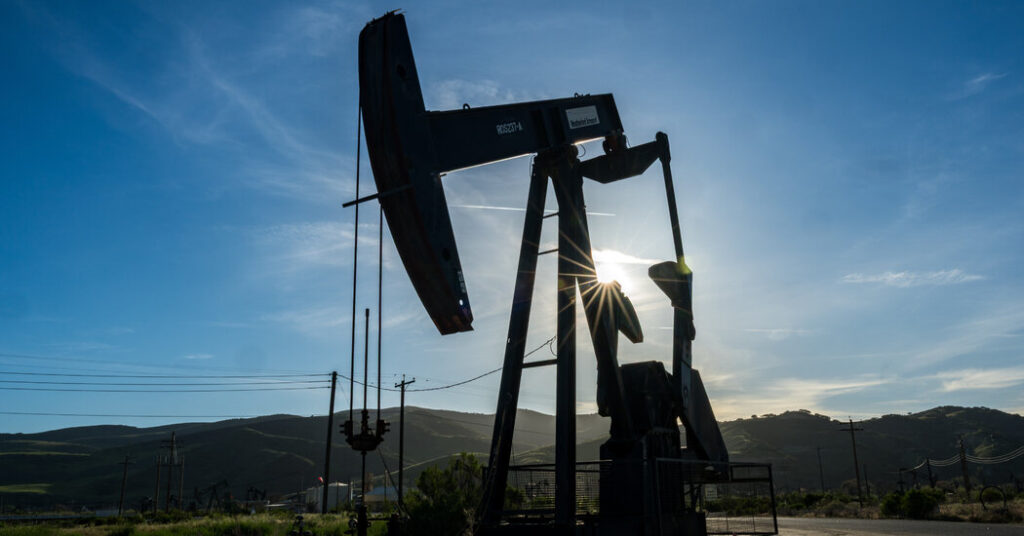
The price of Brent crude, the global benchmark for oil, spiked to nearly $120 a barrel on Monday before President Trump said in an interview with CBS News that the war on Iran was “very far ahead of schedule.” Investors’ concerns about the conflict’s long-term economic fallout were assuaged and the price of oil plunged to below $90 a barrel after his remarks were published.
And the S&P 500 stock index jumped, ending with a 0.8 percent gain when trading ended on Monday. That recouped some of last week’s 2 percent loss, which was the biggest weekly decline for the benchmark index in about five months.
Investors have become increasingly concerned about the fallout from the war as it moves into its second week, with a potential resolution to stop the fighting and fully restore oil shipments unclear, despite Mr. Trump’s remarks.
On Tuesday, the price of Brent crude around $90 a barrel. U.S. stock futures, which allow investors to bet on the direction of markets when trading resumes in the United States, were up slightly.
Stocks in Asia recover: Equity markets across Asia rose, largely taking back what they lost the day before. The biggest gainers were the Kospi index in South Korea, which went up 5 percent. Stocks in Japan and Taiwan rose about 2-3 percent. The national economies of Asia, which import most of their oil and gas, are extraordinarily exposed to the shock of suddenly rising energy costs.
Oil price remains in focus: The escalation in the Middle East has brought the transport of oil and gas through the Strait of Hormuz, a narrow passage between Iran and Oman, to a virtual standstill. Even if fighting stops soon, officials and analysts say the disruption to energy supplies could last weeks. And it’s been several years since the oil price touched these levels.
Gasoline keeps going up: Gasoline costs, which typically lag changes in the price of oil, are continuing to go up. The latest data from the AAA motor club, released on Tuesday, showed that U.S. gas rose to an average of $3.54 a gallon. That is 19 percent higher than it was before the U.S.-Israeli strikes on Iran began. But gasoline prices are not a concern only in the United States. From Asia to Europe, governments are concerned about how daily fuel costs could drive inflation higher, adding to the cost of living struggles of their citizens.
The post Oil Falls and Stocks Rise After a Day of Drastic Swings appeared first on New York Times.