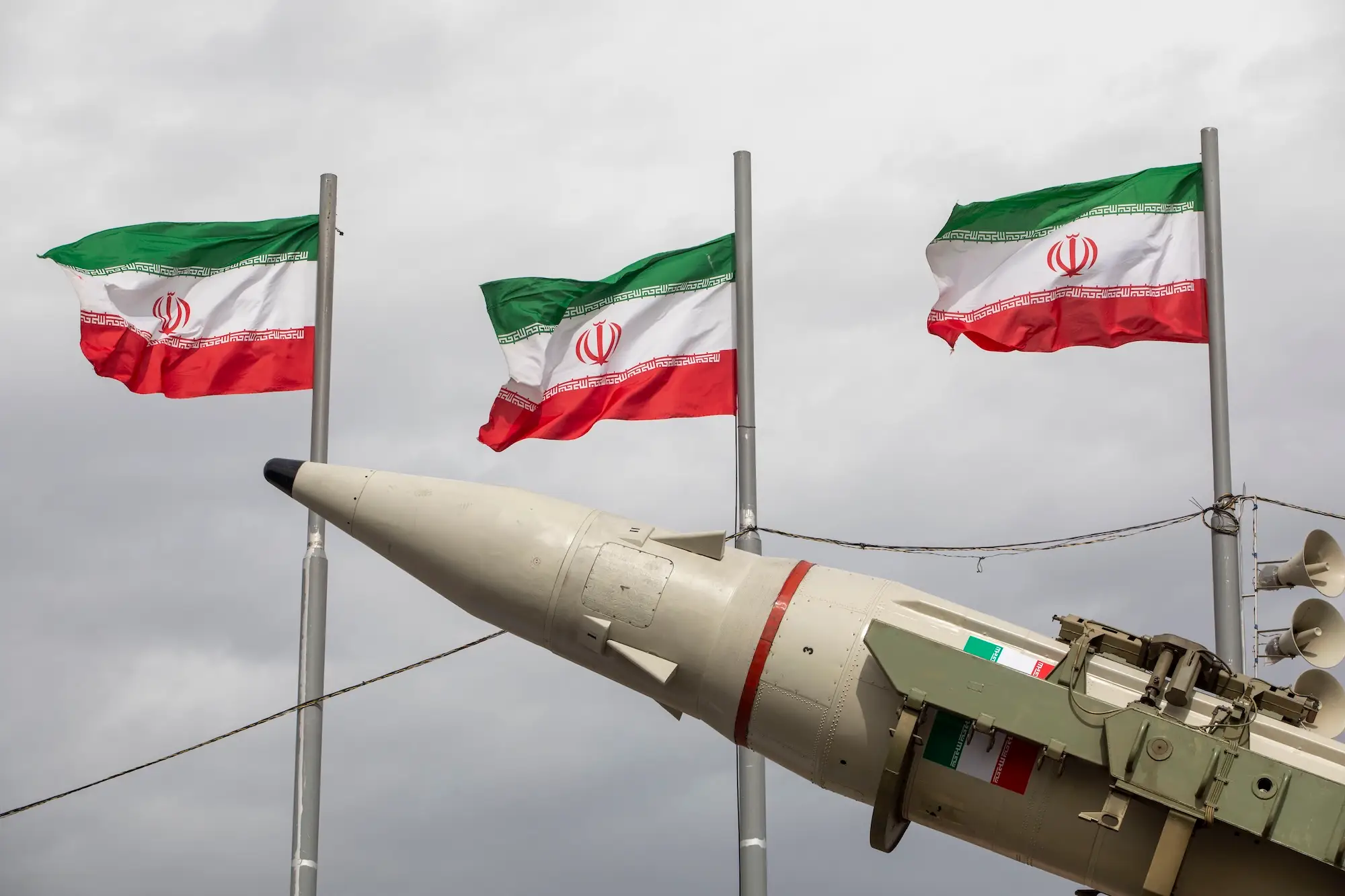
Iran has wielded its missiles and drones to strike most neighboring states in this ongoing war that’s raged for 10 days. However, their destructive scale has so far been blunted by the advanced defenses of Israel, the US and their regional Arab partners. Iran’s powerful regime armed forces, utilizing a decentralized strategy they devised decades ago, are likely in a race to preserve what’s left of their offensive weaponry.
“The biggest surprise has been that Iran has not chosen or been able to overwhelm Gulf Arab air defenses in ways that would be very impactful,” Ryan Bohl, a senior Middle East and North Africa analyst at the risk intelligence company RANE, told Business Insider.
Iran, Bohl noted, preferred to either “spread out strikes” or focus largely on the United Arab Emirates, which he noted is “handling the incoming attacks as well as the Israelis.”
A central test is whether Iran’s armed forces, which are seemingly operating with minimal centralized command and control, can preserve the drones and missiles that the US and Israel are hunting, military analysts told Business Insider.
The large-scale air campaign that began on February 28 has severely damaged Iran’s arsenal. Gen. Dan Caine, the chairman of the Joint Chiefs of Staff, pointed to a more than 80% drop in missile attacks less than a week into the war as a sign of how the strikes are strategically and systematically weakening Iran’s offensive capabilities. Furthermore, after just over a week of war, the Israeli military announced that 75% of Iran’s missile launchers are now destroyed.
So far, it’s difficult to determine whether Tehran’s weapon choices are driven by its strategy or what has survived the US-Israeli strikes. Iranian state media claimed that Tehran fired 500 ballistic missiles and cruise missiles while launching 2,000 drones as of March 5.
Iran’s short-range Fatah-110 ballistic missiles appear have been fired in significant numbers while more advanced medium-range models like the Khorramshahr-4 and Fattah-1, the latter of which Tehran claims is hypersonic, have only seen sparing use so far.
“Iran is using its missiles somewhat differently from 2025,” James Devine, an associate professor in the Department of Politics and International Relations at Mount Allison University, said. “They seem to keep firing them at a steady rate and across a large range of targets, rather than using large mass attacks targeting a single location. Rather than trying to just cause as much damage as possible, they seem to be trying to wear down the US and its allies’ supplies of interceptors.”
‘A guerrilla-like war’
The erratic attacks with small numbers of munitions could also be a sign of Iran’s strained command and control. A day after Iran’s supreme leader was killed in an enormous airstrike along with other top officials, the country’s foreign minister, Abbas Araghchi, said Iran had shifted to a “decentralized mosaic defense,” allowing Iran’s military units to act more independently.
“I don’t think Araghchi is bluffing, and there is evidence that Iran is implementing a mosaic strategy that helps it overcome its command and control issues,” Arash Azizi, a visiting fellow at Boston University and author of “The Shadow Commander: Soleimani, the US, and Iran’s Global Ambitions,” told Business Insider.
“Iran has depleted significant military resources, but it still can ration enough (and even carry out production) to go on for a while,” he said. “Its drone capabilities are especially significant and ongoing. It’s effectively fighting a guerrilla-like war.”
Iran’s tactics now are likely informed by its experience in the air campaign last June, an Israeli-led effort that the US joined to strike Iran’s heavily fortified nuclear sites with strategic B-2 Spirit stealth bombers in Operation Midnight Hammer.
“The idea is to decentralize command so that the military can continue to fight even if the political leadership is destroyed,” Devine said. “The (June 2025) 12-day war reinforced the importance of the strategy after the regime hesitated to respond after the decapitation strikes at the start of that conflict. They clearly have been better prepared this time.”
Aside from hitting Israel with its more advanced medium-range ballistic missiles, Iran has also targeted all of the Gulf Arab countries. Many of these states have advanced American-made air defense systems. Early in the war, the UAE reported that its air defenses, which include THAAD and Patriots, intercepted 94% of incoming drones and 92% of all missiles.
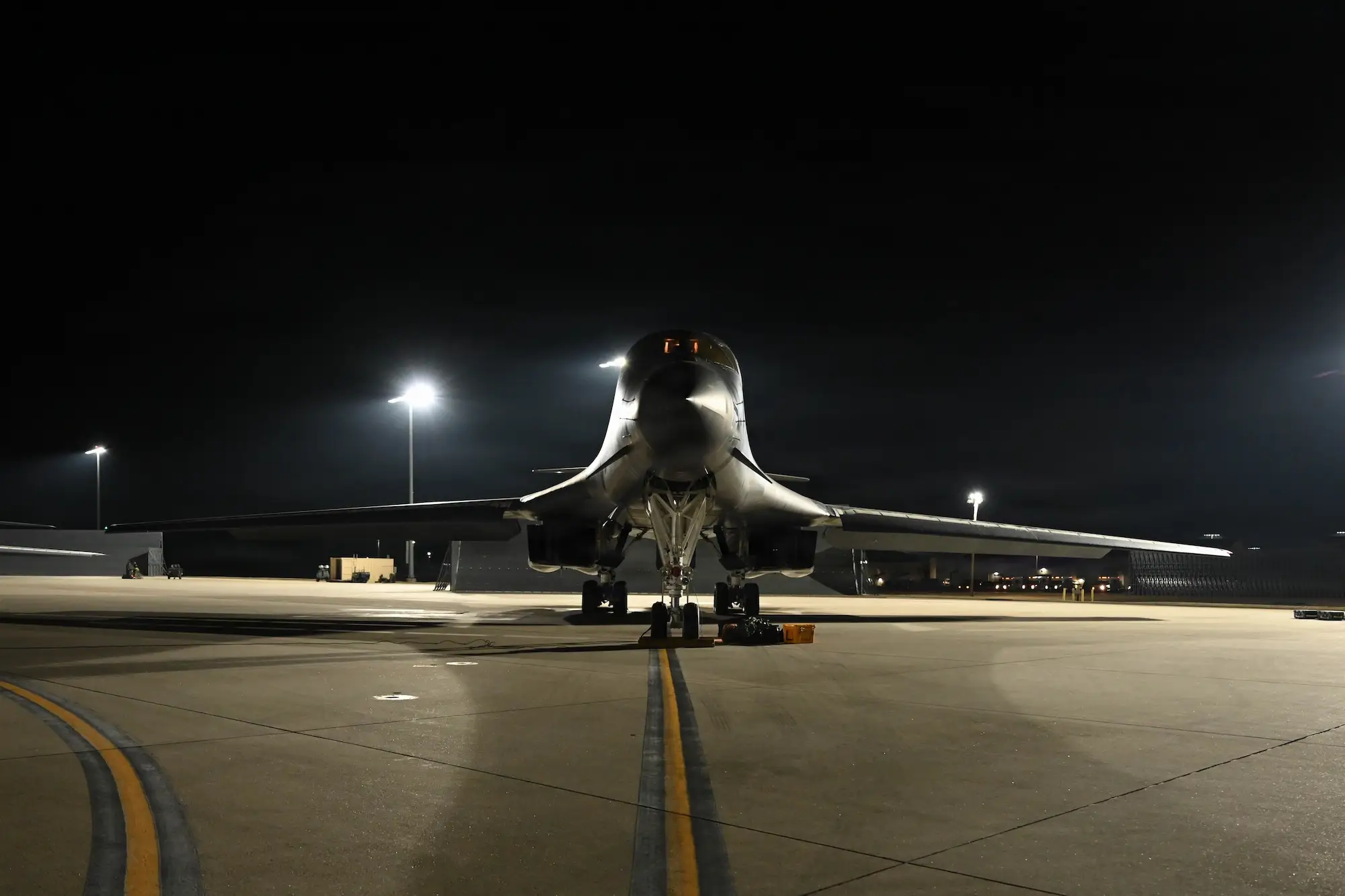
Iran has built underground lairs dubbed “missile cities” to conceal and protect its arsenal from strikes. The US has targeted these in the current war with its B-2s.
“While the underground missile cities do pose a threat, they are facing an issue of Israeli and American warplanes hovering over them as their locations are mapped, making it harder for them to necessarily fire as often,” said Bohl, the Middle East analyst at RANE. “In addition, repeated strikes on them will eventually reduce their effectiveness.”
Even if Iran retains significant numbers of missiles, multiple launchers have been hit — Israel’s military estimates three-quarters of them — reducing its ability to fire.
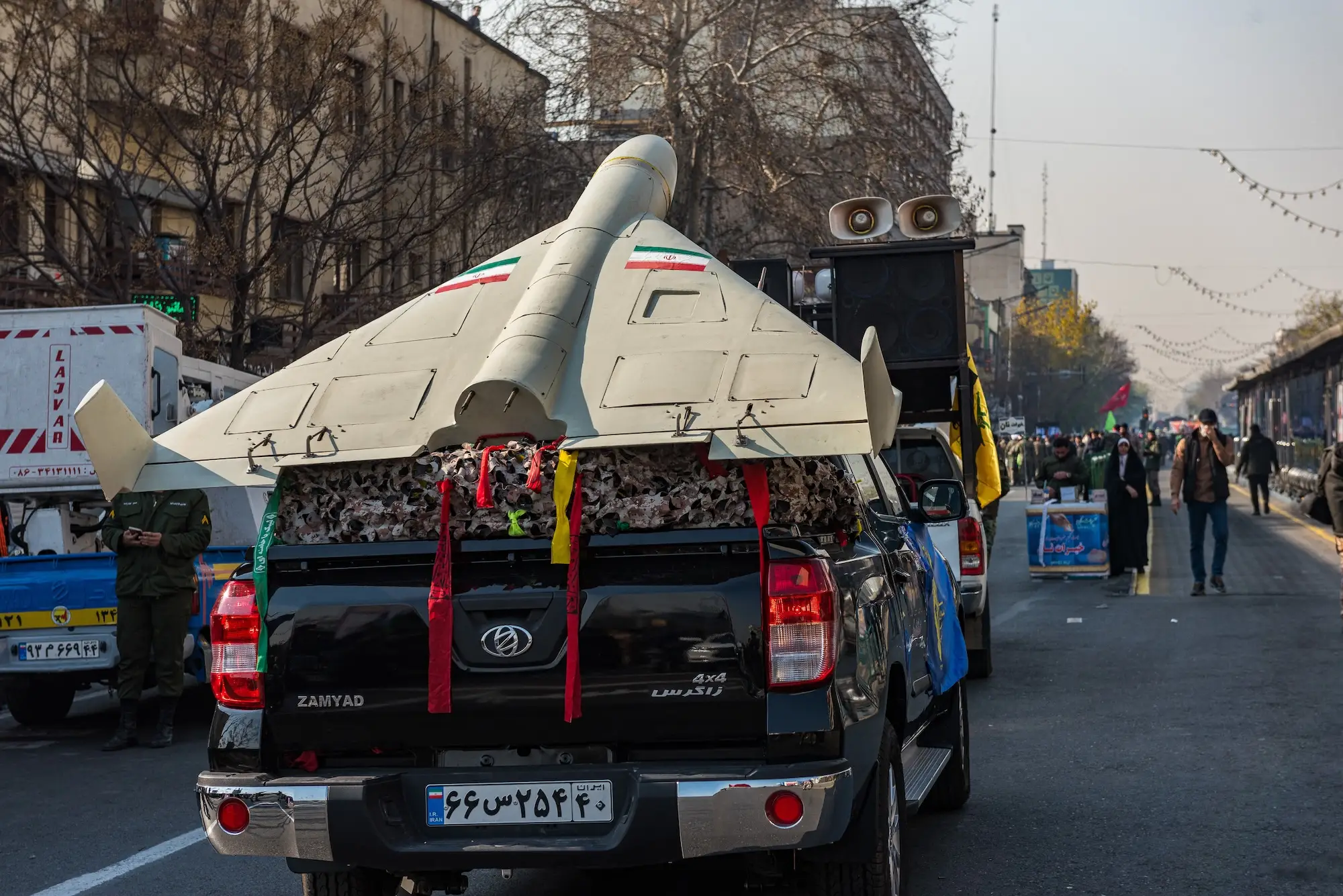
“It remains the simple Shahed drone, however, that is the latest threat to which the US, Israel, and the Gulf states don’t have a clean option to stop,” Bohl said. “As Ukraine has struggled to stop this system entirely, it seems likely so too will these advanced militaries.”
Iran has managed to directly hit the US military in places. One of its projectiles hit a tactical operations center in Kuwait on March 1, killing six US troops. And satellite images from last week reveal that Iranian munitions hit the radar of an American THAAD system in Jordan and buildings containing similar radars in the UAE. The THAAD, short for Terminal High Altitude Area Defense, is the most advanced missile defense system in the region aside from Israel’s analogous Arrow 3.
At present, Iran is enduring magnitudes more strikes against its offensive arsenal.
“It’s impossible to say what has been destroyed and what has survived,” Devine said. “This is true of the missile cities and the launchers more generally. The US is now claiming a major decrease in Iranian attacks, but it’s not clear if that’s tactical or due to a significant change in Iranian capabilities.”
Iran has also fired missiles fitted with cluster warheads at Israel in what’s likely an attempt to threaten civilians.
“The cluster munitions will not do a great deal of structural damage or penetrate proper bomb shelters. However, they are hard to stop, and they are very dangerous to soft targets and civilians,” Devine said.
“I doubt they will be a game-changer, but they will increase the political pressure on the US and Israel.”
Paul Iddon is a freelance journalist and columnist who writes about Middle East developments, military affairs, politics, and history. His articles have appeared in a variety of publications focused on the region.
Read the original article on Business Insider
The post Iran’s use of missiles has been different from what military analysts expected — here’s what that may signal appeared first on Business Insider.