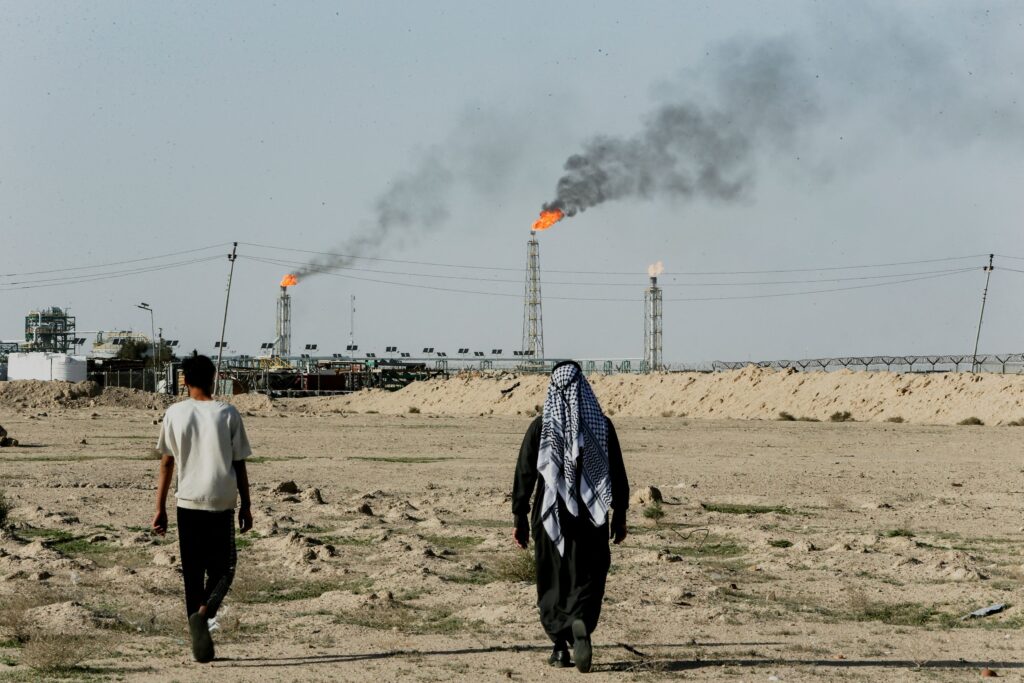
Uncertainty fueled by war in Iran sent the benchmark price of oil to nearly $120 a barrel Monday before falling to under $90 by the end of the day. While that’s nowhere near record highs, the volatility and steep increase in recent days could still do economic damage — especially if politicians pander more than they lead.
Current levels aren’t even the highest in recent memory. The inflation-adjusted price of oil was above $100 for most of 2010 to 2014 and hit an all-time high over $200 in 2008. It was over $125 in 2022 when Russia’s full-scale invasion of Ukraine began.
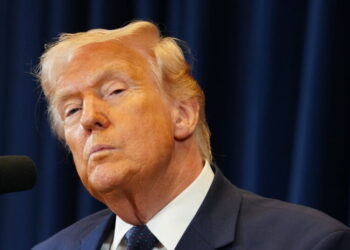
Markets calmed on the assumption that fighting will end soon, which may not happen. A sharper price spike could also make that belief self-fulfilling by spooking the market-sensitive President Donald Trump into ending hostilities.
Major countries are currently in wait-and-see mode when it comes to releasing petroleum from their stockpiles. G-7 finance ministers decided during a Monday meeting against a release, at least for now.
The first economies to feel the pain of higher prices are in Asia and Europe. Due to either lack of resources or a refusal to develop their resources, those markets remain dependent on oil exports from the Middle East.
U.S. allies in Europe seem sensitive to the threat, with France promising to send warships to help escort tankers around the Persian Gulf. The U.S. can provide 24/7 drone coverage of the Strait of Hormuz to eliminate any waterborne threats emanating from the Iranian shore. Because France is not a party to the conflict, Iran is less likely to target French ships escorting tankers than American ones.
It’s in France’s interest that the oil trade resume, and it’s in America’s interest that the price of oil not get in the way of finishing the job.
Because Asian countries are on average poorer than European ones, the effects of higher energy prices are more damaging there. That includes American adversaries, such as China, the largest purchaser of Iranian oil. It also includes American allies, such as the Philippines and South Korea, whose governments are ordering energy conservation measures and capping prices.
The temptation to centrally plan energy prices may eventually arrive on these shores. Politicians need to remember that the alternative to higher prices is gas lines, which are unpopular but inevitable when price signals aren’t allowed to tame demand.
It would also be self-defeating to reimpose the crude oil export ban that was imposed in the 1970s to try to keep prices down. Oil is a global market whether politicians want to acknowledge that or not, and the U.S. is better off fully involved in that market. That ban from the 1970s stuck around until 2015, showing how difficult it can be to remove “temporary” government restrictions.
On the other hand, repealing the Jones Act, which would allow non-U.S. tankers to transport oil between U.S. ports, would immediately have salutary effects. The decrepit Jones Act fleet makes it cost prohibitive to move products from Gulf Coast refineries to the Northeast or the West Coast. The Trump administration is reportedly considering waiving the law, and there is already legislation introduced in Congress to repeal it. That’s a great idea regardless of anything happening with Iran.
The precedent of the Persian Gulf War is instructive. The price of oil doubled between the summer and fall of 1990, then went back to normal by winter. If Trump is eyeing the midterm elections, a quick resolution to the conflict would mean oil prices are a non-issue for voters. But he can’t expect it to remain stable around $100 per barrel if the Persian Gulf isn’t open for traffic again soon.
The post The right and wrong ways to reduce oil prices appeared first on Washington Post.