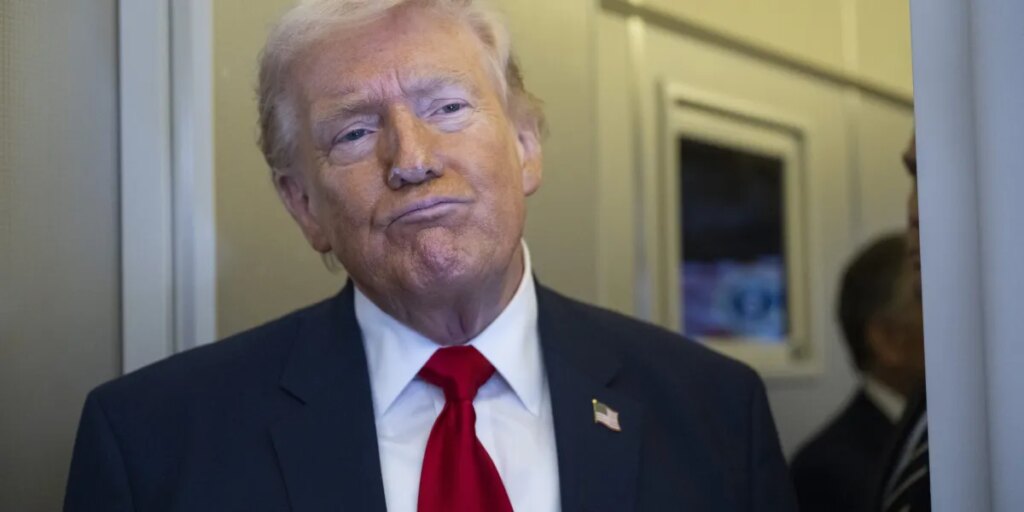
In January 2025, the newly elected President Donald Trump declared a “national energy emergency” during his inaugural address. His proposed remedy included a pledge to refill the country’s emergency petroleum reserves.
“We will bring prices down, fill our strategic reserves up again right to the top, and export American energy all over the world,” Trump said.
The president didn’t set a deadline for himself to do so—but in retrospect, an expedient one might have been useful. A little over a year after his declaration, the U.S. is heavily involved in a conflict in the Middle East that has left a hole in globally traded petroleum supply and caused U.S. gas prices to jump. And the Strategic Petroleum Reserve, a supply buffer designed to mitigate price shocks by stockpiling emergency stores of crude oil, remains nowhere near full.
The reserve currently holds 416 million barrels of crude oil, out of a maximum capacity of 714 million barrels—around 58%, according to the Department of Energy’s latest inventory report from Feb. 18. Since Trump began his second term, the reserve’s volume has only risen by around 5%.
The White House and Department of Energy did not immediately reply to Fortune’s requests for comment.
Oil shock repeat
The U.S. petroleum reserve was established in 1975 by former President Gerald Ford in the wake of another oil shock sparked by supply cuts in the Middle East. An oil embargo agreed upon by exporter nations in the early 1970s caused years of high inflation and slow growth in the U.S., and officials saw a strategic reserve as a necessity to navigate unexpected supply disruptions and price shocks.
The U.S. now appears to be reliving that pain. Now in the second week, the sweeping military campaign in Iran has largely stopped petroleum shipments from leaving the Middle East. For their tankers to reach global markets, the region’s energy exporters primarily rely on the Strait of Hormuz, a narrow waterway linking the Persian Gulf to the open ocean. On normal days, around 20% of the world’s liquid petroleum supply passes through the Strait, but Iran’s Revolutionary Guard has effectively blocked passage since the war began.
Middle Eastern oil producers—including Iraq, Kuwait, and the United Arab Emirates—started cutting production over the weekend due to the Strait’s closure. The global Brent crude benchmark shot past $100 a barrel Monday for the first time since 2022, when the Russian invasion of Ukraine sent energy markets into a frenzy, and analysts now warn prices could rise higher still.
“The sky’s the limit,” Neil Atkinson, former head of oil at the International Energy Agency, told CNBC Monday. “We are in a potentially game-changing and unprecedented energy crisis.”
Americans are already starting to feel the pain at the pump. Gas prices have risen on average 14% across the country to $3.41 per gallon, according to data from AAA.
Strategic reserve lies idle
Despite the increasingly rocky state of energy markets, the Trump administration has refrained from publicly discussing a release from the country’s reserve.
Speaking to reporters over the weekend, Trump claimed the U.S. has a “tremendous amount” of oil, and that rising gas prices would be “healed very quickly.” Administration officials have similarly framed rising oil and pump prices as a short-term problem.
“We have a temporary period of elevated energy prices, but it will not be long,” Energy Secretary Chris Wright told CBS on Sunday. Wright also claimed there was “no energy shortage” in the western hemisphere, and rising oil prices came down to “emotional reactions and fear that this is a long-term war,” adding “this is not a long-term war.”
But the reality remains America’s emergency reserves remain much lower than they would ideally be during a supply crunch. The strategic reserve was near full capacity for most of the past two decades, until former President Joe Biden authorized a nearly 50% drawdown starting in 2022, as the war in Ukraine and sanctions locked most Russian petroleum out of the global market and caused U.S. gasoline prices to skyrocket.
In total, Biden sold off nearly 300 million barrels of oil from the reserve during his term. The 2022 release left the reserve with around 350 million barrels of oil at its lowest point, the emptiest it had been since the early 1980s. Trump criticized his predecessor for his management of the reserve, claiming in 2023 the drawdown had been authorized primarily to score political points ahead of the 2022 midterm elections
If the war in Iran goes on much longer and gasoline prices remain elevated, Trump might have no choice but to follow in Biden’s footsteps. The White House is reportedly discussing the possibility of a release, according to Politico, citing an unnamed person familiar with talks as saying a release was “on the table.” The White House might also succumb to political pressure to do so as midterms loom. On Sunday, Sen. Chuck Schumer (D-N.Y.) publicly called on Trump to authorize a release in a post on X.
Allies might also push the U.S. into making the call. On Monday, finance ministers from G7 countries—the U.S., Canada, Germany, Italy, France, the U.K., and Japan—gathered to discuss a possible coordinated release of oil reserves to anticipate further disruptions.
If a release is authorized, it takes oil 13 days to enter the U.S. market, according to the Energy Department, and the maximum daily withdrawal would be 4.4 million barrels. Regardless of what Trump decides, refilling the reserves as promised will likely take much longer than implied during his inaugural speech due to significant required upgrades.
A 2016 DOE report found at least 70% of the reserve’s infrastructure and equipment was “exceeding its serviceable life.” In a Congressional testimony last year, Wright said the rapid drawdown in 2022 had further damaged the reserve’s structure, and that repairing the facilities and bringing them back to full capacity would cost in excess of $100 million.
The post Trump promised to fill America’s oil reserves ‘right to the top.’ A year later, oil has exceeded $100 and they’re still less than 60% full appeared first on Fortune.