As a Texas jury deliberated over whether a Black man deserved the death penalty for two 2008 murders, it twice asked to see what prosecutors had said was a critical piece of evidence: 40 pages of the defendant’s handwritten rap lyrics.
After examining the lyrics, which included violent themes, the nearly all-white jury sentenced him to death instead of life without parole.
Letting prosecutors introduce that evidence exploited racial stereotypes to turn artistic expression into a death warrant, lawyers for the man, James Broadnax, told the Supreme Court last month. The lawyers asked the court to halt his execution, set for next month, and to hear his case.
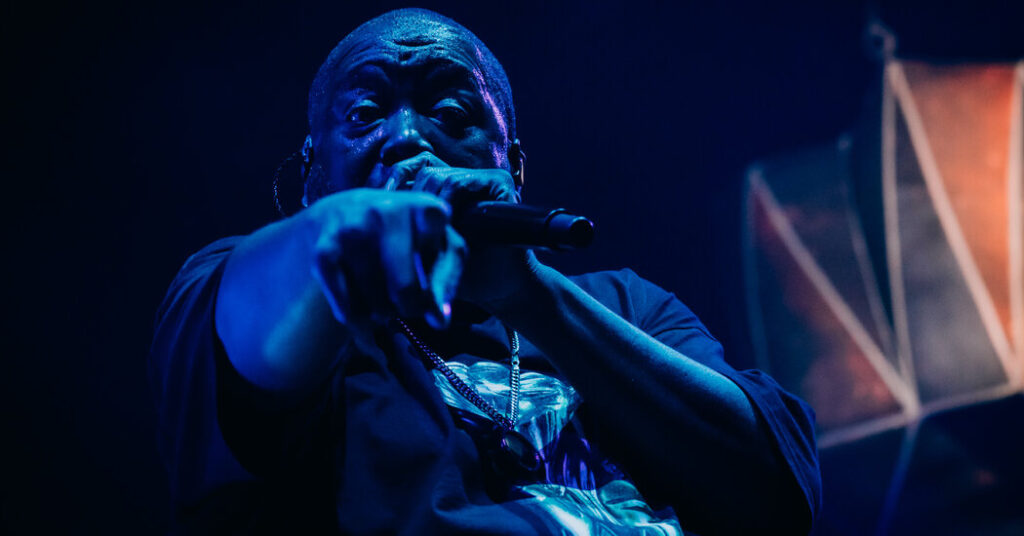
There is no particular reason to think the justices know their way around rap music and the culture that surrounds it. On Monday, they received expert assistance from towering figures in the world of hip-hop, including Killer Mike, T.I., Young Thug, Fat Joe and N.O.R.E. in the form of a brief supporting Mr. Broadnax. A second brief, from Travis Scott, will soon follow, his lawyers said.
The rappers argue that prosecutors mistook the fantasy that is gangster rap for a literal account amounting to a confession.
“Tales of violence, sex and criminal behavior sell to a broad swath of Americans — and any would-be gangsta rapper must learn and practice these conventions of the form,” said one of the briefs, filed on behalf of artists, industry professionals, scholars and arts organizations.
Killer Mike, the performer and political activist, said in an interview that the jury had been encouraged by prosecutors to confuse creative expression with real life.
“No matter how beautiful it sounds, or how horrific it may sound, it’s still just art,” he said of Mr. Broadnax’s lyrics. “It’s an interpretation of the human spirit. It is not an admission of guilt.”
Other musical genres, he said, do not get the same treatment. Nobody believes that Johnny Cash shot a man in Reno just to watch him die. Or that Neil Young shot his baby down by the river — “dead, oh, shot her dead.” Or that Bob Marley shot the sheriff even as he spared the deputy.
The second supporting brief, to be filed on behalf of Mr. Scott, will focus on free expression. “A death sentence based in any part on protected artistic expression violates not only the First Amendment but our most basic principles of due process,” said Ellyde R. Thompson, a lawyer with Quinn Emanuel Urquhart & Sullivan, which represents Mr. Scott.
Prosecutors in Mr. Broadnax’s case used peremptory strikes — ones that do not require giving a reason — to eliminate all seven prospective jurors who were Black.
The judge reinstated a single Black juror, noting that “there are no African American jurors on this jury, and there was a disproportionate number of African Americans who were struck.” While that did “concern me quite a bit,” the judge said, he did not want to imply “some sort of nefarious intent on the part of the prosecutors.”
Mr. Broadnax was convicted in 2009 of killing two white men, Matthew Butler and Stephen Swan, during a 2008 robbery in Garland, Texas.
Prosecutors introduced Mr. Broadnax’s lyrics only after he was convicted, at a separate proceeding to decide whether he should be put to death. To secure the death penalty under Texas law, prosecutors must persuade the jury that the defendant is a continuing threat to society who will probably commit more violent acts.
Prosecutors said the lyrics proved just that.
“The general theme of those lyrics,” as one prosecutor put it, was “robbing, killing and selling dope.” (Mr. Broadnax’s lawyers say prosecutors overlooked other themes, including regret and redemption. A lawyer for the state did not respond to a request for comment.)
Mr. Broadnax was 19 when he committed his crimes.
Killer Mike, who is 50, recalled writing foolish things at that age. “I said a bunch of stuff that I thought was hard-core, that I thought would sound badass, and for those times it did,” he said, adding that he was grateful that he had never been “tried according to those lyrics.”
Mr. Broadnax may deserve a long sentence, he added, but “I just don’t trust an environment where we allow art to bleed into the sentencing phase.”
Another rapper who signed one of briefs, Young Thug, has a particular interest in the case, as his lawyers had fought, unsuccessfully, to prevent prosecutors from using his lyrics at a lengthy trial for racketeering he faced in Georgia. (It ended when he pleaded guilty to some of the charges against him and was sentenced to time served.)
Other courts have been more cautious. In 2024, a Texas appeals court in a different case surveyed the legal landscape. “While Texas has not yet addressed this issue, courts in other jurisdictions have recognized that the admission of rap music or rap videos is highly prejudicial due to the nature of the lyrics that distract from the charged offense,” it found.
That Texas court, too, signed on to the consensus, granting the defendant in that case a new trial.
The supporting brief from Killer Mike and Young Thug was also signed by Erik Nielson, a professor at the University of Richmond and the author of “Rap on Trial: Race, Lyrics, and Guilt in America.”
“For decades now,” he said, “the criminal justice system has targeted rap artists, weaponizing their lyrics to secure convictions — or, as in this case, to sentence them to death.”
Mr. Broadnax is scheduled to be put to death on April 30. If the Supreme Court follows its usual practice, it will rule on his application for a stay of execution and his petition seeking review of his case shortly before then.
In a telling exchange at the 2009 sentencing proceeding, a prosecutor and a police detective discussed how Mr. Broadnax’s conviction affected how his rap lyrics should be interpreted.
“If we were looking at the lyrics of some rapper out of New York who’s never killed anybody, these might not be so shocking, would they?” asked the prosecutor, David Alex.
The detective, Barrett Nelson, agreed that the lyrics were “the normal stuff that you hear on the radio.”
A little later Mr. Alex continued that Mr. Broadnax’s actions made his lyrics more meaningful. “We already know we’re talking about a young man who’s killed two people,” he said. “That could be sort of trouble.”
“Yes, sir,” the detective agreed.
Adam Liptak is the chief legal affairs correspondent of The Times and the host of The Docket, a newsletter on legal developments. A graduate of Yale Law School, he practiced law for 14 years before joining The Times in 2002.
The post Hip-Hop Icons Tell Justices That Texas Turned Rap Lyrics Into a Death Warrant appeared first on New York Times.