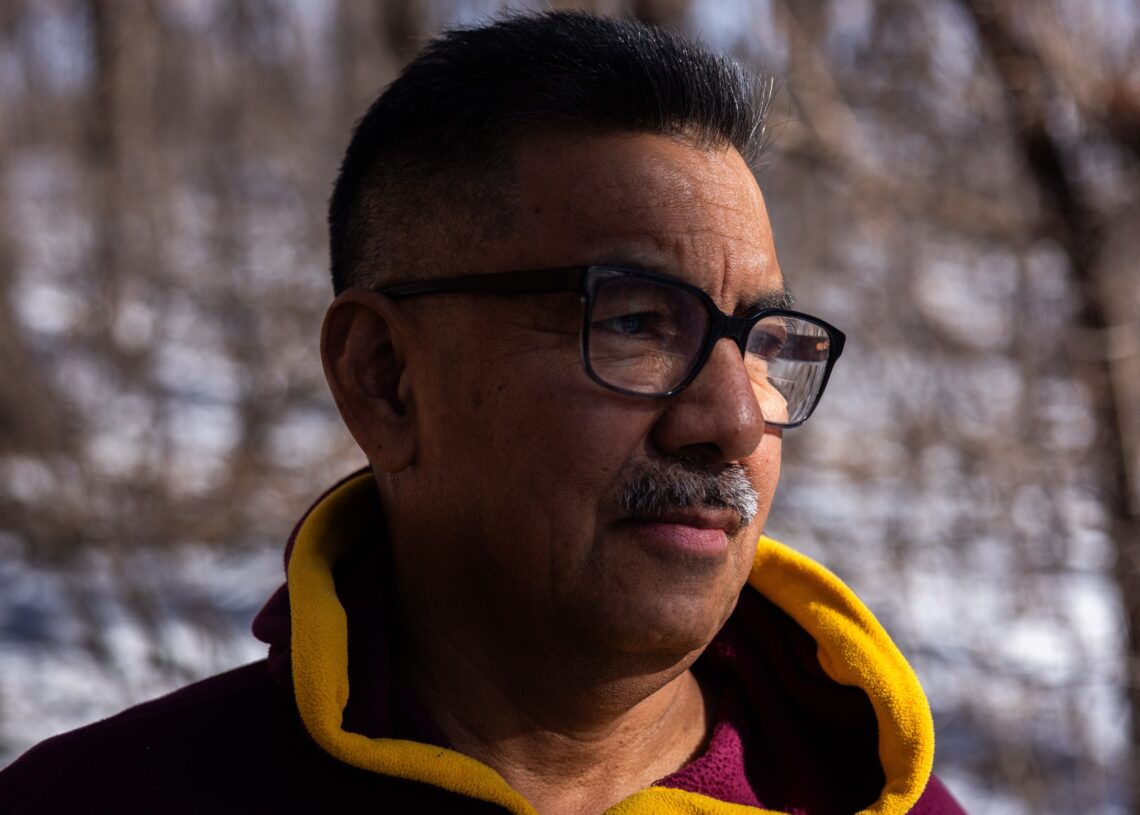
MINNEAPOLIS — Jose Avendano tried explaining to the immigration officer yanking him out of his car that he had permission to be in the United States. The 62-year-old dishwasher had fled El Salvador decades ago and had a valid work permit and one of the few temporary statuses offering protection from deportation that the Trump administration wasn’t revoking.
“They didn’t listen,” Avendano said.
As he was being shuttled to a detention camp near a U.S. military base in El Paso in early January, most of Minneapolis and the nation was focused on the clashes between protesters and federal immigration officers that led to the fatal shootings of two U.S. citizens and ignited tensions over the Trump administration’s mass-deportation campaign.
More than 4,000 people have been arrested in Minneapolis since the start of Operation Metro Surge in December, and federal judges and civil rights lawyers say many of those detentions broke the law. The Washington Post reviewed nearly 70 cases in which U.S. District Judge Patrick J. Schiltz ruled that the Trump administration had violated court orders. The court records offer the most detailed account yet on who officers arrested in Minneapolis and how they conducted arrests.
The case files show how officers repeatedly detained people under a reinterpretation of a 1996 law that states that anyone in the United States illegally “shall be detained” without bond, indefinitely, even when courts had ordered they be granted a bond hearing or set free. Most were quickly transferred to detention centers in Texas or Louisiana.
Of the 66 cases The Post examined, 52 involved immigrants with pending applications for asylum or another legal status. None had final deportation orders. Most weren’t criminals and more than a third had lived in the United States for over a decade. Some were legal refugees detained under a separate policy also being challenged in court. The detainees came from countries all over the world, and despite President Donald Trump’s remarks about Somalis, relatively few on the judge’s list were from the East African country.
In every case, the government argued that it had the broad power to detain people indefinitely. The records analyzed by The Post are not readily available online because of court privacy rules, and were downloaded, case by case, from a public court terminal in Minneapolis.
Avendano, a grandfather with a heart condition, was held for nine days, before his lawyer filed a lawsuit and a judge ordered his release.
Most federal judges nationwide have ruled that the Trump administration policy of mandatory detention of undocumented immigrants settled in the United States is illegal. Government agencies in the past have denied bond to serious criminals and recent border crossers. But Trump administration attorneys are digging in on appeal and legal experts say the issue could reach the Supreme Court.
The Trump administration has defended its push to deport all undocumented immigrants, but in the aftermath of the violence in Minneapolis, the president has softened his tone on immigration enforcement somewhat. The administration has not surged into a city at a similar scale since then, and on Thursday, Trump fired Kristi L. Noem as DHS secretary and announced Sen. Markwayne Mullin (R-Oklahoma) as her replacement.
But in court, government officials are continuing to defend the mandatory detention policy. They argue that federal law enables them to detain undocumented immigrants without bond, in part to ensure they do not skip hearings. Courts have noted that the U.S. government has never used its detention power so broadly, but officials say that doesn’t mean they cannot use it now.
ICE officials say their goal is to enforce removal orders efficiently and avoid prolonged detentions. “We detain to remove,” acting ICE director Todd M. Lyons, who issued the mandatory detention policy in July, said at a congressional oversight hearing last month.
In Minnesota, the case files show how lawyers quickly became overwhelmed as they struggled to keep up with the volume of people detained. At the Justice Department, government attorneys, working overtime, said they were receiving more emails than they had time to read. Attorneys acknowledged it was difficult to track detainees because Immigration and Customs Enforcement quickly transferred them to other states, sometimes hopscotching from one to the next. Judges threatened to hold multiple government lawyers in contempt of court and some quit.
Michael Tan, an American Civil Liberties Union attorney leading a nationwide class-action lawsuit on behalf of undocumented immigrants affected by the policy, accused ICE of using indefinite detention to “coerce people into giving up and accepting deportation.” Most detainees don’t have attorneys and haven’t filed lawsuits, he noted, even though the cost to file is $5.
Since Trump took office, immigrants have filed 23,700 lawsuits seeking release from detention. DHS has said it deported more than a half-million people last year.
“We have the largest mandatory detention regime in the United States,” Tan said. “We’re literally talking about millions of people.”
The Department of Homeland Security and Department of Justice did not respond to questions about the detentions.
‘EMERGENCY’
On Jan. 9, Avendano was driving to the Chinese restaurant where he has washed dishes for 16 years when three vehicles boxed in his car. A masked agent in a green uniform pulled him out, he said, “like I was a criminal.”
Avendano said he tried to explain to them that he has temporary protected status, which the George W. Bush administration granted to thousands of Salvadorans in 2001 after a devastating pair of earthquakes. The designation shields immigrants from deportation, though it does not offer a pathway toward becoming a U.S. citizen.
“That’s canceled,” he said one agent told him. Avendano knew that wasn’t true. Trump, an ally of Salvadoran President Nayib Bukele,has left Salvadorans’ temporary protection intact.
His family and lawyer searched for Avendano as officers held him for several hours in Minnesota, shackled at the wrists, ankles and waist. His lawyer said his record consists of a speeding ticket. On his application for temporary status, Avendano noted a 1999 shoplifting citation that he said resulted in five days probation. He has lived in the United States for 32 years.
Avendano said he also told officers that he has cardiomyopathy, a heart condition that has required a pacemaker and daily medication. Because of his arrest, he missed an important medical procedure to stabilize his heartbeat. Two of his brothers died young of heart failure.
“EMERGENCY – Serious Medical Condition,” attorney Maria Miller wrote to ICE. “He has not been able to take his heart medications … We don’t know where he is.”
A federal magistrate judge directed the Department of Justice to explain why Avendano had been arrested. When government lawyers failed to respond, U.S. District Judge Nancy Brasel, a Trump nominee, said they violated court orders and directed that Avendano be immediately released. ICE kept him in custody for three more days. He said he was told to check in with ICE in April.
“Even when the court issues an order … it’s just chaos,” Miller said. “Nobody’s listening to anybody.”
The court records show that most of the 66 cases on the chief judge’s list in Minnesota — some cases involved multiple people — did not have criminal histories beyond offenses such as speeding tickets or driving without a license, raising questions about why they were targeted when border czar Tom Homan and others said they were prioritizing “the worst of the worst” criminals. None had final orders of removal.
Advocates for immigrants argue that immigrants should not be detained if their only offense is a civil immigration violation because proceedings could drag on for months or years. Detaining someone costs roughly $150 a day.
ICE says detaining people ensures that they will not abscond, noting that hundreds of thousands of people have final removal orders but are still here. But 52 of the 66 had applied for permanent legal residency, work permits or asylum with the federal government, which lawyers said is a clear sign that they are not hiding.
A man from Nicaragua who surrendered at the southern border in 2022 said he had a work permit, a landscaping job in Minnesota, and a pending asylum application when the immigration courts summoned him to a hearing. He went.
“When I arrived, they said I didn’t have a case,” he said, speaking on condition that he not be identified because he fears re-arrest.
ICE officers arrested him in the hallway as soon as he left. His labor union sprang to his defense and helped him to file a lawsuit in Minnesota that ordered his return and release, though he was held for six extra days nonetheless. Now he worries he cannot trust the federal government to give him a fair hearing. “Are they going to detain me again and deport me?” he said. “Or will they let me stay always?”
Five of those arrested were refugees who fled persecution in their home countries, were vetted and welcomed into the United States legally with resettlement aid and the promise of protection. Some were from Moldova, including a man who had arrived with his wife and child, and said he was told to “re-justify” his refugee status.
Federal officials said in court records that they have the authority to detain refugees in order to conduct an “inspection” under the law. But in practice, that has occurred during an office visit to review their paperwork, not detention.
Several on the chief judge’s list were children or teenagers, including a 12-year-old boy shipped to a family detention camp in Dilley, Texas, allegedly without his inhaler. He is one of six Venezuelan immigrants living in St. Paul who alleged that federal agents barged into their house without permission and arrested them at gunpoint.
Judge John Tunheim ordered the government to produce a warrant to justify the arrest and ultimately found that the government “failed to file anything.” He ordered the group released, and the boy and his father returned to Minnesota by Jan. 22.
Three days later they were still detained.
“The Court can scarcely think of a situation requiring more urgency than a 12-year-old allegedly, with health concerns, being arrested unlawfully and whisked away across the country,” Tunheim wrote. Lawyers said they would be returned and released that night.
Attorneys on triage
The records show that attorneys in the U.S. attorney’s office in Minnesota faced the brunt of the court’s frustration over the failure to follow judicial orders. But the attorneys signaled that they had inadequate resources and power to enforce them.
On Jan. 14, Justice Department attorney Ana Voss begged Judge Jerry Blackwell for “forgiveness” for missing orders demanding the government explain why it had detained Estefany, a Colombian woman arrested while walking her youngest child to the school bus stop, and shipped her to El Paso. Estefany, who could not be reached for comment, had a clean record and a pending case in immigration court. She had been suffering from a bacterial infection and was taken to the hospital before her transfer.
Voss admitted that she was “not aware of this court’s orders” and described an office near a breaking point, juggling a flood of emergency habeas petitions. She said she’d received 523 emails the day before, more than she could read.
“It has become apparent to me that I am not able to effectively triage and review every order,” she wrote.
Blackwell ordered Estefany released immediately on Jan. 15; officers freed her two days later.
Judges and advocacy groups say the Justice Department was failing to fulfill its basic duties while immigrants paid the price.
On Feb. 3, Blackwell summoned DOJ lawyers into court to explain why lawyers kept violating judges’ orders. At the hearing, lawyer Julie Le told the judge “this job sucks.” She said it was a “huge fight” to get ICE officials to follow judicial orders.
“I share the same concern with you, Your Honor,” she said of enforcing the court’s orders. “I don’t have a magic button to do it. I don’t have the power or the voice to do it.”
Le was removed from that position after that outburst, administration officials said. Voss’ email says she is no longer with the department.
Records show the violations continued, and judges raised the possibility of civil and criminal sanctions against Trump administration lawyers.
On Feb. 18, Judge Laura Provinzino, a former federal lawyer, fined government attorney Matthew Isihara $500 a day for failing to follow her orders to return identification to a detainee. She dropped it after the lawyer complied.
But she said it had become “painfully clear” that Justice Department attorneys like Isihara lack training to follow judges’ orders. She noted that he had never practiced in federal court until he joined the U.S. attorney’s office in January, and was soon juggling more than 100 cases.
The Trump administration announced the end of Operation Metro Surge — which began Dec. 1 and ran parallel to another operation targeting refugees suspected of fraud — on Feb. 12, and federal and state officials said they hoped to return to a state of calm.
But the courts are still cleaning up what was left in the aftermath: Several lawsuits are pending and on March 3 a judge said at a hearing that he had not ruled out possible prison time for government officials who violate court orders, according to media reports.
U.S. Attorney Daniel N. Rosen, who did not respond to questions, wrote in a court filing in February that he had found errors on the chief judge’s original list. Rosen’s letter prompted Schiltz, the chief judge, to re-check his list. He found some errors and struck those cases from his findings. But as of Jan. 28, he wrote, ICE had violated 97 court orders in 66 cases.
The judge then checked to see whether things had improved. They had not.
He said he found 113 additional violations in another 77 cases. Most violations occurred after Jan. 28.
“This Court will continue to do whatever is required to protect the rule of law, including, if necessary, moving to the use of criminal contempt,” Schiltz wrote Feb. 26. “One way or another, ICE will comply with this Court’s orders.”
Razzan Nakhlawi contributed to this report.
The post Trump officials are using this new, radical tactic to detain immigrants appeared first on Washington Post.