BEIRUT — When Iran’s Islamic Revolutionary Guard Corps warned this week that ships traversing the Strait of Hormuz would be “set ablaze,” alarm set in with government and industrial leaders all over the world.
They have good reason to be alarmed: Whoever controls the strait controls nothing less than the sole maritime gateway for most of the Persian Gulf’s oil riches to the world. Shipping companies are already heeding Iran’s warning.
Here’s a closer look at the strait and how the U.S.-Israeli war on Iranwill have effects far beyond Iran’s borders.
Why is the strait important?
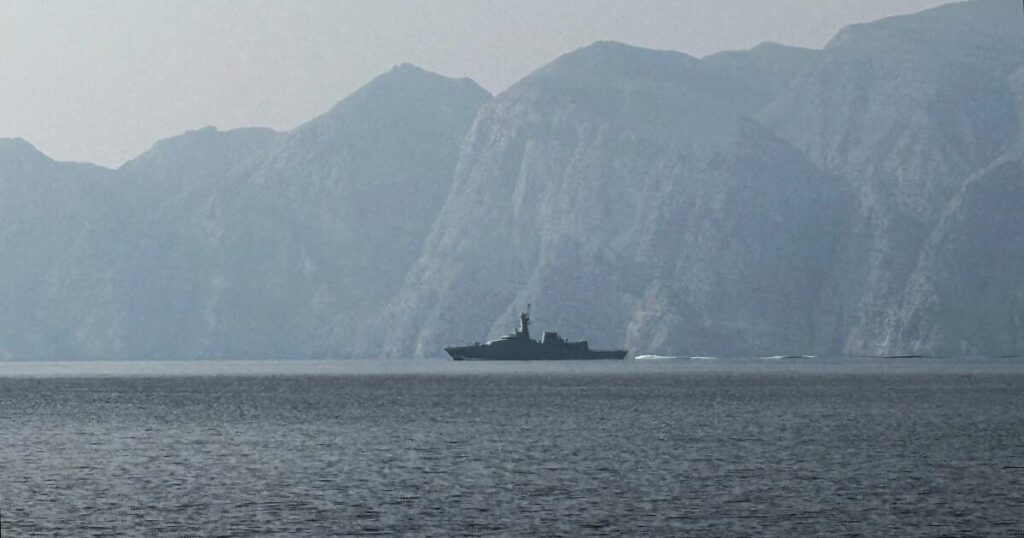
Located between Iran’s southern coast and a peninsula shared by Oman and the Emirates, the strait is a tiny section of sea connecting the Persian Gulf to the Arabian Sea.
It’s roughly 100 miles long and, at its narrowest, just 21 miles wide. It has two 2-mile-wide shipping lanes allowing for traffic in opposite directions, separated by a 2-mile-wide median.
Yet the small size belies its importance.
On any given day, an armada of some 80 tankers — laden with roughly 16 to 18 million barrels, or around a third of all oil transported by sea — traverses the waterway, delivering around 20% of the world’s crude and a large portion of its gas.
But the strait’s importance goes beyond energy. It handles a significant amount of container traffic, with gulf countries being an important hub for containers bringing consumer goods from Asia to Europe.
What’s the reaction to Iran’s warning?
In effect, the strait has turned into a parking lot, with an almost complete cessation of ships going through, experts and marine traffic monitoring services say.
“Tanker traffic has fallen by around 90%. And you have laden oil tankers still waiting outside of Hormuz and unwilling to cross to global oil markets,” said Noam Raydan, a maritime risk expert at the Washington Institute for Near East Policy.
Shipping industry leaders also say roughly 10% of container ships operating around the world are stuck in the strait, while United Kingdom Maritime Trade Operations, which tracks security at sea, said in an advisory note Thursday that only two cargo vessels had passed in the 24 hours prior. That’s far below the 138 per day historic average, the U.K. group said, representing “a near-total temporary pause in routine commercial traffic.”
On Thursday, Danish shipping giant Maersk suspended new cargo bookings to parts of Saudi Arabia, the UAE, Kuwait, Qatar, Iraq and many ports in Oman “until further notice.”
Similar measures were taken by other shipping firms, including Hapag-Lloyd and Cosco Shipping. The Mediterranean Shipping Co. announced that it would levy fuel surcharges on shipping clients until April.
In a statement, Maersk added that “exceptions will be made for critical foodstuff, medicine and other essential goods.”
Although Iran has not made the closure official — the ban was announced by a Revolutionary Guard representative on national TV — its threats have proved to have teeth.
Since U.S. and Israeli strikes on Iran began Feb. 28, at least nine vessels have been hit by projectiles, according to Lloyd’s list on Thursday; most of the attacks — which killed three seafarers and two port workers — have been claimed by Iran.
Meanwhile, insurers are pulling coverage.
What’s the effect on prices?
We’re already seeing a spike in the maritime transport industry, with leasing rates for tankers rising from $100,000 to $400,000 per day; some companies have mentioned going as high as $700,000, observers say.
Those increases have translated to energy markets, with jet fuel being the most affected, potentially leading to a rise in ticket prices later in the year. Meanwhile, the price of Brent oil surged past $90 on Friday, a 7% increase from the previous day and a 24% increase since the start of the war.
Even so, the reaction of the market has been relatively subdued, said David Butter, an energy expert on the Middle East at the Chatham House think tank.
“From the way prices have moved, there seems to be a reaction in the market based on an expectation that things are going to wind down in a few weeks,” Butter said. He added that the large amount of oil in storage, whether in land depots or the hundreds of tankers floating in the strait, have acted as a kind of backstop.
But it’s unclear how long that backstop can last. Several Persian Gulf nations have already reduced or fully shut down oil and natural gas production out of fear of an attack by Iran’s drone or missile arsenal. And restarting production can take weeks, experts say.
Robin Mills, chief executive of Qamar Energy, a consulting firm in Dubai, said there was a disconnect between the price and the geopolitical situation.
“Given what’s going on, it’s surprisingly relaxed. And I would say it’s incorrectly relaxed,” Mills said.
He compared the disruption to the market at the beginning of Russia’s attack on Ukraine in 2022, which sent prices soaring to around $120 a barrel.
“This is far more serious and the long-term consequences could be a lot worse, and yet the price has only gone up bit by bit.”
Qatari Energy Minister Saad Al-Kaabi told the Financial Times that, depending on how long the war goes on, oil prices may reach $150 a barrel.
“GDP growth around the world will be impacted,” he said. “Everybody’s energy price is going to go higher. There will be shortages of some products and there will be a chain reaction of factories that can’t supply.”
What is Trump doing in response?
This week, President Trump said the U.S. government could offer insurance to commercial vessels and provide U.S. Navy escorts to ensure traffic continues.
At least one part of that plan has come to pass: On Friday, the U.S. International Development Finance Corporation announced that it would insure losses of up to $20 billion for oil tankers and other maritime traffic.
But many ship owners, Mills said, wouldn’t be interested in putting ships at risk, insurance or not.
“They don’t want the ships damaged and crews killed, or the vessels stuck,” he said. He added that there was skepticism about whether the Navy could actually protect shipping.
“Are there enough vessels to escort every ship?” he asked. “And they’re currently fighting a war, so they might not be available.”
In his messaging, Trump has been characteristically blase. In an interview with Reuters on Thursday, he seemed unconcerned by the rise in gas prices.
“They’ll drop very rapidly when this is over, and if they rise, they rise,” he said.
“But this is far more important than having gasoline prices go up a little bit.”
The post Iran’s threat to burn ships is choking off Persian Gulf oil flow to world appeared first on Los Angeles Times.