
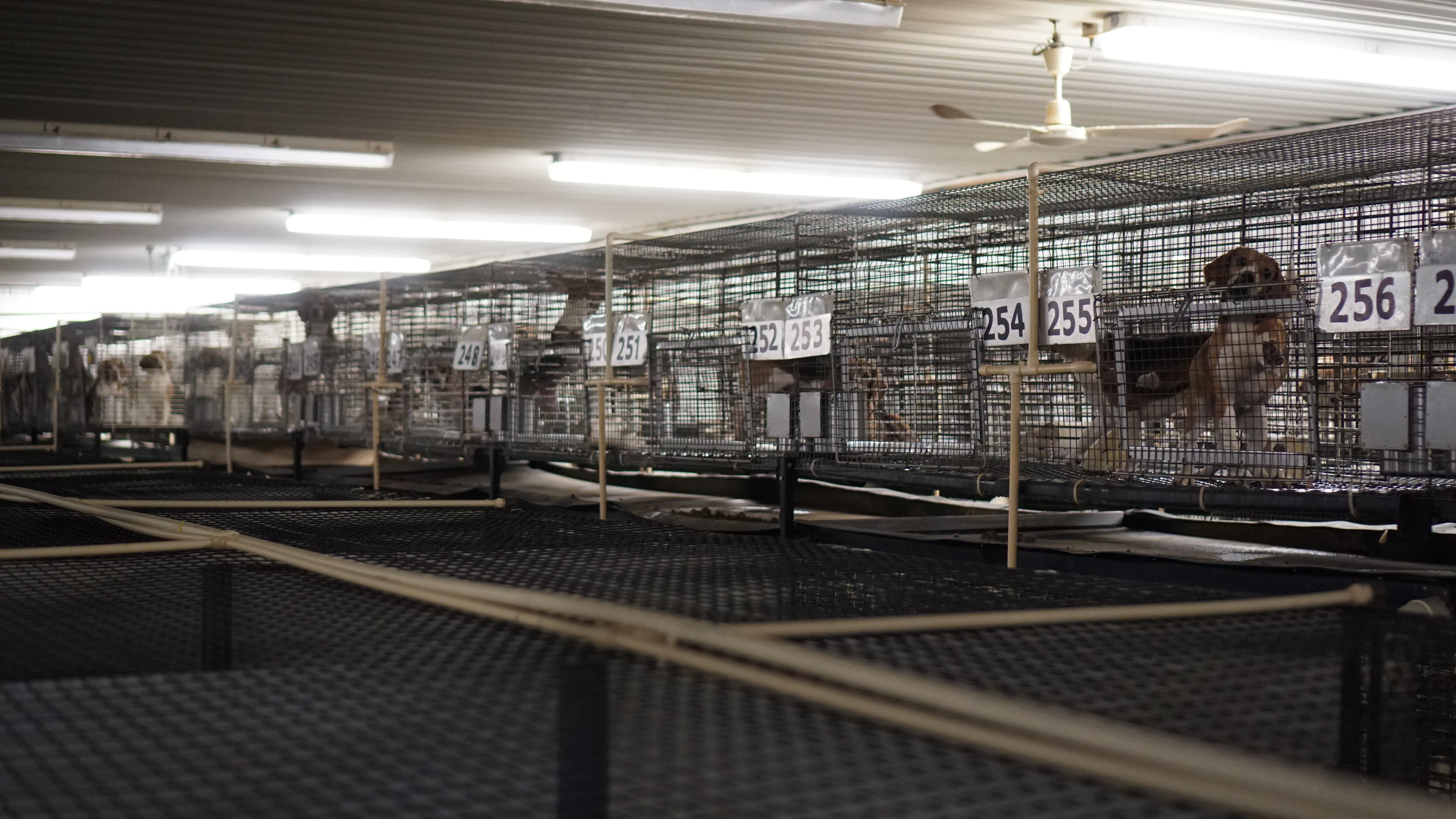
Outside the rural town of Blue Mounds, Wisconsin, about 2,000 dogs await their fate in small wire cages. They are confined at Ridglan Farms, a large-scale breeding operation that supplies beagles for research labs across the country. The current law treats the dogs as property of the company. We and others suggest that the conditions of their confinement have been so bad that their own legal rights should prompt their release.
Ridglan Farms has come under increasing scrutiny for nearly a decade, based on allegations of serious animal mistreatment. In 2024, a special prosecutor was appointed to consider felony cruelty charges. After finding substantial evidence to back these accusations, prosecutors agreed to not pursue the charges on a single condition: Ridglan would close its sale and breeding-for-sale operations by this July (but keep its license to breed dogs for its own research purposes).
This is a major victory for animal advocates and for animal law. But it is a pyrrhic one for the thousands of beagles still confined there; many may be killed or sold to other laboratories before the July shutdown takes effect.
One of us (Justin Marceau) has been involved with the case from its early days, including helping to arrange for the appointment of the special prosecutor. Once the settlement was reached, as animal law scholars, we wondered what legal possibilities there might be for helping to transfer the remaining dogs before their fates were sealed. A law clinic founded by Marceau, the Animal Activist Legal Defense Project, run through the University of Denver Sturm College of Law, teamed up with the Nonhuman Rights Project to bring a seemingly radical case to the courts: These dogs should be considered legal persons too.
This may at least hold true for these dogs, who are being kept in such well-documented cruel confinement. The basis? A habeas corpus petition. One of the oldest common law writs, it harnesses a court’s power to demand of a jailor justification of a person’s imprisonment.
Such cases have so far failed to result in the release of chimpanzees and elephants, where the goal has been to have them transferred to sanctuaries. This new case, filed on behalf of the dogs at Ridglan Farms, brings a new approach, arguing that they have a legal right to a hearing on whether they are being held illegally based on the special prosecutor’s finding that a felony-level animal cruelty charge was justified and could have been brought. It is a novel approach and may open new opportunities for animals and their advocates.
Can animals be treated like persons under the law?
The origins of habeas corpus as a legal claim for humans predate even the Magna Carta (from 1215). As a law, it was formally codified in the UK in the 17th century and carried over to North America by English colonists as an important way to protect against illegal imprisonment. It became a standard feature of US state-level laws and constitutions by the mid-19th century. In the case of Wisconsin, habeas corpus is as old as the state itself, having been included in its original state constitution in 1848.
Under a habeas corpus claim, a judge can order someone holding an imprisoned body (the “corpus” part of habeas corpus) to justify the confinement, specifically to show that it is not unlawful.
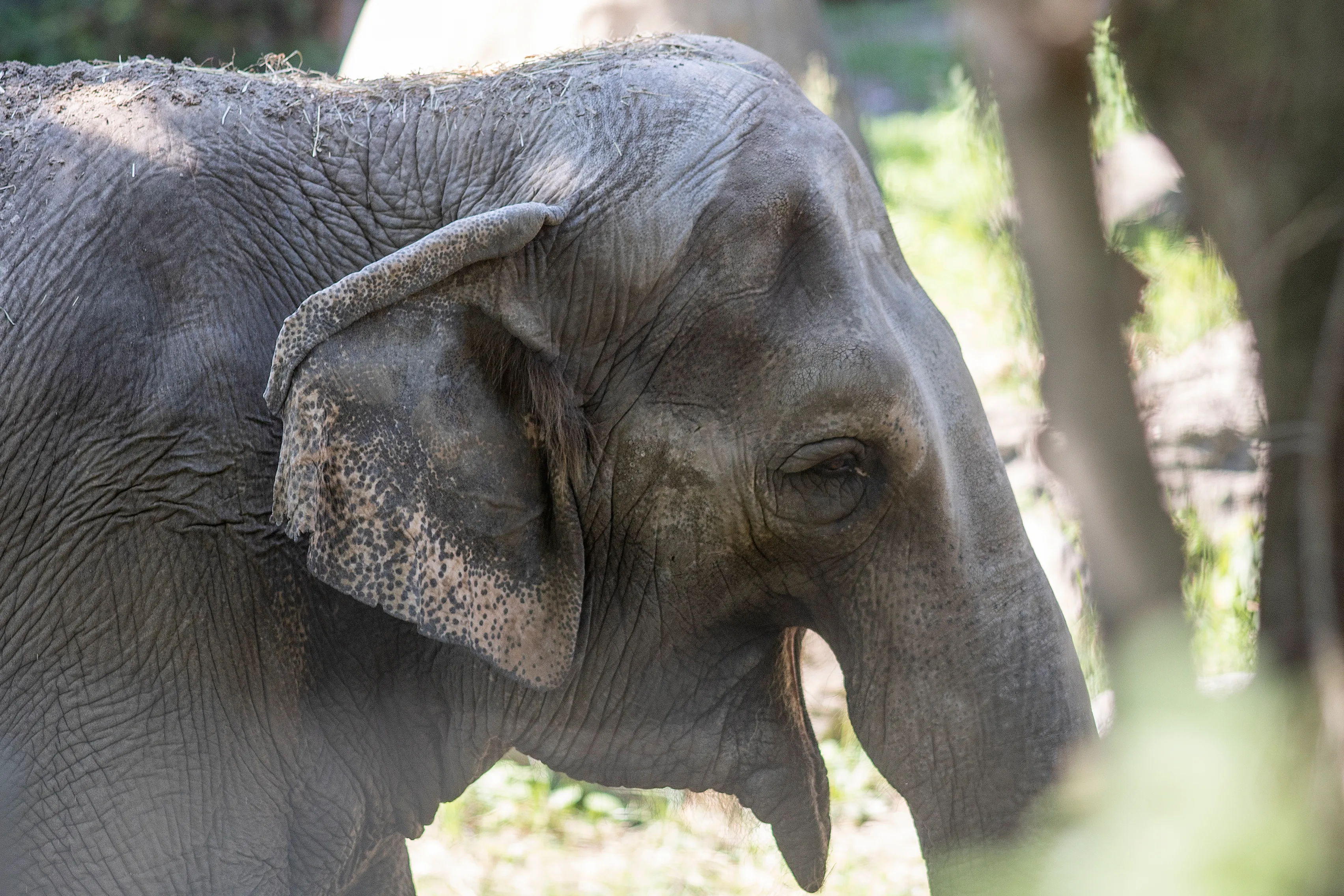
The Nonhuman Rights Project — founded by pioneering animal lawyer Steven Wise — has been bringing habeas petitions for chimpanzees and elephants since 2013, arguing that, due to their cognitive complexity, these animals have enough “practical autonomy” to make them a deserving recipient of this old and venerable process, a privilege that to date has been reserved for human beings. The group’s most famous case involved an elephant named Happy living at the Bronx Zoo. Originally from Thailand, Happy had been at the zoo since 1977, where she was living without elephant companionship since 2002. Happy famously passed the mirror self-recognition test, what many scientists see as an important demonstration of human-like self awareness. Ultimately, Happy was not released, and in 2022 the courts — as they have in each case of this sort to date — ruled that only humans can be “persons” for purposes of habeas corpus relief.
Up until now, the legal strategy of pursuing habeas for animals has hinged on animal cognition or some rough comparisons to human abilities. The claim is not exactly that human-like capacities are prerequisites for relief, but they are emphasized as a sufficient basis for relief. So the cases often focus considerable scientific attention on developing the claim that the animal in question is sufficiently autonomous and advanced so as to justify being treated legally as a person — rather than a mere piece of property. Such cases continue to garner public and judicial attention, quite rightly, in no small part because they marshal an impressive scientific record in support of recognizing animals as legal persons.
The new case on behalf of the beagles matters not only because it may represent a last-ditch effort to save the dogs, but also because it materially expands the scope of animal rights litigation by the Nonhuman Rights Project. For the first time the group has pursued a legal strategy that does not hinge on animal cognition or what preeminent moral philosopher Martha Nussbaum has called “so like us” comparisons to human abilities. Instead it rests on the straightforward claim that animals held in violation of statutory duties (more on that shortly) may seek their freedom through habeas corpus.
Wise himself thought dogs did not reach the benchmark for practical autonomy when he published Drawing the Line: Science and the Case for Animal Rights in 2002. His plan was, after taking on elephant clients, to move to orcas, always showing that these animals have unique cognitive capacities that are rigorously substantiated by expert research. This new case makes no such claims of scientific support and does not turn on the cognitive or human-like sensibilities of dogs.
This shift opens up a fresh and potentially transformative way of thinking about animal rights in law. Here, the idea is that the right of an animal to not be treated cruelly, at least in exceptional circumstances such as these, can be vindicated through habeas corpus.
What this means for these dogs — and other animals
Wisconsin law technically should prevent cruelty to animals, as it asserts that “No person may treat any animal…in a cruel manner” (Wisconsin Statutes Section 951.02). Allegations of mass confinement of thousands of dogs and puppies in cages in an unsanitary environment, without exercise/enrichment causing extreme stress and trauma, without proper veterinary care, etc., seems like it ought to fit that bill, but it becomes challenging when the “person” in question is a faceless company, and the “animal” numbers in the thousands. Each animal in this case is an individual and at a species level is no different in terms of his or her makeup than the ordinary family dog even if it is difficult to wrap one’s mind around the logistics of trying to help all of them. Why should we feel compelled to do it? What do we owe to dogs anyway?
Dogs’ attachment to humans makes them quite reliant on us, whether as pets in the home or stray dogs who rely on the food scraps and sheltering opportunities created by human settlements. As Wise himself wrote, “Dogs have become extremely attached, even dependent, upon us, as our children are, sensitive to our desires and feelings, because for millennia we bred them to be that way.” Philosophers Sue Donaldson and Will Kymlicka argue in their book Zoopolis: A Political Theory of Animal Rights that the dependency of domesticated animals in turn bestows upon us especially strong duties toward them. Such duties arising out of a species-wide dependence or connection might provide a case for recognizing animal rights that is no less strong than one grounded in cutting-edge animal cognitive science.
Beagles are prized in research precisely because they are gentle and compliant; they have a unique willingness to trust and submit. As University of Toronto bioethicist Kerry Bowman put it after revelations about inducing hours-long heart attacks in otherwise healthy dogs in a hospital in London, Ontario, dogs and beagles in particular “are very, very trusting and very willing to work with people, be with people and attach with people, and it is that very behavior in the dog that they take advantage of because they can then manipulate the dogs with all these very invasive, nasty procedures.” At Ridglan, that trust was met with allegations of brutal treatment — including a lack of stimulation or play, no access to the outdoors, and invasive procedures, such as “cherry eye” removal surgeries, performed without anesthesia or proper veterinary supervision, that amount to cutting swollen eyelids off with scissors. The dogs who remain there reportedly live amid constant barking, packed into small wire cages that cause chronic foot injuries and visible psychological breakdowns, including endless pacing in tight circles — a classic sign of severe distress. They are at risk of such surgeries (or worse ones) being performed on them again at a new research facility if they are sold and subjected to further experimentation.
The case against Ridglan offers a chance to translate some of our duties toward these dependents into legal ones. The case for freeing these dogs held in what appear to be classically cruel conditions we think is compelling in a number of ways.
First, prior habeas cases for nonhuman animals challenge the confinement of animals at facilities like zoos, where the judges may assert — often incorrectly — that the conditions are adequate and even enjoyable for the animals. As a result, the litigation asks courts to disrupt socially normalized, familiar institutions. The legal arguments must contend not only with doctrine but also with ingrained, inaccurate cultural assumptions about zoos as benign places. By contrast, the legal filing against Ridglan contains images of beagles in the facility that would be impossible to see as anything other than a violation of the most basic of animal rights.
Second, the Ridglan case requires no special sanctuary transfers and there are no debates about whether one or the other environment is only marginally better or worse for the animal. Lawyers for zoos holding elephants are famous for (often incredulously) defending their enclosures and arguing that moving the elephants to a larger sanctuary is a small improvement at best, and may actually be harmful to the elephant given the rigors of transport or their current poor state of health due to the length of their confinement. By contrast, it’s highly doubtful that the beagles crammed into tiny cages with no toys or companionship or access to the outdoors will be better off than if they are released to ordinary homes with people who will give them a chance at a normal doggie life. In this sense, it is easier to understand what upholding the beagles’ rights would mean for the dogs.
Lastly, it is worth noting that by focusing on the domesticated and dependent nature of the animals — and their right not to be cruelly treated in confinement — the litigation may offer animal rights lawyers an opportunity to move beyond criticism that prior litigation has focused too much on the abilities of animals, and in the process privileged certain traits or even certain species of animals — namely the ones we’ve characterized as super smart. Feminist legal scholar Maneesha Deckha has probably done the most to highlight that this strategy problematically creates a benchmark that some humans might not meet and most animals will never be able to reach. It’s like saying that among all the humans, the only ones who really get to be protected by the law are able-bodied, white, male, and cisgendered. Focusing on dependency will allow the field to embrace what philosopher Jennifer Nedelsky has called “a relational theory of self, autonomy, and law” in which we see ourselves as living fundamentally in relation to others.
To be sure, Wise and the Nonhuman Rights Project had a principled reason for initially focusing on just a few species, and doing so based on their proven cognitive capacities. Such a strategy is a way of threading the needle between the human and animal world, and a way of attempting to attract judges. The cognitive approach has gained traction with some judges, notably two dissents in Happy’s case, a concurrence in a case regarding chimpanzees, and an earlier case in which the judge recognized legal personhood is a legal fiction and it was a matter of policy, not biology, who is included in it and gets to count under the law — but didn’t think it was a decision she could issue. No court in the United States has yet granted the release of an animal under the cognitive capacity approach to habeas and most of the judges have reacted poorly to comparisons to human groups.
At the end of the day, Wise was an iconoclast precisely because he dared to think about new ways to protect animals through law. But he was not dogmatic. By seeking to vindicate the rights of dogs who are confined in documented cruel conditions, it is possible to conjure a theory of animal rights that is not particularly shocking to judges or the public. The Ridglan freedom-from-cruelty suit continues Wise’s bold vision, challenging the legal system by asking a question that is at once both radical and modest: Do animals have a right to be free from cruelty, at least some aspects of which, a prosecutor was prepared to find was felony-level illegality?
Where the case stands now
Only a week after the case was filed late last month, a Wisconsin trial judge dismissed it. But an appeal will be immediately pursued once the court issues a written judgment.
Important to the appeal will be a response to the question why the settlement agreement between the prosecutor and the company should not be the end of the matter, dealing definitively and conclusively with the claims of all parties. The answer? That settlement agreement is not one the dogs agreed to. They were not a party to it despite the fact that they are the ones most directly affected. Like the victims in a human criminal case, they should not be left where the crimes occurred, facing ongoing cruel conditions and high risk of new abuses, just because the government and the company have worked out something they can both live with. What about what the dogs can live with? Shouldn’t the agreement also require their consent or some reasonable stand-in for it? The groups bringing the action are effectively asking to be the “guardian ad litem” or guardian for the lawsuit, helping the dogs speak up to say that they did not consent to the agreement and being left at the facility.
Representatives for Ridglan Farms noted that, “If successful in this case, the animal activism community will undoubtably [sic] use this same justification to repeatedly seek to halt the use of animals for food, research, hunting, fishing and other activities that involve animals,” according to a statement they provided to a local ABC news station.
Pointing to a slippery slope and marching out a supposed parade of horribles that would ensue if the law were to protect these particular animals, while a typical reaction, steers the public away from what actually could occur if the habeas petition is honored. Granting habeas corpus in this case would have no impact on what humans can eat because the case is not about animals used for food, who are regulated differently from animals used in research. The case also does not argue that no dogs can ever be held by humans, or even that other types of animals cannot be confined for other purposes. And it wouldn’t enable someone to “liberate” your dog; the government would still control such a prosecution in the case of alleged mistreatment. These particular dogs would be “persons” only for the very limited purpose of a hearing to determine if their living conditions at Ridglan Farms violate their right to be free from criminal cruelty and its ongoing threat. They would effectively be made legal persons for a limited purpose and with limited effects, to challenge the conditions of their confinement, not confinement per se for other animals in other situations.
The larger claim in the lawsuit, ultimately, is still a relatively small one: Lawyers should be able to use the courts to challenge captivity that is arguably illegal, and have a court determine whether the animals should be freed so as to avoid breaking the law. By requiring a justification, the captor must appear publicly to defend their actions, telling the court — and everyone listening — why what they are doing is okay. This is important when a lot of people do not seem to know what these dogs’ lives are like, the conditions they live in and risks to which they are routinely exposed.
The court that dismissed Happy the elephant’s case made a lot of grand gestures toward the supposedly robust protections that exist for animals in US law today. At that time we wrote about how this was “almost laughable” given the realities of so many animals’ lives and the ways in which the laws (including those which are supposed to protect them) routinely facilitate their use and abuse. This case with the dogs at Ridglan offers a chance to give proper effect to protection laws that do exist and for a judge to use habeas to do the right thing for the animals, these particular animals, who have a shot at a very different fate.
At the end of the day, if there was enough evidence of felony-level animal cruelty found to justify shuttering this breeding-for-sale facility, then so too it seems like it should warrant the release of the dogs. They are the parties at the heart of the matter. They should not be left out of the process and its resolution, as if the matter doesn’t concern them at all when nothing could be further from the truth. It should be all about them.
The post Can dogs be considered “persons” under the law ? appeared first on Vox.