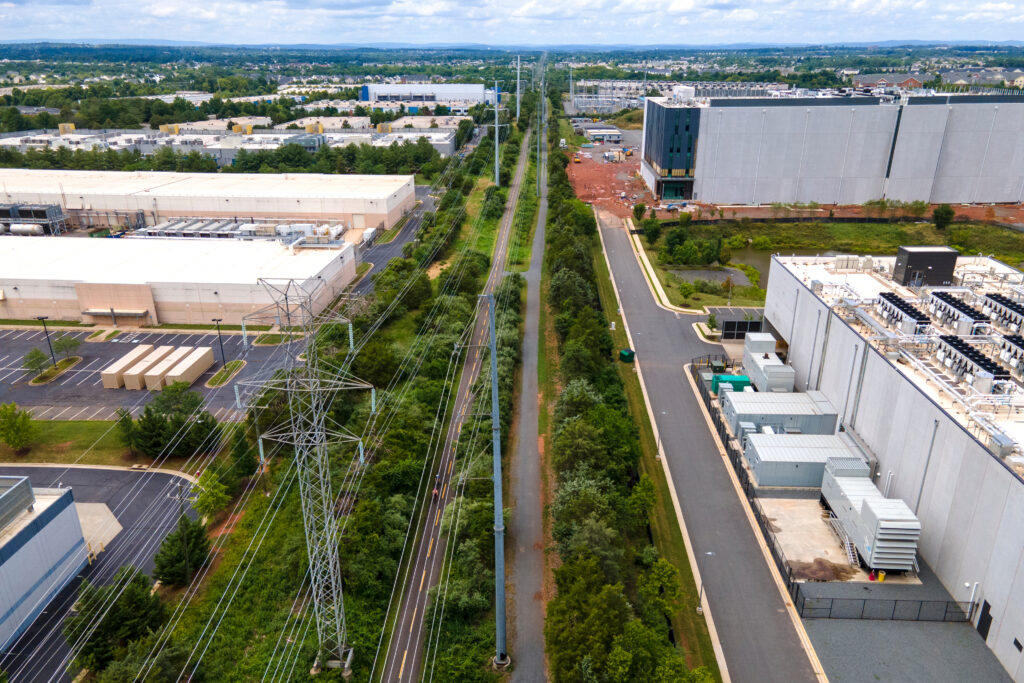
Set near the Potomac River, in one of the country’s most affluent areas, George Washington University’s sprawling Northern Virginia campus seemed like an ideal place for new housing, retail and a hub for medical and scientific research.
The last thing Loudoun County leaders wanted was another data center in a suburb that has long had the nation’s highest concentration of facilities that handle the world’s online traffic.
Amid long-standing speculation that GWU would sell its Ashburn campus, Loudoun leaders say they had sought to engage the university in discussions about the property’s future — that is, until school officials stopped returning calls more than a year ago.
Then, in an announcement that stunned Loudoun officials, GWU last week revealed that Amazon Data Services had bought the 120-acre property for $427 million.
The tech company’s plan for the parcel? A data center.
Now a county whose soaring economic success in recent years is rooted in attracting data centers is bracing to fight the addition of one more.
“We were all blindsided,” said Michael R. Turner (D-Ashburn), a member of the Loudoun County Board of Supervisors. “GW plays a role in the daily life of the community and it came as a real surprise and disappointment to the governing body that they would enter this kind of deal without telling anybody.”
Julia Garbitt, a GWU spokesperson, said in a statement that “confidentially provisions in the sales agreement” barred school officials from sharing “specific details in advance of the closing.”
“As the university progresses with this transition,” she said, “we will remain in communication with Loudoun County officials on the latest developments.”
Data centers are a sensitive subject in Loudoun, where more than 200 have opened over the past 25 years. The facilities have generated enormous tax revenue — approaching $880 million per year — that has allowed county officials to lower homeowners’ property taxes.
Yet the centers also consume vast amounts of power, straining the regional electrical grid and spurring concerns about potential hikes in consumers’ utility bills.
“They are huge metal monsters,” said Juli E. Briskman (D-Algonkian), a Loudoun County supervisor whose district includes GWU’s campus. “They are visually unattractive.”
The Ashburn campus is 25 miles from D.C., near what is known as “Data Center Alley” because of the number of facilities in the area. The campus, initially made possible because university trustee Robert H. Smith donated 50 acres, opened in 1991 and includes GWU’s nursing school and labs for chemistry, engineering and physics research.
As Loudoun’s executive director for economic development, Buddy Rizer has served as the point of contact for tech companies seeking to open data centers in the county and presided over the explosion of the facilities in the area. He said in an interview that he learned of Amazon’s plan for the campus during a phone call with a company official Wednesday. He said the sale announcement, made by the university on Feb. 27, “came as a big surprise” and that the identity of the buyer, initially withheld by GWU officials, was “even more of a surprise.”
“I think it’s fair to say the purchase was made with the idea that there would be some data center that’s part of the plan,” Rizer said, recounting his conversation with the Amazon official. “They haven’t talked specifics or site plans. This is more of a long-term play for them.”
At the same time, Rizer said that Loudoun officials believe that the campus is “not zoned for a data center” and that Amazon “would have to apply for that rezoning. I don’t know that their interpretation is the same.”
Turner, who has overseen efforts to restrict where data centers can go in Loudoun, said he would be “shocked” if the nine-member county board approved a data center. “We don’t want a data center in that location,” he said. “Our infrastructure is pretty well saturated by data centers. We are a mature data center market, probably the most in the world.”
County residents, Briskman said, “don’t want any more data centers. Politically speaking, voting for data centers is almost political suicide. Loudoun County voters are done with them.”
An Amazon spokesperson, asked about the data center plan on Wednesday, referred a reporter to an already-released company statement that said “any future considerations for development would involve community input, coordination with local leaders, and transparent public processes.” (Amazon founder Jeff Bezos owns The Washington Post).
Loudoun officials have envisioned a number of potential uses for the campus, including a mix of residential and commercial development.
“We have too much residential around there to put in a data center,” said Briskman, whose district — including a slice of Ashburn — does not host any data centers. “We have a park area all through there. The last thing I want is a polluting, energy-hungry data center going on this property.”
GWU’s president, Ellen M. Granberg, in a letter to the university community, said the sale would bolster the school’s finances, which have been hurt by a number of factors, including rising expenses and a decline in funding for federal research.
The price Amazon Data Services paid for the property is four times the county’s assessed value of $107 million, amounting to $3.5 million per acre.
“As stewards of the university’s mission, we must continually assess how best to use our resources in service of our community and future generations,” Granberg wrote. “This includes our real estate portfolio, a critical asset that supports our academic mission.”
Under the deal’s terms, the university will remain on the campus for up to five years. GWU plans to devote a “significant portion” of the sale’s proceeds to establish a new endowment to “advance” its “strategic priorities,” according to a university statement.
The campus’s future has been the subject of speculation in Loudoun for years.
Briskman, who was elected in 2019, said she had discussions with university officials “about their intentions for the property and the county’s vision.”
“We have asked many times to partner with them,” she said. “What I kept hearing from them was they were working on their land strategy … and then would get back to us.”
Then, she said, “they weren’t returning our calls for a better part of a year or two.”
In her experience as a supervisor, Briskman said, developers with proposed projects that involve potential rezoning meet with her “even before they file their application because they want the district supervisor to be on board.”
“I feel disrespected,” Briskman said. “This is not what a trusted community partner does.”
The post A suburb rife with data centers set to fight Amazon plan for another appeared first on Washington Post.