When federal jobs reports have come out in President Trump’s second term, leading Republicans usually declare that the economy is booming and it is all thanks to Mr. Trump.
On Friday, the Labor Department released a report saying that U.S. employers had cut 92,000 jobs in the previous month — surprising economists and raising fears that the labor market could be worse than they had realized.
Many Republicans suddenly went quiet.
The lack of triumphant social media posts or news releases from the Republican National Committee and the party’s House and Senate political groups pointed to growing anxiety on the right that the economy could sink the party in the midterm elections.
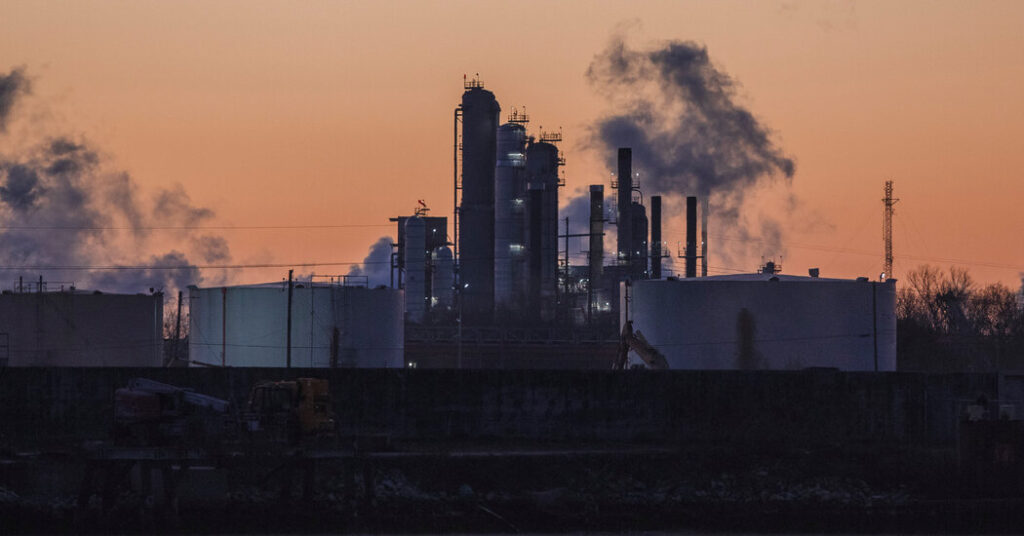
The warning signs for Republicans are piling up. Mr. Trump is pressing forward with a war in Iran that is unpopular among voters, has caused gas prices to rise nationwide and has led to a drop in the stock market. He has also promised to forge ahead with his sweeping tariffs despite a Supreme Court ruling knocking down some of them, and despite warnings that the fees will lead to higher prices and job losses.
Democrats were quick to try to capitalize on Friday.
“Donald Trump’s Achilles’ heel has always been the economy,” said Senator Chuck Schumer of New York, the minority leader. “His disastrous policies have spiked prices, caused job losses and weakened the economy. Republicans are going to get wiped out in the midterms because working-class Americans continue to pay the price for Donald Trump’s failures.”
Even in an era of surprising economic news, the numbers on Friday were striking: Forecasters had anticipated a gain of around 50,000 jobs. Instead, employers cut tens of thousands of jobs, and what had looked like solid job growth in December was revised to show a loss. The unemployment rate continued a slow but steady rise.
Economists frequently warn not to overreact to individual data points, which are volatile and subject to revision. The White House pointed to mitigating factors: winter storms, a nurses’ strike, technical changes to the way the numbers are tallied.
But when Americans think the economy is bad, they almost always blame the president regardless of how much any troubles are the White House’s fault. A survey released about a month ago by the Pew Research Center found that 72 percent of Americans viewed the country’s economy as fair or poor.
During Mr. Trump’s first year back in office, he often blamed his predecessor for Americans’ economic concerns. For a time, it seemed to work: A poll in January from The New York Times and Siena University found that 35 percent of voters held former President Joseph R. Biden Jr. responsible for the economy’s biggest challenges, versus 31 percent who pointed to Mr. Trump.
But after a tumultuous few months, Democrats believe job losses, rising gas prices and inflation are more likely to stick to Mr. Trump because of his tariffs and his decision to attack Iran.
“What he’s done on tariffs and what he’s done with the war on Iran is costing jobs and adding to inflation,” said Rahm Emanuel, who served as President Barack Obama’s White House chief of staff during a sour economy that led to the Republican wave election of 2010. “For a freshman in Economics 101, none of this that’s happening would come as a surprise.”
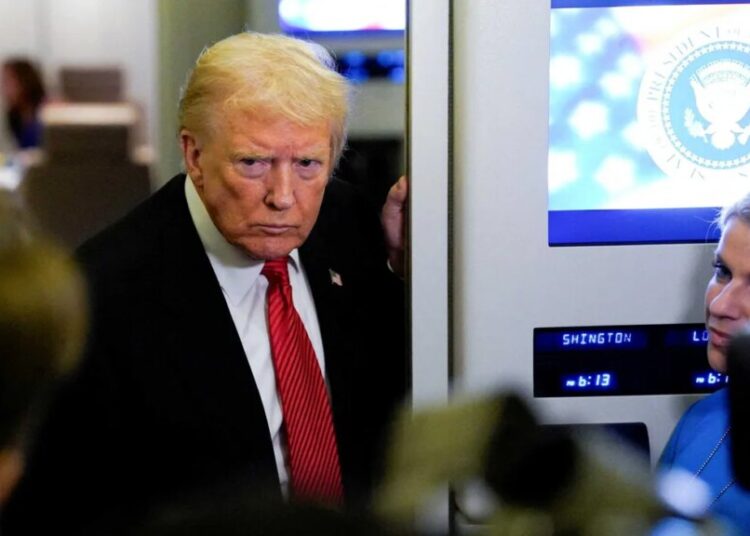
Mr. Trump made no mention of the jobs report on Friday. It was left to other Republicans to explain away the job losses as not really that bad.
Kevin A. Hassett, the director of the White House National Economic Council, said the job losses were “an outlier,” though he warned that future job reports might also show losses.
“There will be some anxiety that a number like this, or two or three numbers like this, is ahead for us,” Mr. Hassett said in a Friday interview on CNBC. “Every other indicator is consistent with very strong G.D.P. growth right now, and so this really is an outlier number.”
The White House clipped Mr. Hassett’s remarks and posted them on social media.
Representative Mike Lawler of New York, who is among the most vulnerable House Republicans, also blamed this winter’s severe weather and the health care strike. The important thing, he said, is that wages are on the upswing.
“We’ve seen similar one-month disruptions before,” Mr. Lawler said. “What Americans want right now is stability and policies that strengthen economic growth and lower costs.”
Whit Ayres, a Republican pollster, said the jobs report cut at the heart of Mr. Trump’s 2024 campaign promises.
“Donald Trump was elected to bring down inflation, juice the economy, control illegal immigration and get away from woke culture,” Mr. Ayres said. “Anything that gets away from success on any of those four efforts is not helpful, to state the blindingly obvious.”
To most economists, the February figures weren’t an easily dismissed blip, but rather part of a consistent pattern of weak hiring. Employers added just 116,000 jobs in all of 2025, and have cut jobs in two of the past three months.
The slowdown is most pronounced in some of the sectors that Mr. Trump has long promised to help. Manufacturers have cut 100,000 jobs since he returned to office. The oil industry has cut thousands more. And the unemployment rate is up over the past year among native-born workers, even as it has been flat among immigrants.
Derrick Johnson, the president of the N.A.A.C.P. and a frequent Trump critic, said the report’s finding that the unemployment rate for Black people had risen to 7.7 percent illustrated that the president had “been nothing but a miserable failure in every regard, including on the economy.”
Representative Suzan DelBene of Washington, the chair of the House Democratic campaign arm, argued that many Americans would view Republicans’ insistence that the economy is great as a denial of reality.
“The president seems indifferent to the struggles of the American people,” she said. “ “They don’t even acknowledge that families are struggling. So I think people understand that if they don’t even acknowledge it, they’re not going to do anything about it.”
The broader economic picture is more mixed. Gross domestic product, the broadest measure of economic output, grew at a solid pace last year, lifted in part by huge investments in artificial intelligence. Consumer spending has proved resilient, although separate data on Friday showed that retail sales fell in January. Wage growth is outpacing inflation, although it, too, has slowed. The unemployment rate, despite the uptick in February, remains low by historical standards.
But Mr. Trump has so far failed to deliver on some of his core economic promises. Manufacturing employment is down. The trade deficit in goods hit a record last year despite his tariffs. And inflation, which Mr. Trump vowed to end on Day 1 of his administration, has remained stubborn — and could be set to worsen again now that the war in Iran has led to a jump in gasoline prices.
Ruth Igielnik and Tim Balk contributed reporting.
Reid J. Epstein is a Times reporter covering campaigns and elections from Washington.
The post Economic Warning Signs Pile Up for Republicans Ahead of Midterms appeared first on New York Times.