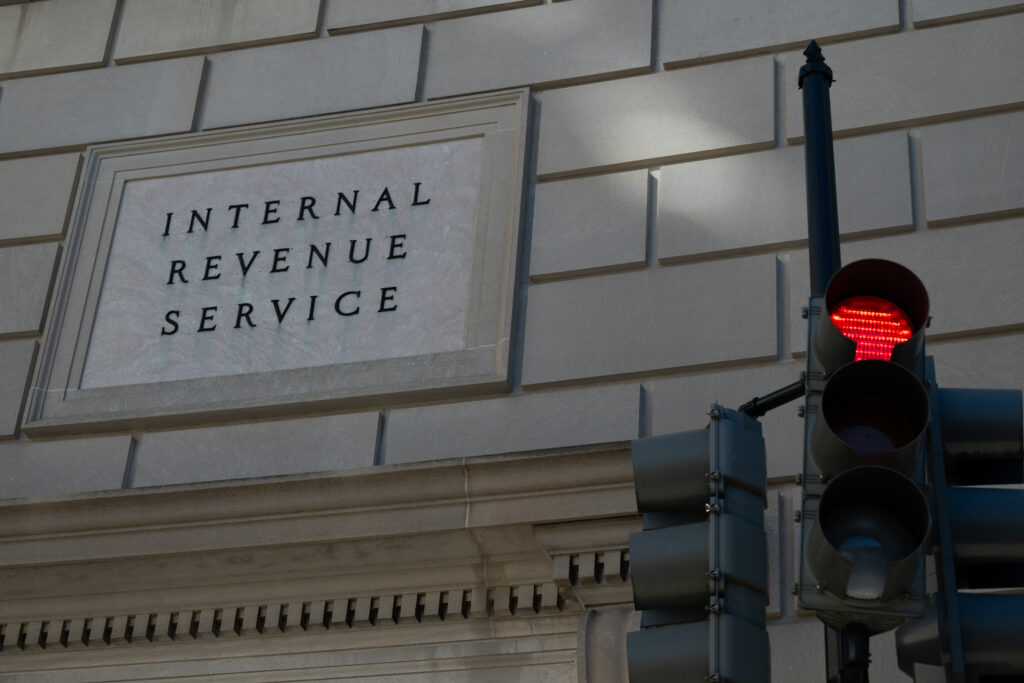
The Trump administration signaled a plan Friday to revoke a two-year-old tax rule designed to crack down on an arcane but highly lucrative tax avoidance tactic used by some of the largest and most complicated businesses.
If enacted, the Trump administration’s proposal would mean that large business partnerships no longer need to tell the IRS when they shift assets from one corporate entity to another. Those transactions, called “basis shifting,” have allowed businesses to dodge tens of billions of dollars in taxes, the Treasury Department alleged in the past, by illegally depreciating the same asset over and over again.
“My concern is that people will take this as a substantive conclusion that these transactions are okay,” said Stuart Rosow, a partnership tax attorney. Rosow said that he and other lawyers who handle complex partnerships’ taxes stopped looking for the transactions to report to the IRS last year, when the Trump administration initially signaled that it would repeal the reporting requirement.
Multimillion-dollar partnerships and their lawyers had been lobbying against the rule from the moment the Treasury Department announced it.
“The problem was that the way they did the regulations, they were almost impossible to comply with,” attorney Eric Sloan said. “It hit so many ordinary, everyday transactions. … It was just a bundle of errors. I felt really strongly from day one that they simply needed to be pulled.”
Under President Joe Biden, the Treasury Department announced the crackdown on basis shifting by partnerships in 2024 and estimated that the effort would raise more than $100 billion over the next decade.
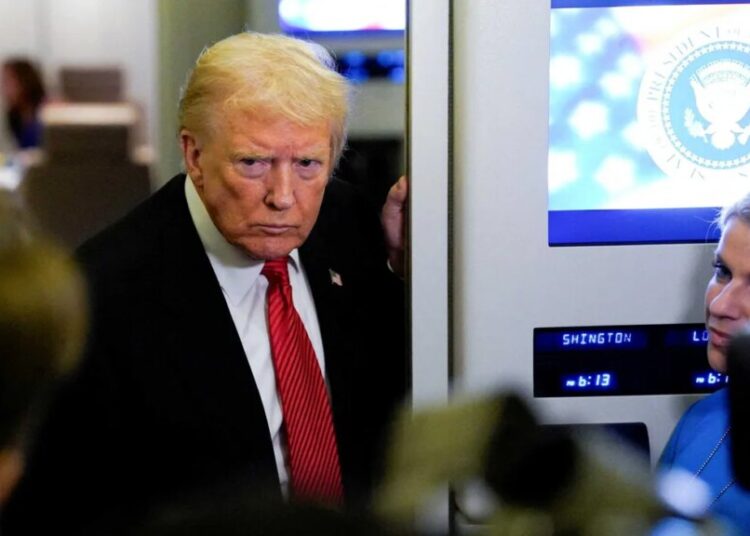
The posture quickly changed under President Donald Trump.
“You have an administration that wants to, as a general matter, deregulate and be pro-business,” said Miles Johnson, who focuses on partnership tax issues at New York University’s Tax Law Center. Johnson said some partnerships will probably take the move by the Trump administration as tacit permission to continue basis-shifting practices, even though “these sorts of transactions, in their worst forms, are pretty abusive.”
The Biden administration took a three-pronged approach. With Friday’s proposal by the Trump administration, published in the Federal Register where it will require public comment before taking effect, two of the prongs are gone.
The first was a requirement that businesses report certain transactions to the IRS, so that the government could detect illegal basis shifting. That’s what Friday’s proposal revokes.
The second was an increase in audits of partnerships. Partnerships have exploded in popularity as a structure for the most profitable and complex businesses — the number of partnerships with more than $10 million in assets grew 70 percent in the 2010s, to 300,000 in 2019. Over that same time, the IRS went from auditing almost 4 in every 100 partnerships each year, to just 1 in 1,000.
The Biden administration pledged to reverse that trend, hiring hundreds of new auditors. Danny Werfel, the IRS commissioner whom Trump replaced before his term was up, said that those new auditors noticed inappropriate basis shifting right away, leading the IRS to focus on that loophole.
But the IRS workforce has shrunk drastically under Trump. In the first months of his term, more than a quarter of the agency took buyout offers or otherwise left their jobs.
That leaves only the third prong still in place — a ruling by the IRS that basis shifting is illegal if its only purpose is tax avoidance.
In a closely watched case, Otay Project LP v. Commissioner of Internal Revenue, the U.S. Tax Court ruled last week that a California housing developer illegally deducted more than $700 million in income by using transactions between parties, which the court called “engineered.” Experts viewed the decision as a victory for the Biden-era interpretation of the law — that transactions must have “economic substance” beyond mere tax avoidance.
Some tax advisers for partnerships had said they would fight the Biden IRS rule in court, arguing that only Congress could make the basis-shifting moves illegal. “If it is correct that these need to be changed, then go to Congress,” Sloan said. “Don’t do by regulation what is Congress’s job.”
The post Trump plans to revoke Biden tax rule that cracked down on big business abuses appeared first on Washington Post.