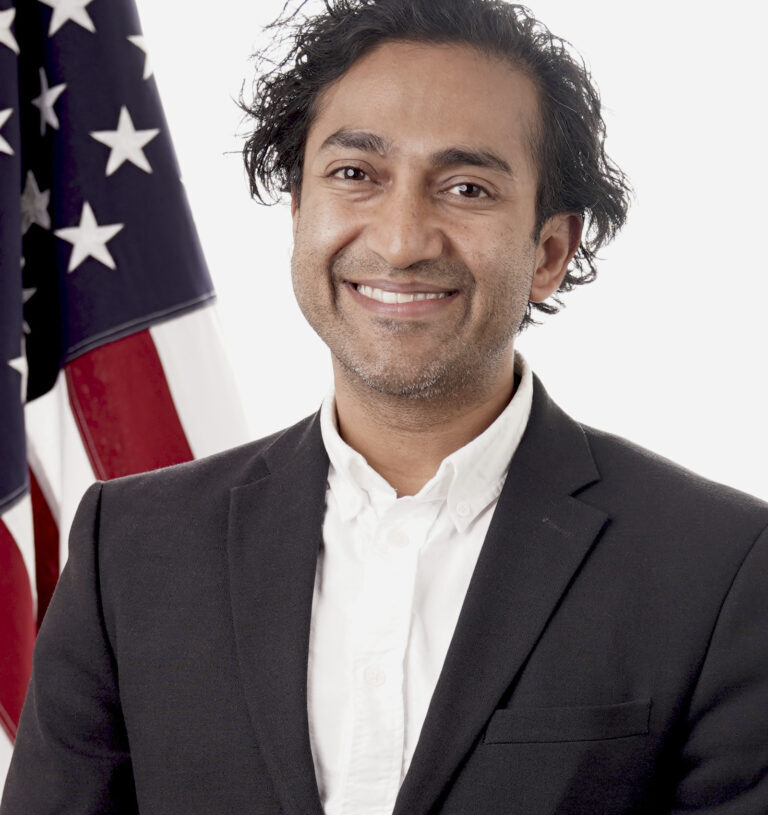
The nation’s controversial top vaccine regulator is leaving his job at the end of April, federal health officials said Friday.
Vinay Prasad had begun his role leading vaccines and complex treatments for difficult diseases in May, but has had a rocky tenure at the Food and Drug Administration over the past year, overseeing divisive decisions about drugs and a new plan to tighten vaccine approvals.
“He got a tremendous amount accomplished within his one-year sabbatical from [University of California at San Francisco] and will be returning back to his academic home later next month,” FDA Commissioner Marty Makary wrote in a post on X. He cited some of Prasad’s work, including on new guidelines narrowing approvals of new coronavirus vaccines to older adults and those with health conditions and new vouchers to expedite drug decisions.
The Wall Street Journal first reported the news. Prasad did not immediately respond to a request for comment.
Prasad, a key Makary ally, had been ousted at the direction of the White House in July after a right-wing pressure campaign over his handling of drug approvals and past support for Democrats. He was hired back less than two weeks later after Makary, who championed and elevated Prasad, reached out to the White House. The White House then reevaluated criticisms of Prasad and supported his return after finding them disingenuous.
In late November, Prasad laid out a stricter approach for federal vaccine approvals, citing his team’s conclusion, without detailing the evidence, that coronavirus vaccines had contributed to the deaths of at least 10 children. Former leaders of the FDA had condemned the plans, saying they risked undermining the nation’s ability to fight infectious diseases.
“I remain open to vigorous discussions and debate,” Prasad wrote to his team in an internal email laying out his proposals. He added that staff who did not agree with these core principles, including keeping policy debates private among FDA staff, should submit their resignations.
Prasad had recently faced backlash for declining to review a Moderna application for the first mRNA-based flu vaccine, a decision that shocked the company. The FDA reversed course the next week and agreed to review the company’s application under a revised approach.
He had also come under fire for decisions his center has recently made related to drugs for rare diseases, notably disagreements about the study design of an experimental treatment to slow the progression of Huntington’s disease made by gene therapy company uniQure.
Before joining the federal government, Prasad — a hematologist and oncologist — rose to prominence as a vocal critic of pandemic-era policies and had long criticized the regulatory process for approving cancer drugs.
In an internal email to FDA staff obtained by The Washington Post, Makary wrote that a search for the new head of the agency’s Center for Biologics Evaluation and Research is underway. Prasad had replaced Peter Marks, the architect of the U.S. program to rapidly develop coronavirus vaccines who the Trump administration forced out last spring.
Makary had defended Prasad as recently as late last month on CNBC, calling him a “genius” who has been on “loan from UCSF.”
The changes come amid a broader personnel shake-up at the Department of Health and Human Services with the aim of stabilizing a department that had been shaken by infighting and controversial messages. The drug industry and public health experts had been rattled last last year by leadership turnover at the FDA, with concerns over the agency’s direction mounting.
The Trump administration has also been seeking to downplay its controversial push to overhaul vaccine policy and instead tout work on food and drug pricing ahead of the midterm elections. Health Secretary Robert F. Kennedy Jr., the founder of a prominent anti-vaccine group, oversaw a major reduction to the childhood vaccine schedule earlier this year, but has since focused on more broadly popular aspects of his Make America Healthy Again agenda.
The post Controversial top vaccine regulator to depart FDA appeared first on Washington Post.