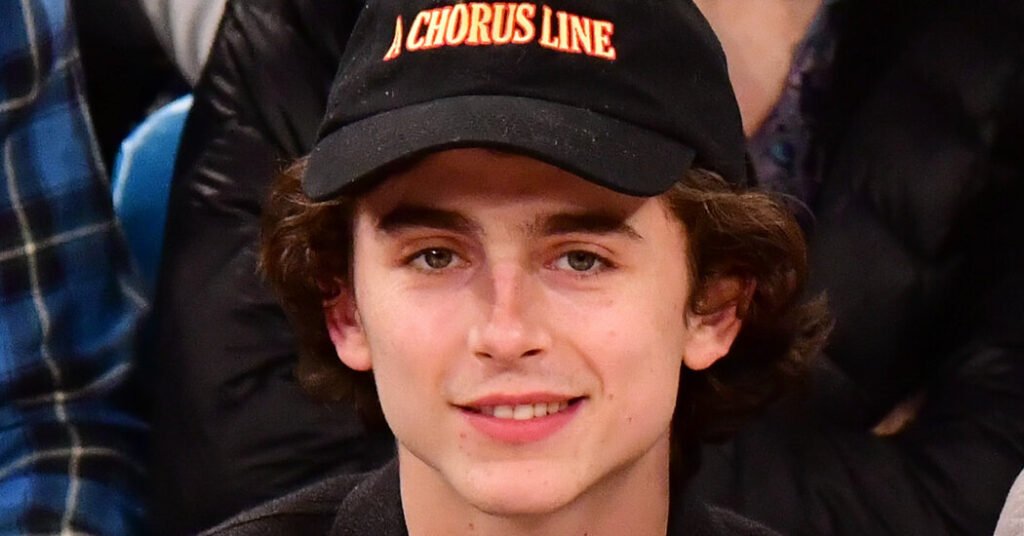
Timothée Chalamet isn’t the person you would expect to put down ballet and opera — especially ballet. His mother and his sister studied at the School of American Ballet. He wore a New York City Ballet baseball cap in Paris. He grew up in Manhattan Plaza, a building for artists including actors, singers and, yes, dancers.
But there he was at Town Hall in Manhattan, giving a talk with Matthew McConaughey, when he seemingly threw ballet and opera under the bus. The context had to do with filmmaking genres — serious versus entertainment — and keeping movie theaters relevant. Then he pivoted, strangely: “I don’t want to be working in ballet or opera, or, you know, things where it’s like, ‘Hey, keep this thing alive.’”
He quickly added, “All respect to the ballet and opera people out there,” and said that he “took shots for no reason.”
Or did he? Chalamet’s point wasn’t that ballet and opera don’t matter, but that it isn’t really part of mainstream culture. He was dismissing these art forms’ roles in our society, and is he wrong? The value of ballet and opera, and people’s perception around their value, are two different things.
He shouldn’t have brought up an idea that he couldn’t properly flesh out — I think the look on his face shows that he knew better — yet what he said wasn’t untrue. It was clearsighted, even practical. As someone from a dance family, he knows this world.
His comments were harsh to hear, but this is the frustration of working in the fine arts. The people who care about ballet, for example, care deeply. And most of those who don’t care think of ballet through stereotypes or quick hits of dancers on TikTok.
Disney+ removed “On Pointe,” a documentary series about students at the School of American Ballet, from the platform — an authentic portrait that was entertaining and crammed with ballet education. Instead, the nuances of this art form are overridden by its depictions in pop culture: “Black Swan,” with its eating disorders, back-stabbing competition and lurid affairs, and the stale fashion trend #balletcore, which is just an excuse for adults to dress up like Lolita. Ballet dancers don’t dress like that.
I don’t believe that Chalamet thinks it’s easier to be a dancer than an film actor. But he knows that movies have not only the potential to last but also to reach larger audiences, while the performing arts don’t.
Ballet is a small world, and a lot of dancers have released statements about Chalamet on social media, including Megan Fairchild, a New York City Ballet principal, who posted on Instagram: “Timmy, I didn’t realize you were a world class dancer or opera singer who simply chose not to pursue it because acting is more popular! Ballet and opera aren’t niche hobbies people opt out of for fame. They’re disciplines you can only enter if you have the rare ability for them in the first place.”
Chalamet must know this. It’s almost impossible to assume he didn’t attend and appreciate performances while growing up a short walk from Broadway and Lincoln Center, and attending the high school that inspired “Fame.”
Pauline Chalamet, his sister and a fine actress, has frequently spoken of her time at the School of American Ballet, the training ground for City Ballet. His mother, Nicole Flender, studied there, too, and went on to have a Broadway career. They both performed in “George Balanchine’s The Nutcracker” multiple times.
I don’t know if Chalamet studied dance himself, but he certainly can move — not just in the memorable Lil’ Timmy Tim appearances of his youth, but also in “Little Women.” (Remember the dance on the porch?) More subtly, his body in “Call Me by Your Name” was a mirror of a troubled, confused mind. Speaking as a dance critic, the less said about dance scenes in “Wonka,” the better, but in “Marty Supreme” he is the embodiment of velocity and nerves. It’s so apparent that his physicality is a gift, and in his genes.
Chalamet’s words, sadly, prove another point about ballet’s role in popular culture: The reason the mainstream media is talking about ballet this week is because a celebrity talked about it first. If a dancer said that a film didn’t matter, it would be like a tree falling in the woods.
Right now, the world should be worshiping Mira Nadon, a magnificent City Ballet principal dancer, as much as it does Chalamet. But as he pointed out, however indirectly, that’s never going to happen. Not because these young performers aren’t on the same playing field artistically, but because ballet is a box that is kept deep in the back of culture’s metaphorical closet. In Chalamet’s words lies a deeper point: It’s not that ballet isn’t important. It’s that the world can’t wrap its mind around finding its true value.
Gia Kourlas is the dance critic for The Times. She writes reviews, essays and feature articles and works on a range of stories.
The post Timothée Chalamet Has a Point About Ballet appeared first on New York Times.