This is an edition of the Books Briefing, our editors’ weekly guide to the best in books. Sign up for it here.
Some novelists build fantastical dream worlds; others aim to capture reality in all its complexity. Among my favorite authors are those who try to do both at the same time. That’s one reason I was intrigued by Carolina A. Miranda’s essay inThe Atlantic this week about Now I Surrender, the latest novel by the Mexican writer Álvaro Enrigue to be translated into English. The book “distills a byzantine swirl of historical events through the lives of a handful of very colorful characters,” Miranda writes, intertwining several real and invented incidents with major moments in the Apache Wars, a series of skirmishes involving Native Americans, the U.S., and Mexico across the Southwest borderlands. Enrigue’s “penchant for shooting the facts of history through the prism of the absurd,” as Miranda puts it, makes him singular—but it also puts him firmly in a long literary tradition.
First, here are four new stories from The Atlantic’s Books section:
- Why Iranians are weeping for a tyrant
- A novel about a secret no one wants to know
- Literature has a stay-at-home-dad problem.
- “French 75,” a poem by Kortney Morrow
Enrigue’s approach serves his subject well because the Apache Wars are so often oversimplified. American textbooks tend to boil the conflict down to the surrender of the Apache warrior Geronimo, depicting his resistance as a poignant speed bump on the road to westward expansion. What Enrigue describes instead is a multilateral conflict whose most tangible result was the erasure of a Native society. “Enrigue is examining a rupture,” Miranda writes, and so he tears apart the veil of realism. In one chapter, we follow a ragtag Mexican posse featuring a zarzuela singer disguised as a nun; in another we witness Geronimo’s anguish over what will become of his people; in still another, Enrigue himself appears, on a contemporary road trip with his fractious family to visit the memorial sites that inspired the novel.
This isn’t Enrigue’s first foray into historical absurdism. His previous novel published in English, You Dreamed of Empires, retells the encounter between the conquistador Hernán Cortés and the Aztec leader Moctezuma II through the lens of the latter’s mushroom-induced hallucinations. An earlier novel imagines two Renaissance artists playing tennis with a ball made from Anne Boleyn’s hair. In treating the details of war and conquest as symbolic playthings, Enrigue brings to mind authors such as Joseph Heller and Kurt Vonnegut—and of course, Thomas Pynchon.
Pynchon’s 1973 novel, Gravity’s Rainbow, arguably the high point of this micro-genre, puts World War II through a blender of plots and subplots, magical twists and alternate histories. It’s devastating and funny and, above all, chaotic. Keeping track of its 400-odd characters—including African rocket designers, Kazakh lexicographers, mad engineers, Masons, Nazis, German expressionists, and a sentient light bulb—is all but impossible for nonobsessives. This particular approach to historical fiction is not to every reader’s taste. In lesser hands (and even in some of Pynchon’s later works), it can risk dissolving into incoherence—which is partly why such attempts can draw mixed reviews. Yet I consider this entropic tendency, on balance, to be a strength, because one thing that these authors would agree on is that history is very, very messy.
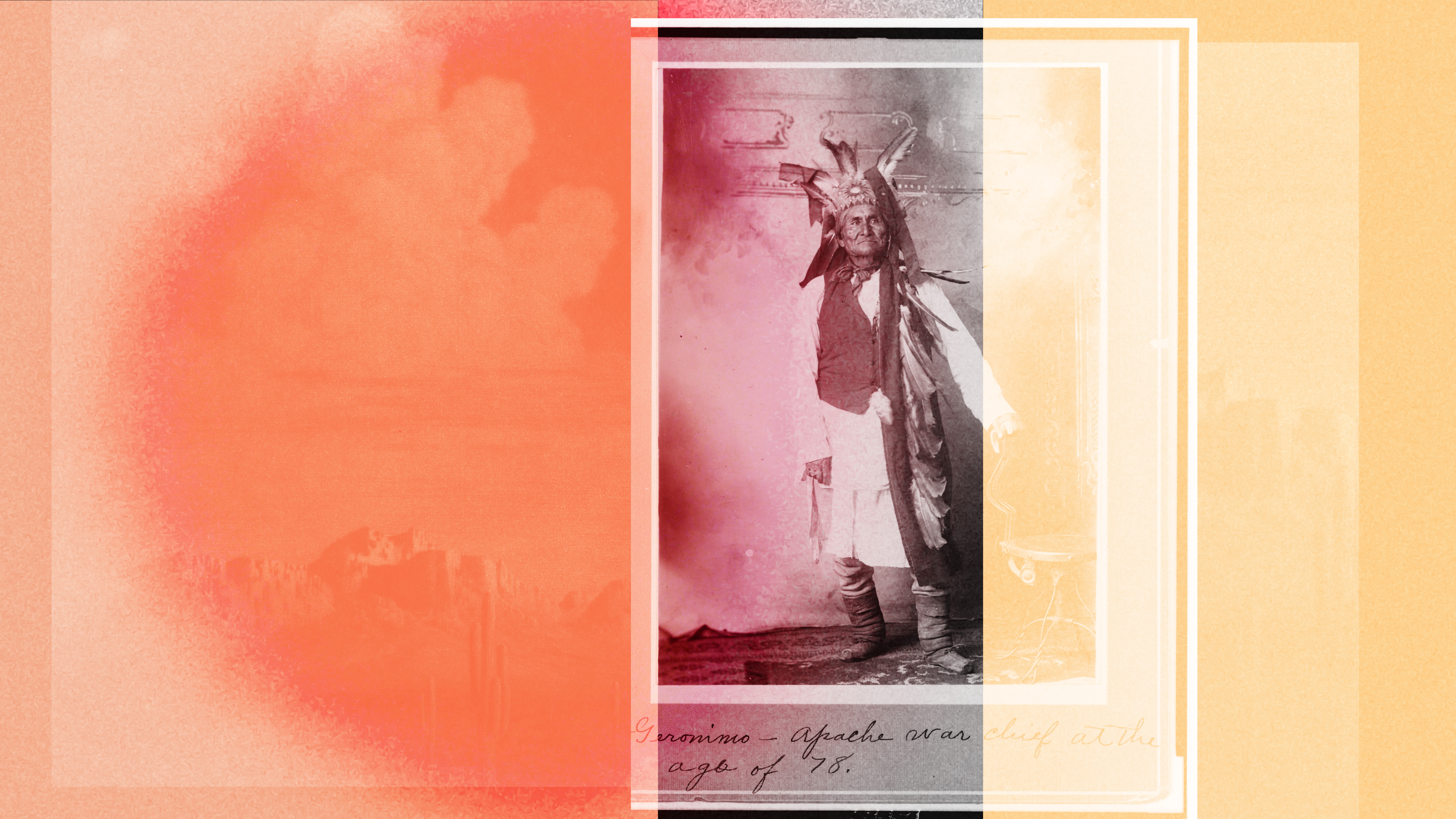
A Western That Goes Where Cormac McCarthy Wouldn’t
By Carolina A. Miranda
Álvaro Enrigue’s Now I Surrender scraps the simplistic binary of cowboys and Indians in favor of a wild, multifaceted war story.
What to Read
Honored Guest, by Joy Williams
A book of short stories may be the best kind of work for a reader with a busy schedule. You can savor one piece in a collection, then let days or weeks pass before moving on to another. Plus, no one can stop you from reading them in any order you please. I recommend the 12 stories in Honored Guest, all full of striking detail and featuring strangely insightful narrators. Each tale abounds with existential questions and turns the familiar eerie. In “Anodyne,” a mother quits yoga to start shooting classes at a gun range; in “ACK,” a couple endures an odd dinner party on Nantucket. Williams’s stories always benefit from considered, post hoc reflection: Finish just one with breakfast, then let the images and sentences drift through your mind for the rest of the day. — Bekah Waalkes
From our list: Seven books to read when you don’t have time to read
Out Next Week
 In the Days of My Youth I Was Told What It Means to Be a Man, by Tom Junod
The Complex, by Karan Mahajan
Everybody’s Fly: A Life of Art, Music, and Changing the Culture, by Fab 5 Freddy with Mark Rozzo
Your Weekend Read

Pete Buttigieg in the Wilderness
By Graeme Wood
A day with the Buttigieges is a never-ending succession of wholesomeness. When I went to their house, Pete had traded running the country’s transportation sector for a different type of traffic management, in the kitchen of his exurban home. The couple had begun preparing their children for a day of camp. Pete was delivering yogurt to the table while Chasten coaxed them to eat it. “Not enough protein,” Chasten said, prompting Pete to scramble eggs, which of course the kids rejected. “Papa got an axe for Christmas,” Gus told me. “Technically,” Pete said, “it is a splitting maul.”
When you buy a book using a link in this newsletter, we receive a commission. Thank you for supporting The Atlantic.
Sign up for The Wonder Reader, a Saturday newsletter in which our editors recommend stories to spark your curiosity and fill you with delight.
Explore all of our newsletters.
The post Pushing the Limits of Historical Fiction appeared first on The Atlantic.