Miles Yu is a senior fellow and director of the China Center at Hudson Institute.
For more than a decade, Beijing has worked quietly and methodically to turn Iran into the keystone of its Middle East strategy. That strategy has now collapsed.
China occupies a unique position among America’s principal adversaries. Unlike Russia, Iran, North Korea, Cuba or Venezuela, it alone remains fully integrated into the global free trading system. Leveraging enormous state-controlled wealth accumulated through that access, Beijing has cultivated relationships with regimes hostile to the United States. Yet, despite Beijing’s preponderant financial and materiel assistance, Russia’s war in Ukraine has ground into a costly stalemate. Venezuela has faded as a strategic factor. North Korea and Cuba remain troublesome but comparatively dormant. Iran, however, stood out as the most aggressive and strategically valuable pillar of a China-centered alignment of anti-U.S. states.
In other words, Tehran was not just another partner for Beijing, it was also central to China’s grand strategy. And the Chinese Communist Party’s investment in Iran has been monumental.
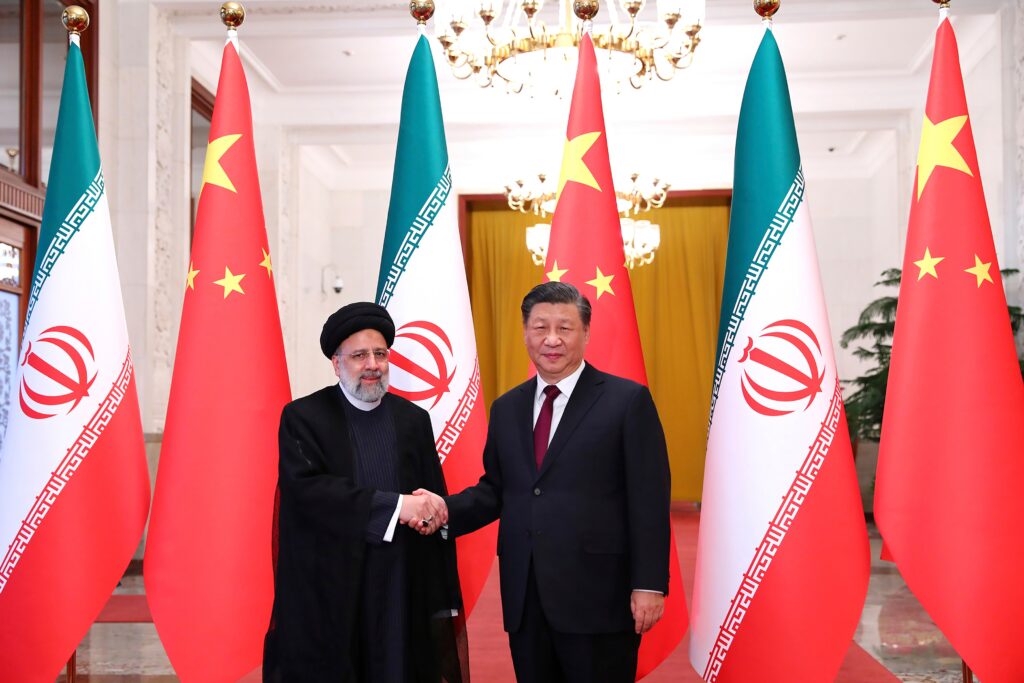
In March 2021, China and Iran signed a sweeping comprehensive strategic partnership, which included Beijing pledging $400 billion in long-term infrastructure and energy investments under the Belt and Road Initiative. In 2023, Iran was welcomed into the Shanghai Cooperation Organization, deepening its integration into China-led security institutions. Most importantly, China has become the dominant buyer of Iranian oil, purchasing roughly 90 percent of Iran’s oil exports — only 12 percent of China’s total oil imports, but crucial to Iran’s economic survival.
Geography is a key factor, too. Positioned astride the Persian Gulf and bridging Central Asia to the Middle East, Iran connected the land-based “Belt” to the maritime “Road.” In strategic terms, it offered China a potential energy corridor that could bypass maritime choke points dominated by the U.S. In political terms, it provided a forward base inside a region historically shaped by American power.
Iran has also served another Chinese purpose. By backing militant proxies and sustaining regional instability, Tehran has kept the Middle East in constant crisis. A United States absorbed in managing Iran, its nuclear ambitions and its network of armed groups would have fewer resources and less strategic focus to devote to countering a greater global threat — China’s ambitions in the Indo-Pacific.
That was the theory.
The cascade of events culminating in June’s Operation Midnight Hammer and last week’s Operation Epic Fury has not only devastated Iran’s nuclear infrastructure and its conventional long-range missile and drone capabilities, it has changed the strategic equation overnight.
The coordinated U.S. and Israeli military campaigns have crippled Iran’s enrichment facilities, decimated its military-industrial backbone and weapons stockpile and shattered its credibility as an emerging nuclear power. Iran’s ability to wield nuclear brinkmanship as a shield for regional aggression was dramatically reduced. Just as important, the strikes exposed the fragility of the anti-U.S. bloc often described as the CRINK axis — China, Russia, Iran and North Korea. When Tehran came under sustained attack, neither China nor any of the other strategic partners intervened in any meaningful way.
Iran was left to absorb the blows alone.
For Beijing, the implications are severe. A weakened, internally strained Iran can no longer function as a reliable diversionary magnet for American attention. Its capacity to destabilize the region on China’s behalf has been curtailed. Belt and Road projects tied to Iranian ports, rail corridors and energy infrastructure now face heightened instability and security risk. The vision of a secure overland energy corridor insulated from U.S. naval power has been reduced to uncertainty.
China had bet on a confident, defiant and nuclear-ambitious Iran. Instead, it is left with a battered partner whose utility has sharply diminished.
Moreover, Beijing’s setback is not limited to Iran itself. For years, China has attempted to balance two contradictory policies: cultivating ties with Arab states — particularly Gulf monarchies — while simultaneously underwriting Iran’s regime. It has presented itself as a neutral economic partner, even as it deepened strategic commitments to Tehran.
That balancing act is now far harder to sustain. What was once framed as a masterstroke of hedging now looks like a bumbling miscalculation. The weakening of Iran is widely seen in parts of the region as a step toward greater stability — good news for Middle Eastern peace, but a strategic loss for the Chinese Communist Party.
China’s official reaction to last week’s Operation Epic Fury was swift and familiar. In a call between Foreign Minister Wang Yi and his Russian counterpart Sergei Lavrov, Beijing condemned the strikes as unjust and unlawful. This posture underscores a recurring inconsistency and hypocrisy: China has refrained from condemning Russia’s actions in Ukraine and has steadfastly avoided direct criticism of Iran-backed militant violence, including the Oct. 7, 2023 massacre of Israelis by Hamas.
The contrast reinforces a perception of selective principle — invoking sovereignty and international law when convenient, remaining silent when allies or partners are implicated.
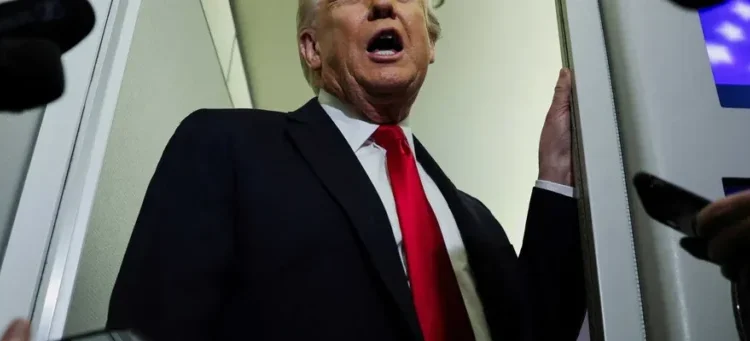
There is an immediate geopolitical angle here as well. As President Donald Trump prepares for talks with Chinese President Xi Jinping at the end of this month in Beijing — the symbolic command center of today’s global instability — the United States will have demonstrated both capability and resolve in dismantling a key pillar of China’s international strategy.
The lesson is unmistakable. Grand strategy built on vulnerable and tyrannical proxies carries inherent risk. In Iran, China believed it had found the perfect partner: strategically located, ideologically aligned and willing to challenge U.S. influence. That bet has failed.
The post China bet its Middle East strategy on Iran. That bet has failed. appeared first on Washington Post.