Amy Griffin, a best-selling memoirist, was sued on Wednesday by a former classmate who contends that Ms. Griffin’s story of being sexually abused — as she described in her book, “The Tell” — was based on assaults the classmate herself suffered at their Texas middle school in the 1980s.
The classmate, identified in court papers as Jane Doe, filed the lawsuit in California, accusing Ms. Griffin of invasion of privacy, negligence and infliction of emotional distress, among other claims. The suit also names Sam Lansky, a ghostwriter who worked on “The Tell,” as well as Penguin Random House and The Dial Press, which published the book, as plaintiffs.
“‘The Tell’ constitutes neither a genuine nor harmless memoir,” the lawsuit says.
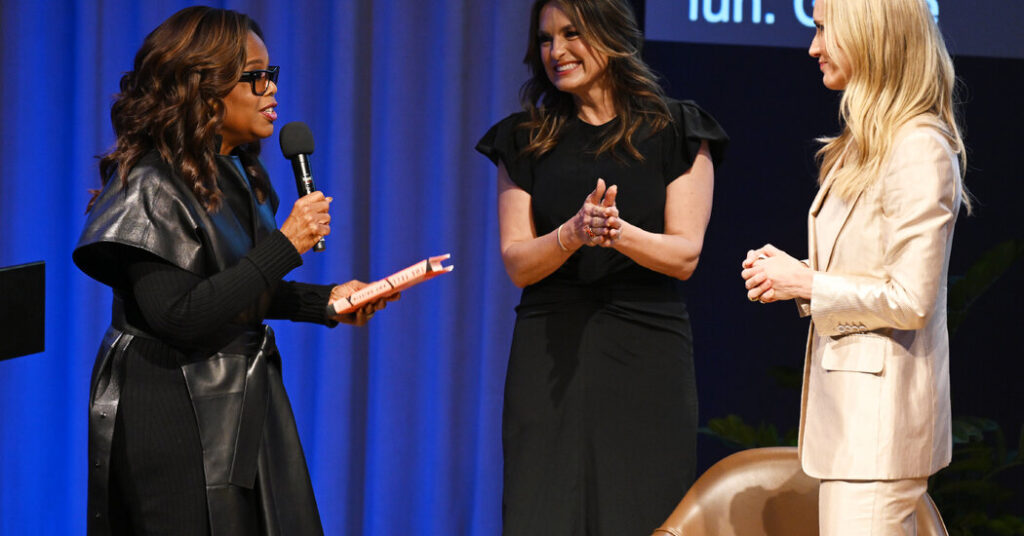
The suit was filed in state court nearly one year after the publication of the book, which came out last March amid enormous social media support from Ms. Griffin’s network of famous friends. “The Tell” also was selected last year by Oprah Winfrey for her book club.
In the book, Ms. Griffin wrote that while under the influence of MDMA, an illegal psychedelic drug, she recovered memories from more than 30 years earlier of being assaulted at her middle school by one of her teachers.
Ms. Doe’s lawsuit specifically cites two incidents in the book — an assault at a middle-school dance and another in a school bathroom, in which Ms. Griffin said the teacher tied her hands behind her back with a bandanna — that were presented in “The Tell” as Ms. Griffin’s “own ‘recovered memories’ that she had recently become aware of after going through MDMA therapy.”
Ms. Doe asserts that both attacks actually happened to her. She contends in her lawsuit that she was sexually assaulted at the dance while wearing a dress she had borrowed from Ms. Griffin and that she returned the dress with a stain on it left by the teacher during the assault.
And, she says, she was attacked again approximately one month later, in a school bathroom.
“This assault was more violent,” the suit states. It describes the teacher putting his boot on her back and stuffing a bandanna in her mouth, which caught on her braces.
Representatives for Ms. Griffin, Penguin Random House and The Dial Press did not immediately respond to requests for comment, nor did Mr. Lansky.
Parts of Ms. Doe’s story came to light in a New York Times article published in September that examined how Ms. Griffin’s celebrity connections catapulted a book by a first-time author, with the help of a ghostwriter, onto the best-seller list. It also revealed that Ms. Griffin’s husband, John A. Griffin, had financially supported research conducted as part of an effort to push the Food and Drug Administration to approve MDMA for therapeutic use, and that the couple had invested through their foundation in a company poised to sell MDMA.
Zach Rosenblatt, a lawyer for Ms. Doe, identified his client by name to The Times. She is the classmate mentioned in the article. The classmate spoke to The Times last year on the condition of anonymity.
In that article, The Times also reported that the book had not been fact-checked by the publisher, and that the teacher Ms. Griffin accused of sexual abuse — whom she had named in her proposal to publishing houses — was described in enough detail that he was identifiable to many in Amarillo, Texas, where she grew up.
The classmate told The Times that the teacher who assaulted her was not the teacher whom Ms. Griffin accuses in her book. The lawsuit makes the same distinction.
During his 30-year career, no complaints were filed against the teacher Ms. Griffin says raped her, state education and law enforcement officials said. The Times article reported that despite the publicity generated during the rollout of the book, no other accusers came forward, according to the Amarillo police.
In the lawsuit, Ms. Doe claims that she met with Ms. Griffin in 2019, at the author’s invitation, at a coffee shop in California and discussed growing up in Amarillo. The suit also says that in 2022, Ms. Doe was contacted by someone claiming to be a talent agent and producer who “expressed an interest in using her ‘life story’” for a film or television show. During several subsequent conversations, Ms. Doe revealed her middle school sexual abuse. When Ms. Doe asked for a contract, the purported agent cut off contact, according to the lawsuit.
Ms. Doe claims that the information she shared was then used in “The Tell.”
Katherine Rosman covers newsmakers, power players and individuals making an imprint on New York City.
The post Lawsuit Accuses Amy Griffin, Best-Selling Author, of Invasion of Privacy appeared first on New York Times.