So long as Mississippi has an income tax, there’s no reason for some kinds of income to be treated better than others. Yet the state House just passed a bill to exempt from taxation the income that college athletes earn from their name, image and likeness (NIL).
The proliferation of NIL payments, especially for football players in the Southeastern Conference, has some Mississippi lawmakers believing their state schools are at a recruiting disadvantage. Tennessee, Texas and Florida have no income tax at all. Arkansas Gov. Sarah Huckabee Sanders (R) signed a bill last April to exempt NIL income from income tax if it’s provided directly by universities.
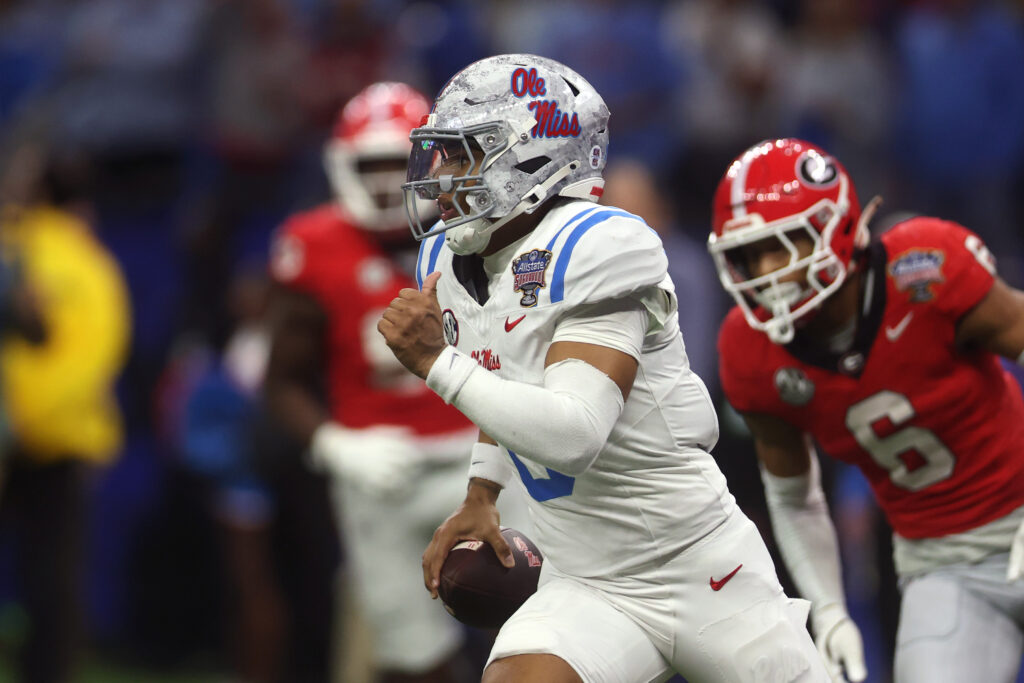
Ole Miss quarterback Trinidad Chambliss is set to make over $5 million in NIL income next year, perhaps more than he would make playing in the NFL. That’s great for him, but there’s no reason the law should prefer him over others.
As a general principle, a simpler tax code is fairer. Complexifying the tax system with special loopholes that benefit politically connected interest groups is unfair to everyone else. It tilts the playing field and distorts incentives, undermining the free market.
Consider the many non-athletes at Ole Miss who also work jobs during school. Their earnings are subject to taxation. A star quarterback and the students working for the on-campus gym where he trains are equally deserving of a lower tax burden.
The logic of interstate competition doesn’t only apply to college sports. Other employers in the Magnolia State have to compete for talent with firms based in states without income taxes. Shouldn’t their workers also be exempt from income tax?
Mississippi’s answer to that, by the way, is yes. Gov. Tate Reeves (R) signed legislation last year that could phase out the state income tax by 2040. Mississippi has already gone from a three-bracket system with a top rate of 5 percent in 2017 to a flat tax of 4 percent on income over $10,000 this year. The law Reeves signed would bring that down to 3 percent by 2030, and then cut it all the way to zero if revenue triggers are achieved in future years.
That’s the right way to make the state more competitive. Twenty-four states have a flat tax for wage and salary income, including the nine states that have a flat tax of zero because they don’t tax wage income at all. States can rely less on income taxes because they have sales taxes and property taxes, which provide stable sources of revenue that are less detrimental to savings and investment. They’re also easier to pay than income taxes.
Mississippi is already moving in the right direction on income taxes. College athletes don’t need to see the benefits before everyone else.
The post Mississippi shouldn’t prefer student athletes over students appeared first on Washington Post.