For the first time since World War II, a torpedo launched from a U.S. Navy submarine struck a vessel in combat, sending the Iranian frigate Iris Dena to the bottom of the Indian Ocean near Sri Lanka.
The submarine, which the Pentagon has yet to identify, carried out the attack on Wednesday. Later that morning, the Defense Department released a video of a single torpedo detonating under the Iris Dena’s stern, sending a large plume of water skyward. The frigate’s hull can be seen tearing apart along its port quarter above the waterline.
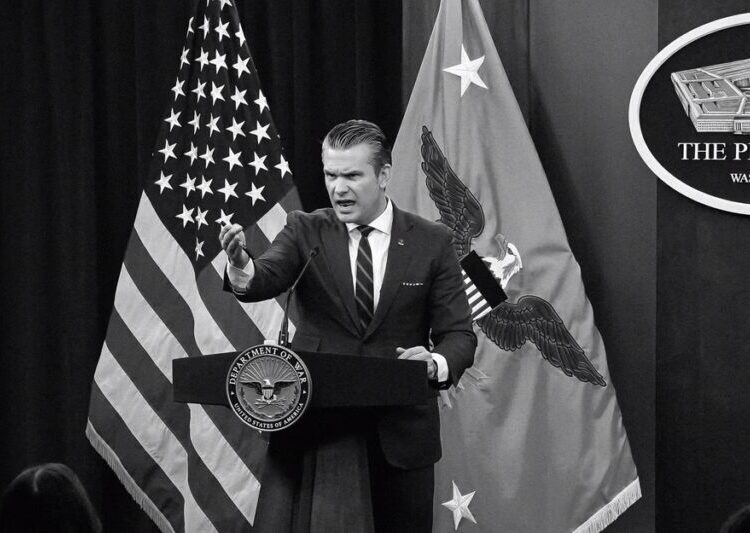
At a Pentagon briefing, Defense Secretary Pete Hegseth called the sinking “quiet death,” while Gen. Dan Caine, the chairman of the Joint Chiefs of Staff, spoke about it more dispassionately, saying the torpedo achieved “immediate effect.”
Sri Lankan officials said they had rescued 32 Iranian sailors from the Iris Dena, which is believed to have had a crew of 180.
The Navy referred questions about the submarine attack to U.S. Central Command.
According to the U.S. Navy’s History and Heritage Command, the last American sub to fire a torpedo at an enemy vessel was the U.S.S. Torsk, which sank a 750-ton Japanese vessel on Aug. 14, 1945.
That ship, a patrol escort called the CD-13, was off the Japanese port of Maizuru when it spotted the Torsk via sonar. According to a Navy history of the engagement, the American submarine fired one torpedo in response, dived to 400 feet and launched a second torpedo. Both weapons struck the CD-13, killing 28 of its crew members.
Since then, U.S. submarines have carried out some of the nation’s most dangerous and sensitive intelligence-gathering missions in enemy waters.
Navy subs have carried torpedoes in hostile waters throughout the Cold War to the present. And even though American subs had not been using torpedoes to sink ships from 1945 until the current war with Iran, they have regularly contributed to combat operations ashore.
The Los Angeles-class fast-attack submarine U.S.S. Louisville became the first to launch a land-attack missile in combat when it launched a Tomahawk missile at an Iraqi position during Operation Desert Storm, according to U.S. Submarine Force Pacific.
U.S. subs launched cruise missiles against targets in Iraq again in 1996 and in 1998, and during the opening salvos of the war in Afghanistan as well as the 2003 invasion of Iraq. They were also used in 2008 against targets in Somalia, in the 2011 NATO air campaign in Libya, in 2024 against the Houthis in Yemen, and in the attack on the Iranian nuclear site in Isfahan last June.
General Caine said the sub that sank the Iris Dena launched a Mark-48 heavyweight torpedo, which has been the Navy’s main sub-launched weapon for attacking ships and other submarines.
Introduced in 1972 and built at a Navy base in Yorktown, Va., that torpedo has been updated periodically. The most recent version weighs nearly 3,800 pounds and can use sonar to find its target and dive down underneath it.
There the equivalent of roughly 500 pounds of TNT detonates, creating a large bubble of gases that rises upward and snaps the ship’s spine, called the keel, through metal fatigue. That often rips the ship into two or more pieces, causing it to sink quickly.
A photo posted on social media by the Defense Department showed the Iris Dena’s bow rising high in the water before the ship slipped beneath the waves.
American submariners who saw combat in World War II were awarded with a coveted pin called the Submarine Combat Patrol insignia. It is unclear whether the pin has been issued by the Navy for action since then.
John Ismay is a reporter covering the Pentagon for The Times. He served as an explosive ordnance disposal officer in the U.S. Navy.
The post U.S. Submarine Launches First Torpedo in Combat Since World War II appeared first on New York Times.