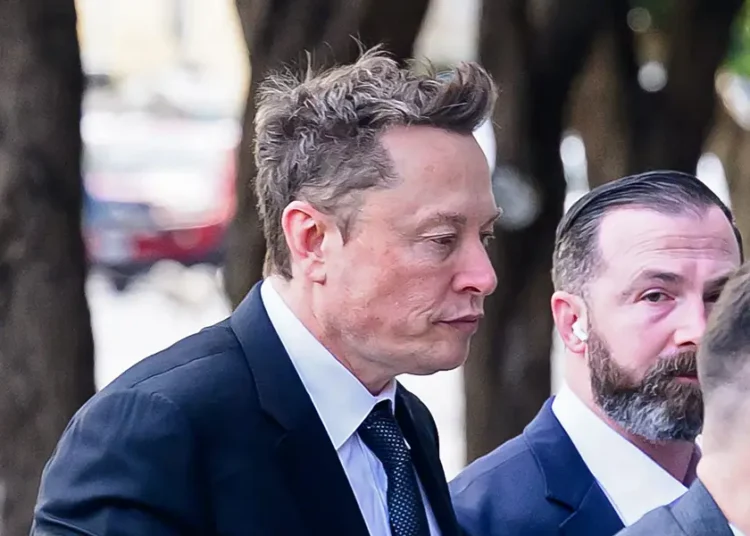
How far can Republicans go as a party of trolls? The answer suggested by Donald Trump, president of these United States, is … awfully far.
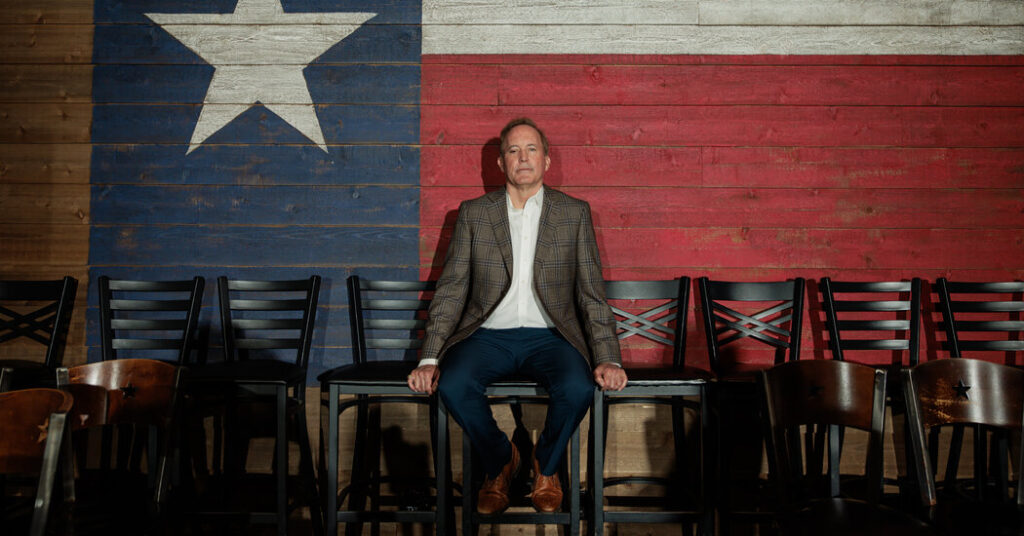
Mr. Trump is sui generis. But what about Attorney General Ken Paxton of Texas? Throughout his career and in the Republican Senate primary, he has explored the outer limits of the troll-as-tribune model of politics.
So far, that’s been working out pretty well for him. Sure, he forced his way into a primary runoff against John Cornyn, a four-term incumbent senator who received tens of millions of dollars of support, a lopsided financial advantage in the most expensive Senate primary on record. All that money didn’t close the deal, and it generally means trouble when an incumbent faces a runoff. Mr. Paxton might very well be the G.O.P. nominee to face the Democratic Senate candidate, James Talarico, a mild-mannered Presbyterian seminarian Texas Democrats chose over their own more trollish candidate, Representative Jasmine Crockett.
An endorsement from Mr. Trump could prove dispositive for either Republican candidate. There are Trump loyalists supporting both candidates — the presidential campaign manager Chris LaCivita is a senior adviser for a Pro-Cornyn super PAC, and the impresario Steve Bannon has thrown his weight behind Mr. Paxton — but the president, disinclined to risk backing a loser in the primary and fearful of giving up a Senate seat in November, offered no endorsement before Tuesday’s election. It might also be the case that the voters who supported the third primary candidate, Wesley Hunt, himself a Trumpist, will turn to Mr. Cornyn and not Mr. Paxton in the runoff.
Nothing is certain. But the fact that Mr. Paxton has come so far without explicit support from the White House cannot be seen as anything other than a victory for the Texas attorney general and his brand of politics.
Mr. Paxton’s trolling his way through a Republican primary is one thing, but a general election is something else. It’s not that the Democrats are immune from the trolling temptation — Ms. Crockett rode that pony a long way — but Mr. Paxton might be described, without exaggeration, as the most scandal-plagued politician in the country. And he has achieved the feat of ousting Ted Cruz as Texas’ least likable elected official.
Mr. Paxton thrives because there are many Texas Republicans who, even though they know that he is a corrupt distillation of right-wing excess, celebrate him for the same reason they celebrate Mr. Trump: He makes progressive heads explode on cable-news shows.
But life on the ground in Texas — particularly in the state’s sophisticated, high-tech, capital-intensive, immigrant-heavy economy — is a world away from the political theater. Yes, the state appears to be as red as red can be, but it is not deeply so — Mr. Trump’s 2020 performance in the state was slightly down from his 2016 performance, and even his comeback win in 2024 (taking just a bit more than 56 percent of the vote) was closer to his showing in Iowa (an even 56 percent) and well behind his romps in Oklahoma (66 percent), Alabama (65 percent) and West Virginia (70 percent). Texas is more closely divided than you might think.
That is in part because Texas is no longer entirely the land of “wide open spaces” but an increasingly urban state, home to six of the 25 largest cities in the country and two of the five largest metropolitan areas. Republicans do not typically fare well in urban areas — they haven’t won a mayoral election in Houston in more than 40 years.
But for the moment, there are enough votes in farm country and in conservative exurban communities to have kept Democrats from winning any statewide office since 1994.
What are Texas Republicans talking about in those sparsely populated areas? Jobs? Taxes? Trade wars destroying farmers’ export markets?
No, their big issue of late has been the fact that a group of Muslims in the Dallas suburbs wants to build a planned community with a mosque in the middle of it instead of a golf course. Mr. Paxton has used the powers of his office to wage war against what critics call planned “sharia compounds” in a state where Muslims make up 2 percent of the population at most. In a state with a cooling economy, stagnant job growth and a slowing housing market, it is not clear that this kind of boutique social-war agenda is going to be enough to carry the day.
The Senate seat Mr. Paxton is seeking to fill has been held in the past by, among others, Morris Sheppard (author of the ill-fated 18th Amendment), Lyndon Johnson, John Tower and Phil Gramm — consequential men doing consequential things. But what do so many modern senators do all day except own the opposition on social media and sit by the phone waiting for cable-news invitations? Our Congress today is, as the writer Jonah Goldberg puts it, a “parliament of pundits.”
The illusion of low stakes certainly shed some light on Mr. Paxton’s political success. His shenanigans raised interesting questions over the years — for instance, does an impeached politician’s estranged wife, herself a state senator, have to recuse herself from voting on his conviction? But he is decidedly minor league when it comes to his featherbedding: Mr. Trump’s family and friends have added billions to their wealth during his presidency, whereas Mr. Paxton’s impeachment (in which he was acquitted) involved only allegations of comparatively penny-ante handouts from a favor-seeking patron.
In the unhinged political environment of Texas in 2026, Mr. Cornyn’s general lack of scandal and controversy must be understood not as a feather in his political cap but as an electoral deficiency: He is, God bless him, boring. Texas Republicans demand to be entertained. Mr. Cornyn’s other cardinal sin is that he from time to time tries to put together a legislative deal that could win some Democratic support — that is to say, he acts like he wants the G.O.P. to govern as a majority party rather than as a minority party limited to the ever-narrower agenda of 60-odd-year-old culture warriors consuming 16 hours of Fox News every day.
The Texas economy often seems to be on a different planet from Texas politics. Texas is ground zero for many of the biggest opportunities and challenges coming in the near future, a magnet not only for Latin American, Asian and African immigrants, but also alternative energy projects and A.I.-enabling data centers. The state’s future looks less like Mr. Paxton and more like the chairman of the Texas Republican Party, Abraham George, who emigrated from India as a teenager speaking little English.
The notion that Mr. Paxton would take a sudden turn for the serious and the statesmanlike — that he is capable of such a thing — is implausible. With Americans now in danger and being killed in the Middle East, the taste for Paxton-style performative buffoonery could diminish. But it has been a disappointing decade for those who have been waiting for the Republicans to come to their senses.
The stakes are high in Texas. The state needs intelligent and responsible political leadership, but will it get it?
Kevin D. Williamson is a national correspondent at The Dispatch.
The Times is committed to publishing a diversity of letters to the editor. We’d like to hear what you think about this or any of our articles. Here are some tips. And here’s our email: [email protected].
Follow the New York Times Opinion section on Facebook, Instagram, TikTok, Bluesky, WhatsApp and Threads.
The post Who Will James Talarico Face? A Texas Troll or a Bore. appeared first on New York Times.