Dear reader,
In last week’s newsletter, we looked at housing construction. This week, we turn to food distribution.
Food benefits in the United States have always been a political football, even before the recent government shutdown played havoc with food stamps. But until the shutdown, both parties had shown growing support for one corner of the Supplemental Nutrition Assistance Program (SNAP): free school lunch.
Just in time for National School Breakfast Week, we’re tracking the progress of the 80-year-old National School Lunch Program, which has been significantly expanded over the past 16 years, but is likely to be affected by recent cuts to food benefits. Our editor Jason Chiu lays out what the program is, what’s changing and what that might mean.
— Matt Thompson
What led to the rise of free lunch?
When President Harry S. Truman created the program in 1946, it served 7.1 million children. In the 2023-24 school year, more than 21 million children received a free school lunch through the program.
For decades, the school lunch program grew incrementally. But two milestones fueled the program’s rapid expansion:
-
In 2010, the first lady, Michelle Obama, made the federal government’s child nutrition program a centerpiece of efforts to fight childhood obesity. The passage of the Healthy, Hunger-Free Kids Act that year included a somewhat obscure provision that let schools with a critical mass of students who receive free or reduced-price lunches offer them to all their students.
-
In 2020, the Covid-19 pandemic induced the federal government to offer free meals to all public school students. Communities nationwide could begin to see the benefits. Since the emergency federal subsidies went away in 2022, nine states have passed laws to provide universal free meals in their schools.
Today, a series of complicated formulas helps determine which students eat for free. Through the national lunch program, the federal government reimburses a school for the costs of the meals depending on what percentage of the school’s population is considered lower income.
What cuts does the program face?
The nation’s school lunch program is part of SNAP, which has always been vulnerable to political attacks. Opponents routinely point out junk food items covered by food stamps, as were highlighted in many news segments about the program’s suspension during the government shutdown in the fall of 2025.
But school lunches are hard to tar with the same brush. The meals are for kids, first of all — and as Susan Shain reported for Headway in 2024, they offer immediate and tangible benefits for entire families. Plus, school lunches might be the most nutritious meals most students eat all day.
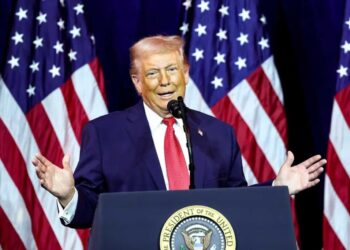
But 2025 brought a new set of challenges to free school meals. In March, the Trump administration announced cuts to some programs that supplied schools with food from local sources, although some of this funding was reinstated for the next fiscal year. The government shutdown in October underscored how federal cuts increasingly jeopardize food benefits. Most significantly, the president’s signature tax and spending bill that was signed into law in July contained major cuts to food benefits that are most likely to reduce the number of students who are eligible for the free lunch program.
Even states that have passed universal free school meal programs will be affected by these cuts because the benefits still depend in part on federal subsidies, said Erin Hysom, a senior child nutrition policy analyst at the Food Research and Action Center. States will have to decide whether to reduce benefits or shift costs to cover more meals, said Alexis Bylander, the child nutrition programs and policy director at the center.
Should we limit who gets lunch?
When the lunch program was expanded in 2010 to allow eligible schools to offer free or cheaper meals to all students, another line of attack widened against the program: Even students whose families don’t necessarily need subsidies eat on the government’s dime. Why not limit the meals to the truly needy? some ask, an approach known as “means testing.”
But until 2010, when universal free school meals became more common, receiving a “hot lunch” suggested your family was poorer. The stigma kept students who may have needed it away.
Where can I learn more?
-
A recent museum exhibit in Philadelphia explored how central school lunch has been to American politics and culture throughout modern history.
-
In The New Yorker, Jessica Winter asks, “What happens to school lunches in the MAHA era?”
-
Canada is making permanent a trial program to fund school lunches, with provinces taking the lead on the rollout. The intent is a low-growth approach: trial locally, partner provincially, fund federally, deploy nationally.
-
Indonesia pursued a rapid national rollout in January 2025, with ambitions of serving school meals to about 83 million recipients by 2026. The program stumbled when more than 11,000 cases of food poisoning were reported.
— Jason Chiu
Your turn
Test your knowledge: Ultraprocessed foods have drawn increasing scrutiny from sources ranging politically from California’s state government to Health Secretary Robert F. Kennedy Jr. What percentage of food consumed by children under 18 in the U.S. is estimated to be ultraprocessed?
Tell us your thoughts: Have you or your children benefited from a free lunch program at school? Or do you know children in your community who have? How did that shape their school experiences? Please email your thoughts to [email protected].
Following up: After last week’s letter on flatlined housing starts in the U.S., several of you wrote in to talk about the upstream pressures that discourage builders from constructing more homes — things like byzantine building codes, delays in permitting, mortgage and rent costs, and limited land availability, especially in places with good jobs. Some of you pointed to areas worth greater focus, such as renovating existing housing stock or making it more dense.
The responses underscored our sense: Our inability to build more housing is a problem with a lot of causal factors, and that will most likely need to be addressed by many approaches working in tandem. At least one hopeful data point came in this past week, reports Gregory Schmidt: “Mortgage rates have fallen below 6 percent for the first time in more than three years.”
The Headway initiative is funded through grants from the Ford Foundation, the William and Flora Hewlett Foundation and the Stavros Niarchos Foundation (SNF), with Rockefeller Philanthropy Advisors serving as a fiscal sponsor. The Woodcock Foundation is a funder of Headway’s public square. Funders have no control over the selection, focus of stories or the editing process and do not review stories before publication. The Times retains full editorial control of the Headway initiative.
The post Who’s Feeding the Kids? appeared first on New York Times.