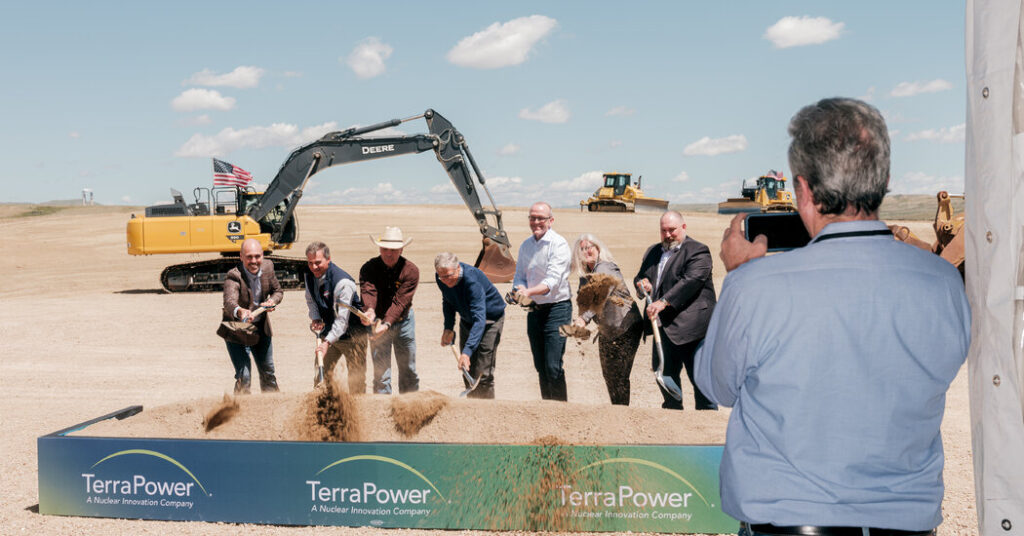
A novel type of nuclear power plant in Wyoming backed by Bill Gates received a key federal permit on Wednesday, making it the first new U.S. commercial reactor in nearly a decade to receive clearance to begin construction.
The Nuclear Regulatory Commission, the federal body that oversees reactor safety, unanimously voted to grant a construction permit to TerraPower, a start-up founded by Mr. Gates. TerraPower is one of several companies trying to build a new wave of smaller, advanced reactors meant to be easier to build than the large reactors of old.
The permit, which comes after years of consultations and regulatory reviews, means that TerraPower can begin pouring concrete and building the nuclear components of its proposed nuclear plant in Kemmerer, Wyo. The plant, which still faces plenty of logistical hurdles, is currently expected to come online in 2031 near an old coal-burning power plant that is slated to retire a few years later.
“Today is a historic day for the United States nuclear industry,” Chris Levesque, TerraPower’s chief executive, said in a statement. “This is the first commercial-scale, advanced nuclear plant to receive this permit.”
Nuclear power has seen a resurgence of bipartisan interest in the United States in recent years, especially as demand for electricity rises. Nuclear reactors don’t emit planet-warming greenhouse gases, unlike coal and gas plants, and they can produce electricity around the clock, unlike wind turbines and solar panels. While some Democrats remain opposed because of concerns about safety and disposal of nuclear waste, others have come to see it as a crucial technology for fighting climate change.
One of the big obstacles facing nuclear power, however, has been the time and expense it takes to build new plants. The only two U.S. reactors built from scratch in the past three decades, at the Vogtle nuclear power plant in Georgia, cost $35 billion, double the initial estimates, and arrived seven years behind schedule.
TerraPower is one of more than a dozen start-ups across the United States betting that new technology and designs can make it easier and cheaper to build reactors.
Today, every American nuclear plant uses light-water reactor technology, in which water is pumped into a reactor core and heated by atomic fission, producing steam to create electricity. Because the water is highly pressurized, these plants need heavy piping and thick containment shields to protect against accidents.
TerraPower’s reactor, by contrast, uses liquid sodium instead of water, allowing it to operate at lower pressures. In theory, that reduces the need for costly shielding. In an emergency, the plant can be cooled with air vents rather than complicated pump systems. The reactor is just 345 megawatts, one-third the size of Vogtle’s reactors, making for a smaller investment.
Trump Administration: Live Updates
Updated
- Interior secretary travels to Venezuela for oil and mining expansion efforts.
- Justice Dept. seeks to stall states’ disbarments of its lawyers.
- U.S. takes military action in Ecuador against ‘terrorist organizations.’
TerraPower’s design has another unique feature. Most reactors can’t easily adjust their power output, making it hard to mesh with fluctuating wind and solar farms to adjust to grid demands. TerraPower’s reactor will have a molten salt battery that allows the plant to ramp up or down as needed.
While the initial plant built in Wyoming is expected to be expensive — $4 billion or more — the company hopes to drive down the cost in the future by building more plants and learning from experience. (The Energy Department has agreed to pick up part of the cost of TerraPower’s first reactor.)
Any new nuclear reactor needs formal approval from the Nuclear Regulatory Commission, which is supposed to conduct a thorough safety review. Some nuclear companies and proponents have criticized the N.R.C. for being too sluggish, overly strict and incapable of dealing with novel reactor designs. In 2024, Congress overwhelmingly passed a law aimed at speeding up the agency’s reviews.
Those changes appear to have had an impact. The N.R.C. reviewed TerraPower’s construction permit application in just 18 months — far faster than the 27 months it had initially estimated.
Some nuclear opponents have accused the commission of rushing its review. “Make no mistake, this type of reactor has major safety flaws compared to conventional nuclear reactors that comprise the operating fleet,” Edwin Lyman, the director of nuclear power safety at the Union of Concerned Scientists and a frequent critic of the industry, said in December after the N.R.C. finished its safety review. “Its liquid sodium coolant can catch fire, and the reactor has inherent instabilities.”
TerraPower said it went through an exhaustive review process, spending more than four years and more than 60 meetings with the commission’s staff to assuage their concerns and filing detailed technical reports on various aspects of the reactor’s design.
With its construction permit in hand, the company says it plans to start work on the Wyoming reactor in the coming weeks. The company had already broken ground on the site in 2024 and had begun building the nonnuclear parts of the plant, which did not require a permit.
TerraPower has already had to push back its start date several times, and it will still face hurdles in trying to avoid the snags and cost overruns that have plagued other reactor projects as well as securing the fuel it needs.
Separately, President Trump has ordered a sweeping overhaul of the Nuclear Regulatory Commission, and the agency is expected to unveil thousands of pages of proposed regulatory changes in the coming weeks that could affect how quickly it approves future reactors, as well as rules around safety limits for radiation exposure.
Brad Plumer is a Times reporter who covers technology and policy efforts to address global warming.
The post A Nuclear Reactor Backed by Bill Gates Gets Federal Approval to Start Building appeared first on New York Times.