The U.S. Senate is closing in on a new bipartisan package aimed at bringing down the cost of housing, as both parties fight to prove they’re making life more affordable for Americans ahead of the midterm elections.
The legislation unveiled Monday focuses on incentives for building new homes. It would approve new grants to revamp aging houses, allow for accelerated environmental reviews for housing developments and create a new program to turn abandoned buildings into housing and more. The bill would also ban large institutional investors from owning more than 350 single-family homes at President Donald Trump’s request — a controversial proposal among Republicans that he called for during the State of the Union address.
The bill marks the most consequential housing legislation in roughly three decades and has widespread support among builders, legislators, trade groups and more. And it shows how noncontroversial efforts to make housing more affordable have become. The median sale price of a house was over $405,000 in late 2025, according to federal data.
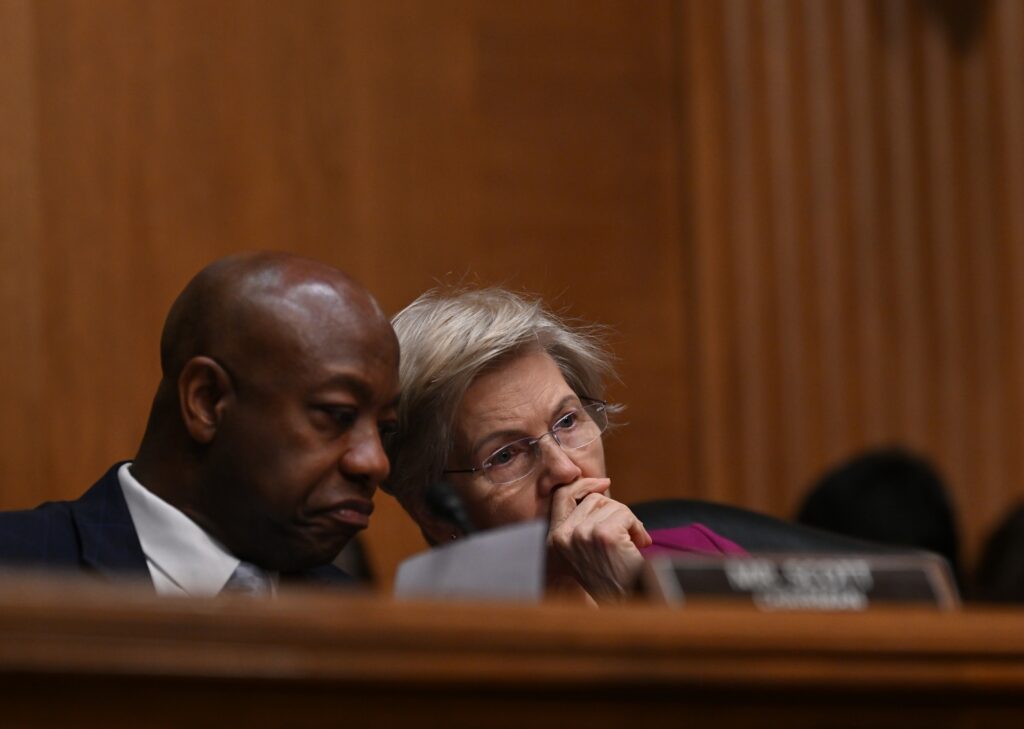
Senate Banking Committee Chairman Sen. Tim Scott (R-South Carolina), has spearheaded the legislation with Sen. Elizabeth Warren (Massachusetts), the top Democrat on the panel. He told reporters Tuesday that the median age of first-time home buyers — now 40 years old — shows housing affordability has moved in “the wrong direction.”
“I think you reverse it by focusing on not red or blue. I think we have to focus on the country as a whole and the issue of affordability is something that all Americans are leaning into,” he said. “We have a bipartisan piece of legislation in a time where almost nothing seems to be bipartisan.”
The White House said Monday it “strongly supports” the new Senate plan. “The White House has been encouraged by the productive discussions with Congress,” spokesman Davis Ingle said in a statement.
The legislation, dubbed the 21st Century ROAD to Housing Act, combines pieces of a House-passed measure with a preexisting Senate proposal. It’s designed to convince enough House members to support the plan — though it’s not guaranteed they will.
Rep. French Hill (R-Arkansas), chair of the House Financial Services Committee, praised the Senate effort at a Milken Institute event Tuesday, though he did not commit to supporting its bill. He said he was “disappointed” it didn’t include community banking provisions from the House bill. House Republicans may be convinced to support the ban on large corporate home buyers with tweaked language, he added.
“I think we really just need to wait and see how that passes muster in the Senate before we pass judgment on the final language,” Hill said.
Scott and Warren’s teams have been working on the Senate bill since early last year. By summer, the senators had hammered out the ROAD to Housing Act, which won unanimous support from the Senate Banking Committee and included input from every member. It cemented a key Scott priority to make it easier to build manufactured housing, and a Warren proposal to reward local governments that build more housing with new funding for infrastructure.
Earlier this year Trump reached out to Warren in a highly unusual phone call, during which the two discussed housing legislation. On Monday night, the full Senate advanced it with a vote of 84-6.
The House passed its own legislation, the Housing for the 21st Century Act, earlier this month.
The Senate bill also includes an unrelated 15-year ban on the Federal Reserve creating a central bank digital currency, added to win over potentially reluctant Republicans who have raised privacy concerns about a potential federal digital currency.
“The package includes the vast majority of the Senate’s unanimously supported ROAD to Housing Act, incorporates bipartisan housing ideas from the House, and takes a good first step to rein in corporate landlords that are squeezing families out of homeownership,” Warren said in a statement.
The measure is gaining momentum as both political parties’ rush to help Americans who have struggled to buy new houses and afford rent. Much of the White House’s housing agenda has focused on deporting immigrants, which officials say will open up more homes. Economists and housing experts have panned that argument, saying the country needs more homes.
What’s clear is that voters are tired of the problem. Health care, new cars and new homes feel unaffordable to most Americans, a Washington Post-ABC News-Ipsos poll shows. First-time buyers make up just 21 percent of the market, an all-time low, according to the National Association of Realtors.
Lately, buyers have gotten some relief with mortgage rates dipping below 6 percent. But prices are still ticking up, rising 1.3 percent in December over the year before, according to the closely watched S&P Cotality Case-Shiller U.S. National Home Price NSA Index.
The legislation builds on a Trump pledge from earlier this year banning large investors from buying single-family homes, albeit with few details. Democrats had pushed for years to limit Wall Street’s involvement in the housing market.
Warren and Scott’s housing bill would require that over time, large institutional investors shed homes in their portfolios instead of adding them. It also says that while investors and private equity firms can build new construction, they have to eventually sell to real people within seven years.
But many economists from the right and the left say larger investors do not have as expansive a grip on the housing market as lawmakers might suggest. A 2023 paper from the center-left Hamilton Project found that large institutional investors own just over 3 percent of single-family rental stock, though that might be higher in some markets.
Michael Strain, director of economic policy studies at American Enterprise Institute, said the proposal could also have unintended consequences for prices, since many large investors build rental properties that are still needed in the market. He said there wasn’t a reason to be “absolutist” about who can and can’t buy homes, especially without a clear sense of how much households would save under a ban.
“This feels more to me like the populist left and populist right pointing the finger at elite Wall Street firms and trying to blame them for affordability issues,” Strain said.
Liz Goodwin and Lauren Gurley contributed to this report.
The post Senate bill to help Americans afford housing nears the finish line appeared first on Washington Post.