Montgomery County Public Schools announced plans this week to buy 140 diesel-fueled buses, less than four years after Maryland mandated the state’s school districts phase out carbon-emitting transportation. It’s embarrassing but not surprising, given that the Free State’s grand green ambitions were never in touch with economic reality.
No district has been as committed to Maryland’s bus requirements as MCPS. In fact, the D.C.-area school system’s push for electric buses predated the state law. It signed a deal to lease more than 326 electric vehicles from a private contractor in 2021, a year before the state legislature passed its mandate. MCPS’s goal was to phase out its 1,400 diesel buses by 2035.
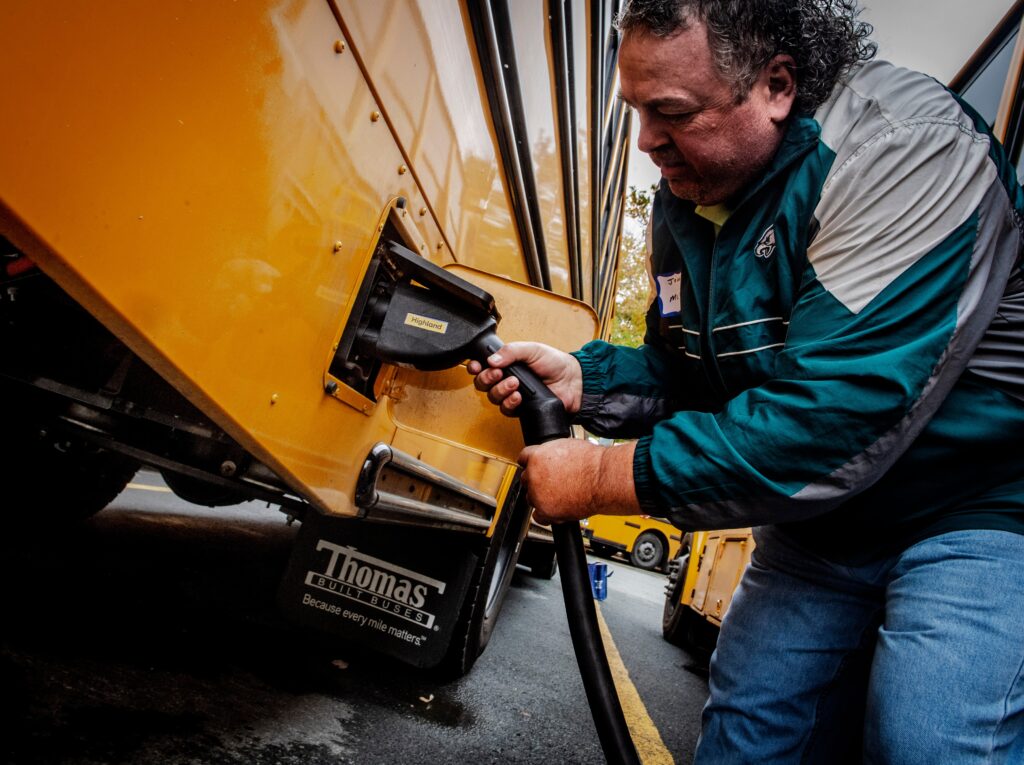
The EV contractor, Highland Electric Fleets, delivered its first batch of buses to MCPS months after an August 2022 deadline. The firm blamed supply chain issues as the problems continued each school year. Meanwhile, the vehicles that actually arrived often didn’t work because of charging problems, especially during cold weather.
The situation got so bad that in 2023 that the school board had to spend $14.7 million on 90 diesel buses to address the delays. A year later, the county’s inspector general concluded that the district failed to enforce the terms of its agreement with Highland, wasting millions of taxpayer dollars. Last January, MCPS finally terminated its initial purchase agreement with the company after receiving only 285 electric buses.
“Current electric bus technology is not fully capable of meeting all of our transportation demands, particularly for longer routes, field trips and midday services that exceed charging capacities,” says a spokeswoman for the schools. Did the technology regress in the past few years, or did they just hope for the best when signing those massive contracts?
Maryland’s other districts all needed waivers in recent years to avoid running afoul of the onerous electric bus mandates forced on them by Annapolis. That fact, more than anything, underscores the fundamental problem with the state’s “net-zero” decrees.
Climate change is a legitimate issue, and school board members in a relatively wealthy district like MCPS have a prerogative to use their resources to reduce carbon emissions, if that’s what their voters elect them to do. But it makes no sense for a state to issue mandates that the market cannot bear. Such rules make activists feel good in the short-term, but they eventually fail — and signal to voters that their government is unserious.
The post Maryland’s electric school bus debacle appeared first on Washington Post.