Like the rest of Asia, India depends on oil and other energy products shipped through the Persian Gulf. More than anywhere else though, India also depends on its own citizens’ safe passage to the Arab emirates on its southern shore, where for generations they have made businesses and livelihoods for themselves and Indians back home.
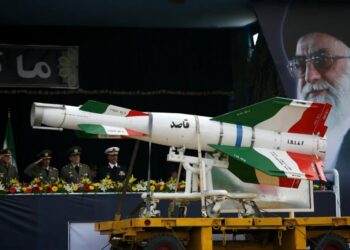
When the United States and Israel started bombing Iran on Saturday, they set in motion a series of attacks and counterattacks that are bringing down missile fire and drones on neighboring countries. The Strait of Hormuz, at the gulf’s mouth, has been all but closed to shipping. Gleaming cities like Dubai, long regarded as a safe haven for businesses in the region, have been paralyzed, with airports and stock markets frozen.
Since the oil boom of the 1970s, this part of the world has become a vital extension of India and the rest of South Asia. Its disruption threatens not just oil markets but also the lives and livelihoods of millions of Indians and billions of dollars in other trade.
India’s population, now more than 1.4 billion people, sends abroad the world’s largest number of migrant workers, with 15 million making names for themselves in the United States, Europe, Africa and nearly everywhere else. By far, the largest share of them live within a three-hour flight from India in the Persian Gulf: 9.3 million, according to the Indian government’s most recent estimate, compared with two million in the United States.
That means a population of Indians the size of a country like Austria — or the United Arab Emirates itself, including Dubai and Abu Dhabi. They make up a majority of the residents in some countries. Altogether, more Indians live in the Persian Gulf than there are citizens of Kuwait, Qatar and Bahrain combined.
No one expects these millions to flee overnight, though South Asian workers have been among the first fatalities caused by Iranian retaliatory strikes. But a prolonged downturn in the Persian Gulf’s economy or fraying of its connection to its international work force could remake the region.
“This corridor is extremely essential to all countries involved,” said Namrata Raju, a migration-policy researcher based in New Delhi and raised in the Persian Gulf. India and the Persian Gulf countries help shape each other on everything from trade balances down to their street lingo.
“I pretty much speak Hindustani with everyone here — many Arabs speak it as well,” said Rehan Khan, an Indian health care executive who divides his working life between Dubai and Mumbai, India’s financial capital. Hindustani, the dialect favored by the Bollywood film industry, serves as a bridge language for South Asians who grew up speaking Pashtun, Malayalam or Bengali. Mr. Khan said he rarely spoke English anywhere except in the office and at home.
India’s overseas workers send home more money, as remittances, than any other country’s. The $125 billion they pour into India’s economy every year plays a crucial role in boosting the value of the Indian currency, the rupee. That is almost twice as much as India exported in goods to the United States annually before President Trump imposed punitive tariffs last August, and far more than India ever received in foreign development aid, which was once its principal source of dollars.
“This is actually one of the secret, thrumming veins of the Indian economy,” Ms. Raju said.
Mr. Khan, the health care executive, belongs to an elite professional class, which is well represented in the Persian Gulf’s high rises. Among the 9.3 million Indians in the region are some of India’s most successful entrepreneurs, including the founder of LuLu Group International, a supermarket chain with more than $7 billion in revenue that first set up shop in the United Arab Emirates.
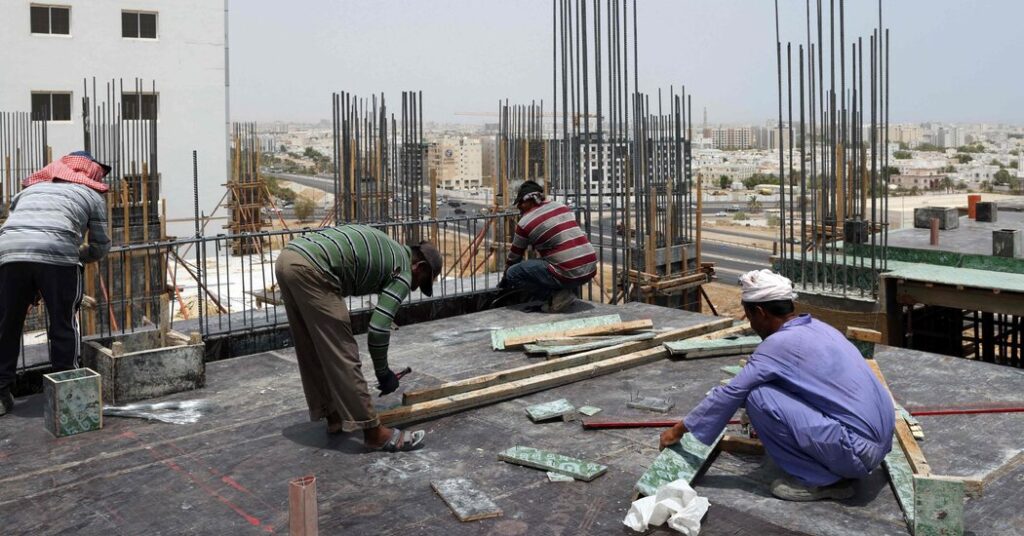
But all kinds of Indians live within driving distance of those glittering towers, including the millions of low-wage laborers who work in construction, transportation and home care.
These Indians tend to get by on very little. Ms. Raju has met workers in Oman who are paid about $390 to $520 a month and manage to remit 50 to 70 percent of that income back to India. They are “sending upward economic mobility overseas,” she said, adding that the money paid for “the dream of buying a house, or sending someone to school or college.” Small towns in southern India have been rebuilt with hard toil in the Persian Gulf.
India’s wider economy benefits, too. India buys more foreign goods than it exports — especially crude oil, with imports satisfying 90 percent of its total needs. With a flow of money going out of the country, it is critical that these workers earn in dollars and other hard currencies and send a lot of it back home.
India’s rupee lost 5 percent of its value last year, under the weight of American tariffs, among other pressures. Those tariffs were relaxed last month in exchange for India’s promising to stop buying discounted Russian oil, according to American officials. That meant forcing Indian buyers to instead rely mainly on oil from the Persian Gulf, which suddenly looks expensive.
With oil prices surging, India needs to bring in dollars urgently. For that, its expatriate workers in the Persian Gulf are its most reliable emissaries. If anything forces them to reconsider their lives across the Arabian Sea, both sides will suffer.
Alex Travelli is a correspondent based in New Delhi, writing about business and economic developments in India and the rest of South Asia.
The post 9 Million Indians Live in the Persian Gulf. The Money They Send Home Is a Lifeline. appeared first on New York Times.