Oil tankers have mostly stopped entering or exiting the Persian Gulf as Iran threatens to block the Strait of Hormuz amid an ongoing war with the United States that has killed its supreme leader and led to retaliatory strikes against Arab energy infrastructure.
If anyone from the 1950s through around 2010 read that sentence, they’d assume the price of oil had gone through the roof and the world economy was spiraling into recession. That would have been a reasonable guess.
But the world looks very different since the U.S. shale revolution began. Oil prices have risen in the past few days, but they’re nowhere near historic highs. The U.S. benchmark price rose 6.3 percent on Monday, the 121st largest daily increase on record.
Past shocks were much larger. Strikes during the protests in the runup to the 1979 Iranian Revolution took 7 percent of the world’s oil off the market, and prices went up 57 percent. The price of oil doubled during the 1991 Persian Gulf War.
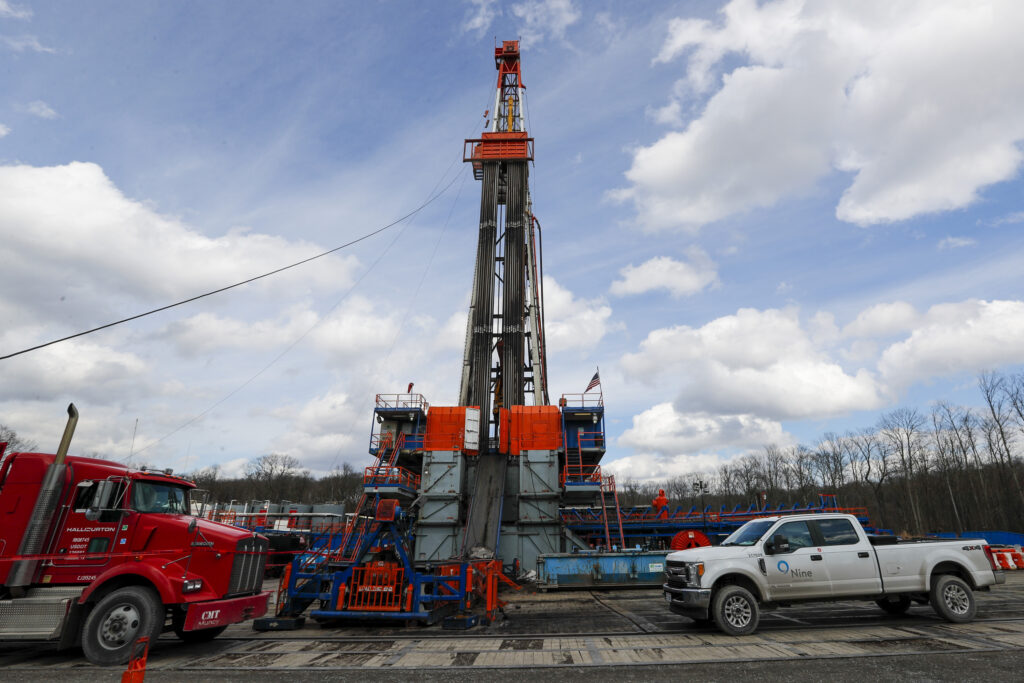
A big part of the difference now is expanded U.S. production due to the widespread adoption of fracking and horizontal drilling. Oil prices were 36 percent lower in 2018 than if the shale revolution had not happened, according to research from the Federal Reserve Bank of Dallas in 2020. The same study found that long-run price volatility is 50 percent lower.
This isn’t a story of economic retrenchment and autarky increasing security. Despite U.S. crude oil production being near record highs, the U.S. is still a net crude importer, to the tune of 2 million barrels per day. And the federal government in 2015 repealed the crude oil export ban that had been adopted to help insulate the U.S. from the world market in the 1970s.
Of course, the U.S. embargo on Iranian oil is one major policy that restricts free markets. But oil is traded globally, so it hardly affects the global price. And American oil buyers have changed the composition of imports away from the Middle East as a whole anyway.
Canada is by far the largest foreign source today, accounting for over half of all U.S. imports. Mexico is second. In 2023, the U.S. imported more crude oil from Mexico than from the entire Persian Gulf. Imports from Saudi Arabia fell by around 75 percent between 2012 and 2024.
There was no order from the federal government to stop buying from the Middle East and prefer Canada instead. Market forces pushed American buyers in that direction as our northern neighbor opened its oil reserves for private development. Canadian crude is carried south on private railroads and through private pipelines.
Having insurance doesn’t eliminate hardship, and oil prices could still rise more depending on how the conflict progresses.
For the U.S. shale sector, high prices are the solution to prevent even higher prices. There are swaths of U.S. oil deposits that become economically viable to produce if prices rise, and fracking is a very flexible production method. Letting prices rise eliminates the need for rationing, which is what politicians tried in the 1970s.
Iran’s command economy illustrates what happens when politicians crush markets. The mullahs have managed to create an energy shortage in a country sitting on one of the world’s largest reserves of oil. Between 2000 and 2023, while U.S. annual crude production increased by about 120 percent, Iran’s declined by 25 percent, even as China continues to buy it.
The U.S. could have had its own energy retreat if some politicians and activists had gotten their way. Many wanted the federal government to more heavily regulate or even prohibit fracking. Environmentalists and refiners alike opposed the repeal of the crude oil export ban.
Yet U.S. crude oil production has been on an upward trajectory since Barack Obama’s first term and broke records under Donald Trump and Joe Biden. The U.S. participates more fully in global oil markets than ever before, and that’s why there won’t be gas lines.
The post The U.S. has oil insurance appeared first on Washington Post.