The photojournalist who for more than a half-century was credited with taking a Pulitzer Prize-winning photograph of a naked girl burned during the Vietnam War has filed a criminal defamation lawsuit in France against Netflix and the makers of a documentary that accuses him of being a fraud.
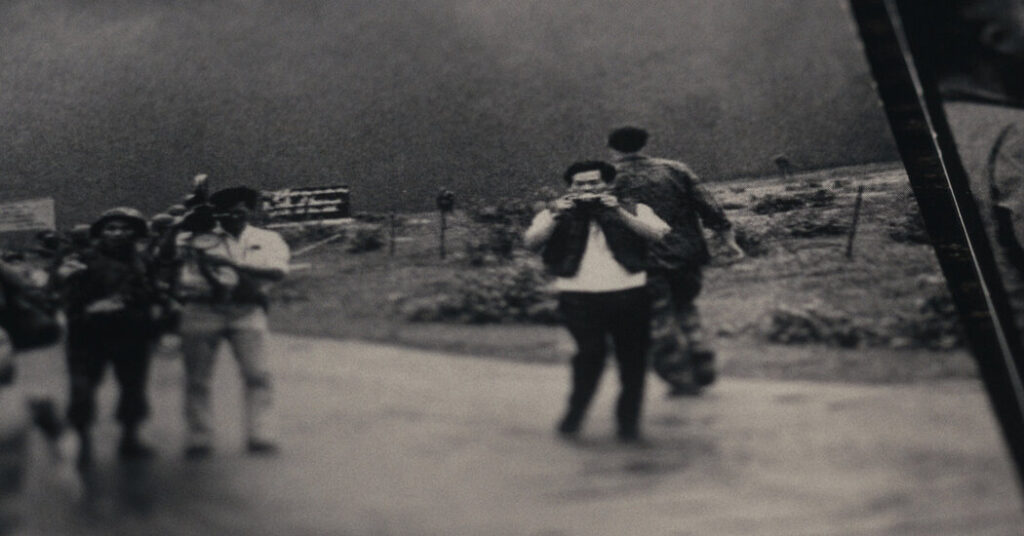
The photographer, Nick Ut, said in court documents filed last week that the film, “The Stringer,” which Netflix released last year, had damaged his reputation and brought shame upon him. The film claims that a freelancer named Nguyen Thanh Nghe actually took the 1972 photo, titled “The Terror of War.”
“These accusations strike at the very core of who I am,” Ut said in a news release. “My entire career has been built on telling the truth, often at great personal risk.” Ut was 21 and employed by The Associated Press at the time of the photograph.
He is seeking 100,000 euros, or about $116,000, in damages and 20,000 euros, or about $23,000, in legal costs.
The widespread debate over the photograph’s origin began in January 2025, when “The Stringer” premiered at the Sundance Film Festival. Directed by Bao Nguyen, it follows a two-year investigation by Gary Knight, a journalist and a founder of the VII Foundation, which supports photojournalism. Knight examined a claim from a former A.P. photo editor who said he had been ordered in 1972 to misattribute the photograph, giving Ut credit for the image that became known as “Napalm Girl.”
“When you’re photographing with film, there’s always some mystery,” Knight says in the opening scenes of the documentary. “But what you do know, is what you didn’t take.”
Lawyers for Ut asked Netflix last fall not to distribute the film, according to the lawsuit, which also said the accusations in it “go far beyond the acceptable scope of journalistic investigation” and suggest “fraudulent and disloyal behavior” by Ut.
Netflix, Knight and the VII Foundation are named as defendants in the lawsuit, which was filed in France in part because the film was distributed and promoted there. Ut said in his statement that if felt natural to seek justice in France, adding that there he would be “surrounded by people who understand my work and my character.”
The bar for defamation lawsuits is lower in France than it is in the United States, where a public figure must prove that a false statement was made with “actual malice,” meaning with knowledge that the statement was untrue, or with reckless disregard for its veracity.
Netflix declined to comment on the case on Tuesday. The VII Foundation did not immediately return a request for comment.
James Hornstein, a lawyer for Ut, said in a statement that his client had brought the action “to defend his reputation, and not for financial gain.” He said Ut intended to donate any award for damages to charity.
Reactions to the documentary from photojournalism institutions have been split.
The World Press Photo Foundation, a prominent international nonprofit, said in May that it had conducted its own investigation, finding that two other photojournalists “may have been better positioned to take the photograph than Nick Ut.” It suspended Ut’s credit for the image, though it did not credit the photo to another photographer. The photograph’s credit in the foundation’s online archives now reads “authorship disputed.”
But the organization stopped short of stripping the photograph of its “Photo of the Year” award, which it conferred on it in 1973. (Ut also won a Pulitzer Prize for “The Terror of War” that same year.)
The A.P., after conducting its own investigation, said it would continue to credit the photograph to Ut. While that report found that Ut had been in a position to take the photograph, it did not find proof that he had taken it. The report said that other photographers had also been in a position to take the photograph, though it likewise found no proof that they had.
Derl McCrudden, The A.P.’s vice president and head of global news production, said at the time that there was not enough evidence to change the photo credit. “It’s impossible for anyone to know with certainty how exactly things played out on the road in the space of a few minutes over half a century ago,” he said.
Lawyers for both Ut and the filmmakers said The A.P.’s report had bolstered their arguments.
Title cards at the end of “The Stringer” say that Ut did not respond to interview requests and that he denied all allegations levied against him.
The cards also say that Kim Phuc Phan Thi, the photograph’s main subject, has no memory of the moment in question.
“She states that eyewitnesses, including her uncle, told her that it was Nick Ut who took the photo, and took her to the hospital,” one card reads. “She still believes that.”
Derrick Bryson Taylor is a Times reporter covering breaking news in culture and the arts.
The post Photographer in Dispute Over ‘Napalm Girl’ Image Sues Netflix appeared first on New York Times.