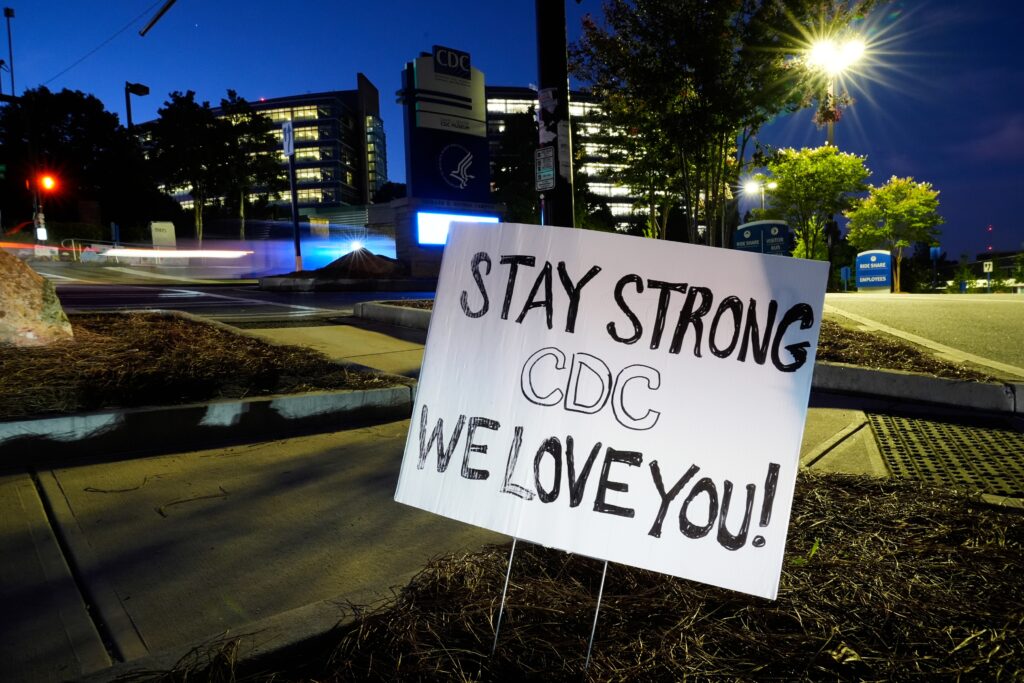
The Centers for Disease Control and Prevention has been without a permanent director since the removal of Susan Monarez in August. Its recently installed acting director, Jay Bhattacharya, is also running the National Institutes of Health, located hundreds of miles from the CDC’s headquarters in Atlanta. The CDC has also lost scores of senior staff and shuttered key programs, including those focusing on tobacco control and injury prevention.
A study published in Annals of Internal Medicine in January offers a chilling illustration of the agency’s unraveling: It found nearly half of the CDC’s routinely updated databases were paused without explanation between May and October 2025. Most of the affected systems tracked vaccinations and the spread of infectious diseases.
Although some of the databases have since been restored, a few remain in limbo. One tracking how many infants are protected against respiratory syncytial virus, either because their mothers were vaccinated during pregnancy or because the babies received preventive shot themselves, has been sitting idle since May. Before vaccines were made available in 2024, RSV was the leading cause of hospitalization among infants. Monitoring uptake is essential to understanding whether babies are adequately protected.
Another system that appears to be on hold tracks weekly influenza vaccination coverage among pregnant women. Influenza is particularly dangerous during pregnancy and is linked to complications including pregnancy loss and preterm birth. Without up-to-date data, health officials cannot identify gaps or direct education and outreach where they are most needed.
Philip Huang, director of the Dallas County health department, told me he is very concerned about whether federal surveillance programs will continue to collect and update data. These systems are the foundation of day-to-day public health work, as they allow health officials to track trends, identify which communities are most affected and assess whether interventions are working.
“Without data, we are blind,” Huang told me. He noted that local health departments generate much of the underlying data, and sustaining those efforts is critical. But local reporting alone is not enough.
“You need the centralization so we can make comparisons across other states and detect emerging threats somewhere else that may be coming towards us,” he said. He pointed to covid-19, which first surged in New York City before spreading nationwide. A coordinated national system, he added, “gives that visibility and benchmarking for all of us.”
Beyond the data gaps, Huang described deep funding shortfalls that have hampered his department’s ability to provide core services. After the Trump administration rescinded covid-related support for local and state health departments, Dallas County lost $4 million that had already been allocated and built into its operating plans. The money was being used to support measles vaccination efforts during Texas’s largest measles outbreak in decades and to strengthen laboratory and surveillance capacity to prepare for future threats. “The chaos with funding has created a lot of difficulties with our ability to keep operations going,” Huang said.
When federal funding is withdrawn at this scale, local and state governments have little realistic prospect to replace it. They operate within tight fiscal constraints and face many competing demands, and public health has historically depended on federal support. Huang noted nearly 90 percent of his department’s budget comes from federal dollars.
Even if some of the money is eventually restored through litigation, the damage may be difficult to undo. Huang recently learned that the administration halted a major public health infrastructure grant, some of which was designated for community-based organizations contracted to deliver services. Many of these small groups will have to let people go as a result, he said.
Rebuilding that capacity is no simple matter, even if the funding is reinstated. “We don’t have ways to just hire people back right away,” Huang told me. “You totally disrupt and destroy the system.” When asked about these funding cuts, Andrew Nixon, a spokesperson for the Department of Health and Human Services, said the grants were being terminated because “they do not reflect agency priorities.”
Beyond the turmoil surrounding funding and data, Huang also highlighted uncertainties around vaccine policy. The growing divergence between federal recommendations and those of major medical organizations have fueled confusion and increased hesitancy. Moreover, evolving federal positions have emboldened state lawmakers to weaken school vaccine requirements and expand opt-out provisions. Each additional hurdle makes vaccination less accessible, resulting in lower coverage rates and higher risks that measles and other infectious diseases return.
Yet the danger these diseases pose will be harder to see quickly, because the warning systems themselves are being dismantled. Public health infrastructure, already fragile before the pandemic, is being steadily eroded. Local health leaders are already seeing the effects; it is only a matter of time before the public experiences the devastating consequences.
The post The cost of chaos at the CDC appeared first on Washington Post.