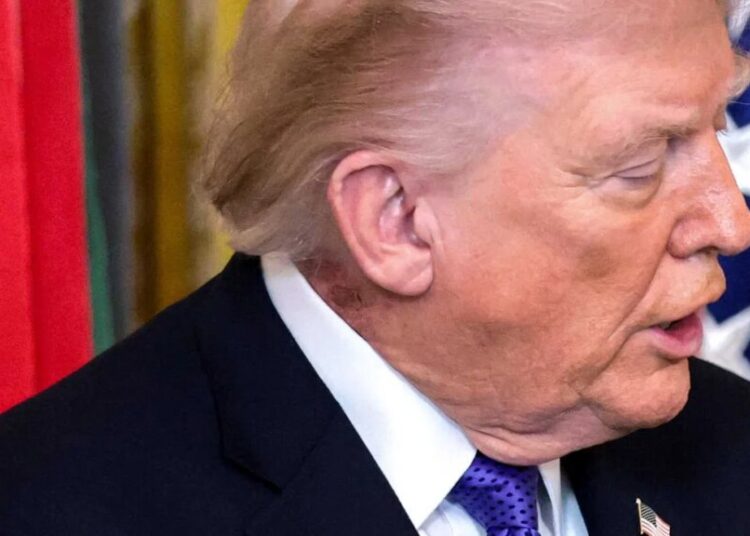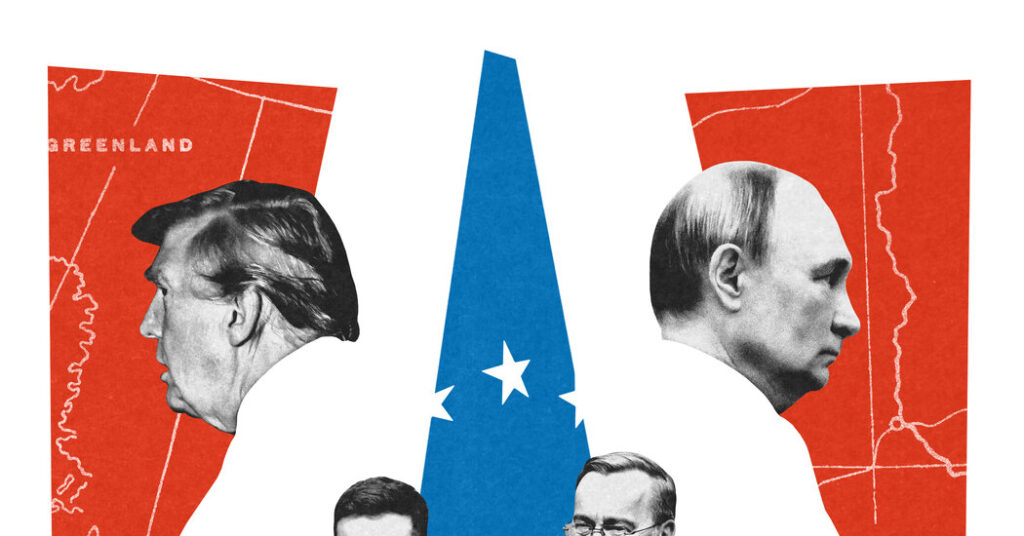
The standing ovation that followed Secretary of State Marco Rubio’s speech at the Munich Security Conference in February may have been more diplomatic gesture than sincere expression of appreciation. Despite public assertions from European leaders that they were reassured by Rubio’s conciliatory tone, private discussions were far more sober. After all, it had been only three weeks since President Trump backed down on his threat to take Greenland. For the Europeans, the prospect of a military strike against them by their most important ally had already marked a point of no return. Trump’s failure to meaningfully consult with the Europeans before launching airstrikes with Israel against Iran on Saturday — putting Europe, which is within range of Iranian missiles, at risk of retaliatory strikes — seemed, to some, the consummation of the administration’s disdain.
At a panel discussion in Munich, Constanze Stelzenmüller, a prominent German security expert at the Brookings Institution, had summed up the mood deftly: At bottom, she observed, the Trump administration is saying that it is always ready to coerce, that it can make others do what it wants by threatening them. Europeans are concluding, she said, that “they need to put themselves in a position where that’s not possible.” President Emmanuel Macron of France evinced a similar resolve on Monday, declaring in the wake of the attacks on Iran and the country’s attacks on its neighbors, that “in order to be free, we must be feared,” before announcing that France would boost its nuclear arsenal and extend its protection over other parts of Europe.
From the start, the second Trump administration has exhibited a new level of animosity toward Europe, seeming to treat it as more adversary than ally. The administration’s latest National Security Strategy memo, released in November, fulminated about a future in which the perils posed by Europe’s fundamental military weakness and economic stagnation would be “eclipsed” by the “civilizational erasure” of mass migration. European officials reacted with shock and outrage “mainly around the contempt that was directed against Europe,” as Emily Haber, a former German ambassador to the United States, put it. But also because while Europe has made real progress in lessening its dependence on the United States, it remains unable to fully guarantee its own security for reasons that go beyond inert bureaucrats in Brussels.
As an economic power, the European Union is the third largest in the world. Yet as a collection of 27 separate countries, with an even greater number of national armies participating in NATO, it relies on troops that lack the uniformity and unified force of an equal number of American troops. Decentralization also complicates Europe’s ability to produce the weapons it needs: European NATO countries must work together, yet they are often at loggerheads over which country’s economic needs will be prioritized. Increased spending on defense is already fraught: France and Italy have extremely high levels of debt, making it difficult for them to finance a military buildup. And though Germany is the largest economy in the bloc and may soon have the strongest conventional army, many Germans are averse to fighting and especially to providing soldiers for a potential peacekeeping force in Ukraine; public-opinion polls show that Germany is the only country where a majority of the population is opposed to doing so, even if it means peace in Ukraine fails.
A few weeks after Trump vowed to take Greenland “the easy way or the hard way,” Chancellor Friedrich Merz of Germany acknowledged that Europeans committed to international law might soon find themselves overtaken by the new reigning logic of hard power. “We will only be able to implement our ideas in the world, at least in part, if we ourselves learn to speak the language of power politics — if we ourselves become a European power,” Merz said. Becoming a European power, he argued, means that Germany, which is not only the wealthiest country in the European Union but also the most populous, must commit to what Merz called a “shift in mentality”: to longer work hours and increasing productivity, so that German prosperity can help sustain the continent through whatever unforeseen threats would surely arise in Ukraine, Greenland or elsewhere.
Merz, in a visit planned long before the Iran campaign, is meeting with Trump in Washington today. While Iran will surely dominate the discussion, Merz will very likely also press his case for Ukraine, and against tariffs. He has long insisted, as he did in Davos in January, that “economic competitiveness and the ability to shape global politics are two sides of the same coin.” But the same forces that are scrambling geopolitical alliances for Europe are also upsetting economic ones, as Germany grapples with the tariffs imposed by the United States and declining demand from China. If Merz blunders, the far right, ascendant in Germany as in the rest of Europe, stands ready to capitalize — and to assert its very different ideas about the uses of restored German might.
All Roads Run Through Germany
It is no small paradox that Munich, the city in which many of the last century’s calamities began, has become the hub for world leaders and defense officials still committed to the rule of law. The annual Munich Security Conference began in 1963, primarily as a gathering between the United States — which spent half a century occupying, reforming and rebuilding Germany into a free-market liberal democracy — and its West German counterparts on the front lines of the Cold War.
Germany’s postwar Constitution places strict limits on what kind of army Germany can maintain and under what circumstances it can be deployed abroad. German intelligence gathering is similarly constrained. Of the terrorist threats to the country that come to light, only 2 percent are discovered via German intelligence, according to a report in the newspaper Bild, which cited a confidential agency document; a majority come through tips from the United States. These restrictions were widely embraced, until Germany solidified its place among European democracies and the prospect of Russian aggression weighed more heavily. The Polish foreign minister Radoslaw Sikorski famously said, more than a decade ago, that he feared “Germany’s power less than I fear its inaction,” and it seems that much of the rest of the continent now agrees.
While Germany’s economic strength placed it in a leadership position during the European debt crisis that followed the 2008 financial crash, it has taken two waves of war with Russia over the last 10 years to get a reluctant German population even nominally on board with building up the country’s military capabilities. According to a Politico survey conducted in February, 54 percent of Germans support increased defense spending — a majority, but a smaller one than in the United Kingdom and Poland. Trepidation toward the army remains part of Germany’s hard-won postwar memory culture. To quote one meme that circulated not long ago on X: “As a German, I just want to get this straight. The entire Western world wants us to build up a huge army, march through Poland and fight the Russians if necessary. Just writing it down so there are no misunderstandings in the future.”
As a central player in the defense strategy of a newly emboldened Europe, Germany has been most decisive in deploying its financial power. By 2025, Germany was contributing as much to NATO’s common funds as the United States and spending more on procurements alone than all other European NATO countries combined did in 2021. But like other European countries, Germany is still scrambling to increase equipment stocks, which means deciding whether to buy from the United States or invest in expanding European production — a trade-off between speed and independence.
When intra-European deals are struck, individual countries’ national interests can get in the way of collective ones. A joint Franco-Spanish-German next-generation fighter jet program called Future Combat Air System, or FCAS, which began in 2017, stalled last year over disagreements on the original contract, which split industrial production evenly among the three nations. One of the French industrial partners, Dassault Aviation, argued that because of concerns around efficiency and intellectual property, among other things, it should take over more of the leadership and the bulk of production. When news broke in the German press last fall that Germany and Spain were considering moving ahead without France, Dassault’s chief executive, Éric Trappier, hit back publicly, saying that the French were the ones with the necessary know-how. A policy adviser from Merz’s party, who asked not to be named because he was not authorized to speak publicly, described Germany’s deep frustration with the stalemate. “FCAS will fail, it’s dead,” he told me. “We have to cancel our most important defense project with our most valued partner, because some H.R. guy in Dassault says no.”
After the Munich conference, Europe’s six largest economies announced plans for a “capital market union,” which would allow them to pool resources for collective financing and cooperative production. (This is in addition to the SAFE program, inaugurated last year, which allows members to borrow money from the European Union to put toward common defense.) But it can take years to retrofit factories and scale production. And Germany’s procurements plan is based, in part, on outdated ideas of what modern warfare requires.
When 20-odd Russian drones flew into Poland last September, NATO countered with fighter jets and missile defense systems. Shooting down drones that cost 20,000 euros apiece with equipment worth millions of euros is inefficient and unsustainable, not to mention that it signals vulnerability to the Russians. Speaking of Germany’s approach, Guntram Wolff, a senior fellow at Bruegel, a European think tank, told me: “Here we are in Year 5 of war in Ukraine, and we are ordering tanks, big ships, traditional artillery, infantry fighting vehicles. Not that we shouldn’t, but we don’t seem to order the small, unmanned speedboats that Ukrainians used, that defeated Russian ships in the Black Sea.”
Europe also remains especially dependent on the United States for the technology to power military equipment. Without American software, German-built frigates are “just a piece of steel floating in the sea,” Wolff says. These high-tech industries, and the innovation that comes with them, are crucial to stimulating economic growth. But Europe is a continent of savers, not investors, and Germans are especially cautious with money: The hyperinflation of the 1920s remains a vivid cultural memory, its aftermath proof that catastrophe may be just around the corner. There is even a moral dimension in Germany to eschewing credit (the German words for “debt” and “guilt” share the same root).
This preference has real-world costs, not just militarily but economically. According to Philipp Hildebrand, former head of the Swiss National Bank, who is now vice chairman at BlackRock, there are 10 trillion euros sitting in European bank deposits. If 1 to 2 percent of that money were invested in start-ups, it would double the funds available annually to European venture capital (where the greatest innovation in defense is happening). It would also help Germany’s economy. “The research is very clear,” Wolff says. U.S. defense spending, because of its “high R.&D. intensity,” has “a major long-term positive growth effect on the U.S. economy.” If Europe continues to rely on the United States, “all these R.&D. and growth benefits won’t go to Europe.”
The Far Right Embraces Power Politics
Germany’s economic challenges go beyond defense, reflecting profound systemic shifts that eventually could compromise its — and Europe’s — security. As Thorsten Benner, director of the Global Public Policy Institute in Berlin, says, Trump “sees German exports as a threat to the U.S. national interest and wants to cut it down to size,” and China has become “a mortal threat to German core industries.” To ensure Germany’s future, Merz must do nothing less than “reimagine its economic model,” Benner says.
These economic vulnerabilities have already become political ones for Merz’s government, a coalition of two centrist parties. For most German voters, matters of defense take a back seat to economic ones, and this is especially true of supporters of the Alternative for Germany, the far-right party, widely known by its German initials, AfD, that is now topping some polls. The AfD has a long history of being friendly to Russia and wary of remilitarization — and though it has always been kept out of a governing coalition in Germany, it was embraced by Vice President JD Vance (and President Trump) during last year’s Munich Security Conference.
Trump’s recent imperialist machinations have proved unpopular with European voters, and far-right parties in France, Italy and the Netherlands, among others, have quickly moved to distance themselves from him. When Trump threatened to invade Greenland, Jordan Bardella, president of France’s hard-right National Rally, criticized his “direct challenge to the sovereignty of a European country” and decried a “world in which the law of the strongest trumps respect of international rules.”
The AfD is more divided. Because the AfD is strongest in former East Germany — where large parts of the population remain fervently anti-American (tempered by grudging admiration for Trump), skeptical of the European project and in favor of reconciliation with Russia — the party’s more extreme members have little reason to moderate their positions. Anti-anti-Russian sentiment in eastern Germany is a crucial part of an alternative unification narrative — a way to say that it was not all bad on its side, that East Germans have their own pride and their own history. This cultural divide still hamstrings Germany. It is hard to pull a country together to fight when many East Germans don’t hate the enemy — and believe that urban liberals, with their embrace of gay rights and other “nontraditional values,” look down on them.
Görlitz, a small town on the border with Poland whose candy-colored Central European architecture has been resplendently restored (Wes Anderson filmed parts of “The Grand Budapest Hotel” there), is now a stronghold of the AfD. It is also the site of a former train-car factory that is being converted to produce tank parts.
There has been significant backlash to the transformation. Sebastian Wippel, the AfD representative in the regional Parliament, is reluctantly supportive of the factory conversion, because of the jobs and revenue it will bring. But he insists it’s only temporary, and as soon as Germany has enough tanks, the plant will revert to making nonmilitary goods. Wippel, who wants a diplomatic resolution to the war in Ukraine, says that the Europeans “have been sending the signal to Russia for a long time that we are not a reliable partner.” Germany, Wippel went on, urged Russia to sign the Minsk agreements — the short-lived peace treaties signed after Russia annexed Crimea in 2014 — to give Ukraine time to rearm and take Crimea back. “Europe and the whole of the West has to regain its trustworthiness in the eyes of Russia,” Wippel told me.
There are some AfD officials, however, who seem to relish the prospect of renewed “great power” politics. Maximilian Krah, a member of the German Parliament originally from a town not far from Görlitz, who is known for his insistence that not all members of the SS were criminals, is especially popular among younger voters. He wrote a series of opinion columns for The Asia Times in which he argued that Trump’s new world order meant “unprecedented opportunities” for Germany that “could usher in a golden age.” After Russia invaded Ukraine, Krah wrote, the West “invoked those old principles” of international law, as though “some abstract legal order” were at issue and not just power, plain and simple. Trump, he continued, is making politics “honest again.” Krah, a lawyer by training, cited a term coined by the Nazi jurist Carl Schmitt, “Grossraum,” or “great space,” which encapsulated a spheres-of-power theory that took inspiration from the Monroe Doctrine and underwrote German expansionism. Krah argued that the United States, and not Denmark, was entitled to Greenland. He welcomed the decline of a phony “value-based justification of U.S. leadership” and its replacement with “a realist one: the deal.”
Renewed German military might, in the hands of AfD members who have no problem speaking the language of power politics, could prove disastrous for Europe. The postwar order was meant to do away with the question of dominance, and the bloody competition for it, by building multilateral structures. But as the Trump administration calls for “cultivating resistance” to Europe’s “current trajectory” and announces plans to fund “MAGA-aligned” think tanks across the continent, those structures risk coming apart.
This year in Munich, Rubio doubled down on this message, exalting the ties between Europeans and Americans as members of one civilization, who are “bound to one another by the deepest bonds that nations could share” — Christian faith, heritage, ancestry and “the sacrifices our forefathers made together.” In the name of this civilization, Rubio said, America would “once again take on the task of renewal and restoration” and was “prepared, if necessary, to do this alone.”
Chancellor Merz, not a figure known for his humility, nonetheless offered a humble alternative vision. “Big power politics in Europe is not an option for Germany,” he said in Munich. Never again would Germans go it alone. “Our country has gone down this path in the 20th century until the bitter and dreadful end.” The West, he suggested, was not one civilization but a set of shared principles: “partnerships, alliances and organizations based on the law and on rules anchored in respect and trust.” It was, after all, the Americans who had instilled such attachments in the Germans. “We remain faithful to this idea,” Merz insisted, “with all our power and passion, with decency and solidarity, with creativity and courage.” Germans and Europeans would “carry this idea into this new age,” for the sake of future generations, he said, “who rely on us in these weeks and months to do the right thing.”
America’s go-it-alone campaign in Iran brought home precisely the kind of rashness and intransigence that continues to fuel European anxiety around Ukraine and Greenland. Yet Merz’s response over the weekend made good on his vow to press Europe’s geopolitical goals by speaking “the language of power politics.” He argued that this was “not the moment to lecture our partners and allies,” observing that European condemnations of Iranian violations of international law had “achieved little over many years and decades,” in part because Europe was “not prepared to enforce fundamental interests, if necessary, with military force.” In his meeting with Trump today, Merz represents a Europe that remains at odds with itself, even as its need to act in unison becomes more urgent by the hour.
The post As Trump Scrambles the World Order, Can Germany Learn the Language of Hard Power? appeared first on New York Times.